
Leveraging Ambient Radio Signals for Radar Sensing of the Terrestrial and Space Environment
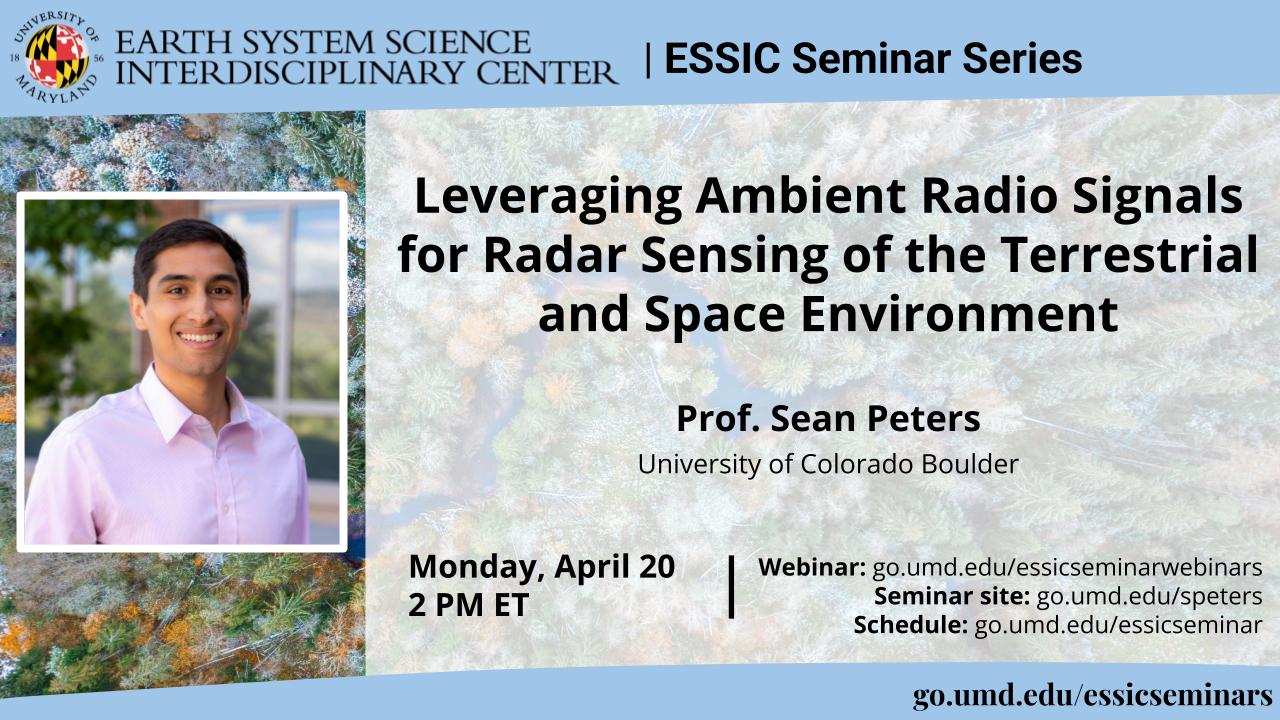
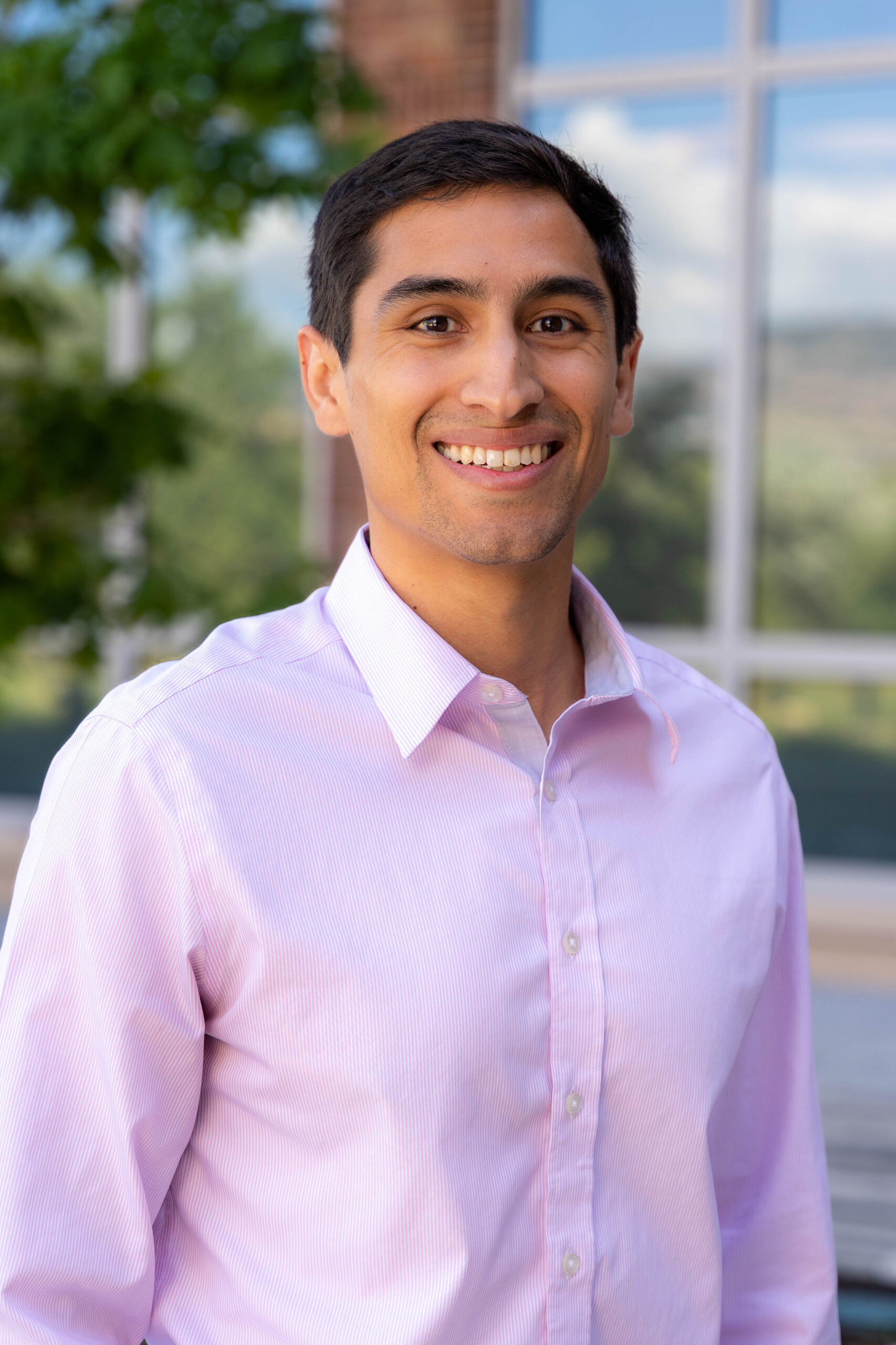
Prof. Sean Peters
University of Colorado Boulder
Monday April 20, 2026, 2 PM ET
Abstract:
Ice-penetrating radar observations are critical for understanding and predicting future ice sheet behavior and their contribution to global sea-level rise. However, conventional radars require transmitting powerful electromagnetic pulses and recording echo reflections to measure ice sheet thickness and subsurface conditions; as such, these systems are resource-intensive in terms of cost, power, and logistics when continuously monitoring ice sheets at both their evolving spatial (local to continental) and temporal (daily to multiannual) scales. To address this, I present a novel approach using passive radar, which leverages ambient radio noise (natural, radio-astronomical, and anthropogenic) as the signal source, eliminating the need for active transmission. I first present the results from our passive radar sounding demonstration using the Sun to measure ice sheet thickness at Store Glacier, Greenland. I then assess the method’s performance for capturing key glaciological observations, including melt rates, bed reflectivity changes, and englacial water storage, across Greenland and Antarctica. Finally, I discuss how networks of passive sensors could provide scalable, low-resource platforms for continuous ice sheet monitoring. This work highlights how recycling existing electromagnetic signals through passive radar signal processing enables new pathways for Earth and planetary remote sensing, offering both scientific insight and potential advantages in challenging observational environments.
Biosketch:
Sean Peters is an Assistant Professor in the Department of Aerospace Engineering Sciences at the University of Colorado Boulder, CO, USA. His research advances low-resource radar remote sensing technologies for monitoring terrestrial, planetary, and space environments. His core research agenda centers on developing passive radar systems and signal processing techniques that leverage ambient electromagnetic emissions (natural, radio astronomical, and anthropogenic) to observe extreme environments, such as ice sheets, ice shelves, and icy moons. Before joining CU Boulder, he was an Assistant Professor in the Department of Physics and a Space Systems Academic Group faculty affiliate at the Naval Postgraduate School, Monterey, CA, USA. Prior to NPS, he worked as a Technical Staff Member at the Airborne Radar Systems and Techniques Group, MIT Lincoln Laboratory, developing field-deployable active, bistatic, and passive radar systems for coastal imaging applications. He received his PhD in Electrical Engineering from Stanford University in 2020. As part of the Stanford Radio Glaciology Research Group and Radar Systems Development Team, he conducted ice-penetrating radar experiments during three fieldwork campaigns on Store Glacier, Greenland.
Zoom Info:
Event site: go.umd.edu/speters
Zoom Webinar: https://go.umd.edu/essicseminarwebinars
Zoom Meeting ID: 918 7733 3086
Zoom password: essic
US Toll: +13017158592
Global call-in numbers: https://umd.zoom.us/u/aMElEpvNu
For IT assistance:
Cazzy Medley: cazzy@umd.edu
Resources:
Seminar schedule & archive: https://go.umd.edu/essicseminar
Seminar Google calendar: https://go.umd.edu/essicseminarcalendar
Seminar recordings on Youtube: https://www.youtube.com/user/ESSICUMD