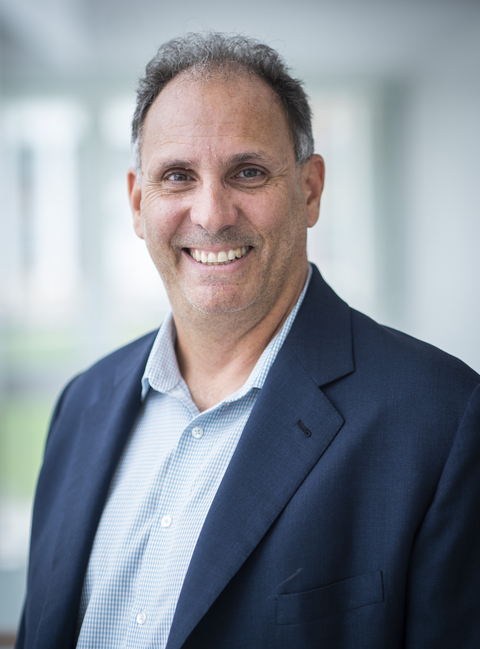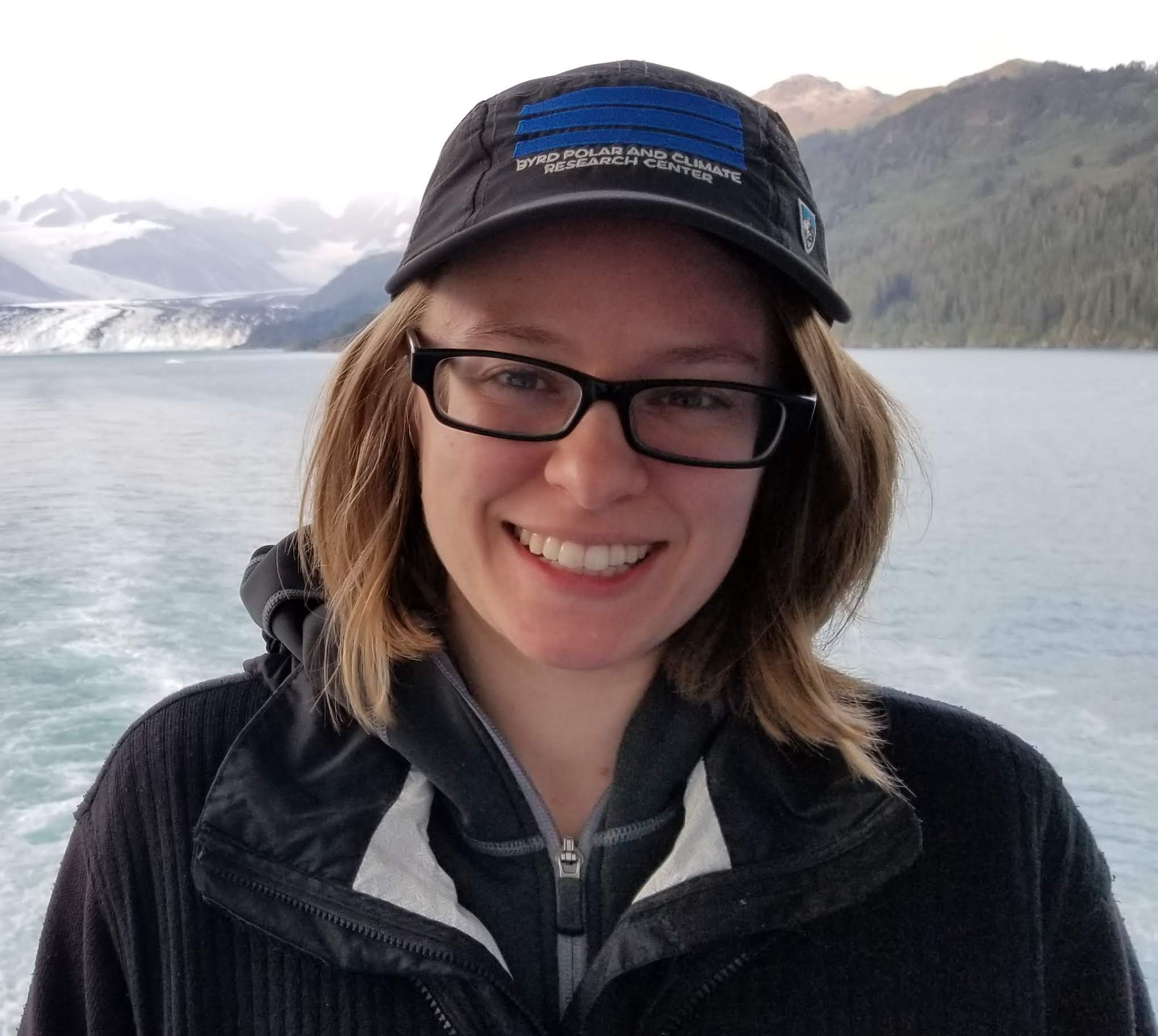
Early Career Scientist Spotlight: Dr. Melissa Wrzesien
Click here to access Dr. Melissa Wrzesien’s Early Career Scientist Spotlight.

Click here to access Dr. Melissa Wrzesien’s Early Career Scientist Spotlight.

ESSIC scientist Ali Abdolali is first author on a new paper in Geoscientific Model Development titled, “Great Lakes Waves Forecast System on High-Resolution Unstructured Meshes”.

ESSIC/CISESS scientists Malarvizhi Arulraj, Veljko Petkovic, Ralph R. Ferraro, and Huan Meng have a new study out in Journal of Hydrometeorology titled, “Precipitation Vertical Structure Characterization: A Feature-Based Approach”.

Welcome to the Spring 2024 semester! We are pleased to announce the return of ESSIC’s Seminar Series. We have a wonderful lineup of senior and junior scientists who are prepared to deliver some compelling presentations about their work and research both in-person and remotely.
Some of our speaker highlights include Dalia Kirschbaum, Director of the Earth Science Division of NASA Goddard Space Flight Center; Neil M. Donahue, Director of Carnegie Mellon’s Steinbrenner Institute as well as professor and AGU Fellow; Claudia Tebaldi, scientist at Pacific Northwest National Laboratory’s Joint Global Change Research Institute and AGU Fellow; Ines Azevedo, associate professor at Stanford; Tracey Holloway, professor at UW–Madison and member of National Academy of Medicine; and Juan Lora, assistant professor at Yale.
Please click “Read more” for our full lineup and to add these events to your calendar now!

Satellite observations are vital for weather forecasts, climate monitoring, and environmental studies. In recent years, there has been a concerted effort to develop methods for quantifying and representing errors associated with satellite observations. ESSIC scientist John Xun Yang has led a team of scientists in the creation of an error inventory simulator, the Satellite Error Representation and Realization (SatERR).

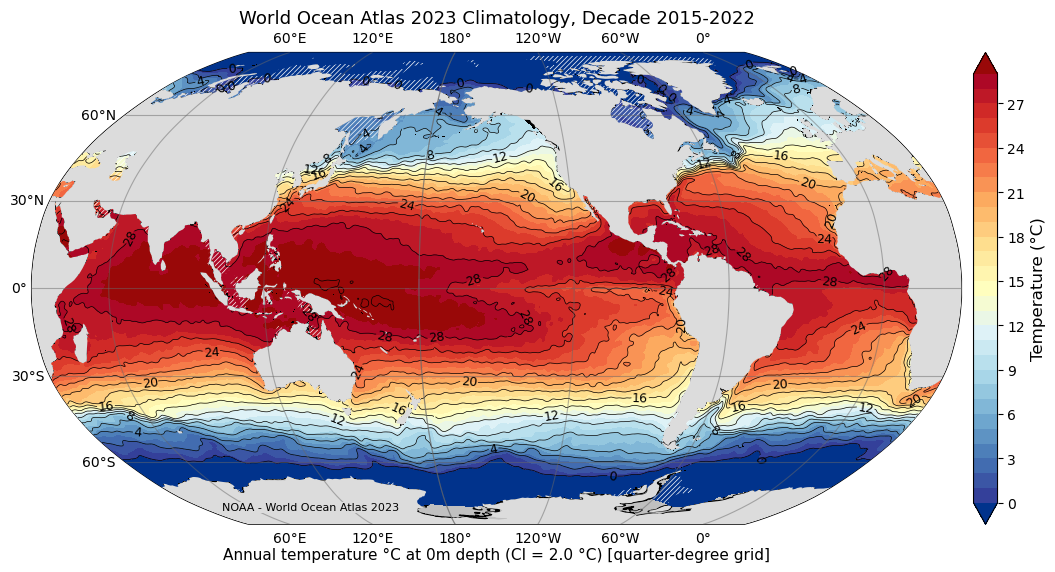
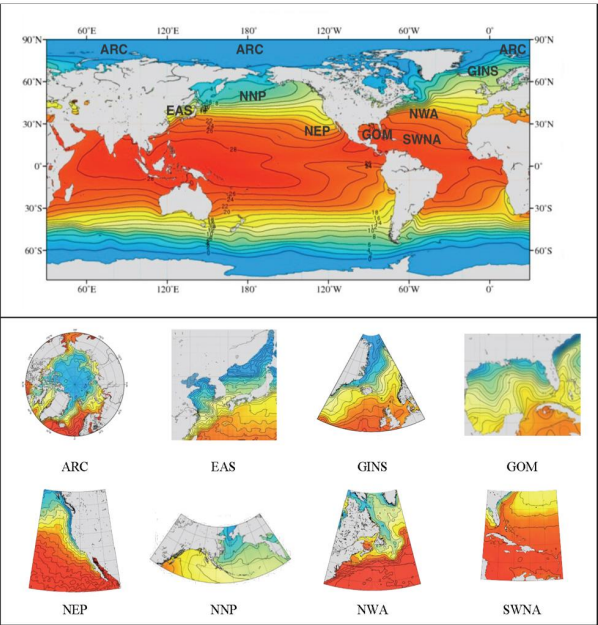
ESSIC/CISESS scientist Alexey Mishonov along with other scientists from the United States, China, New Zealand and Italy have a new article in the journal Advances in Atmospheric Science documenting the record highs in the global ocean set in 2023.

Isaac Moradi, a research scientist and lead of the ESSIC numerical modeling and data assimilation affinity group, has been appointed as a member of the AMS Radio Frequency Allocation Committee, bringing invaluable expertise in microwave and radar observations and their role in weather predictions. The committee focuses on coordinating radio frequency spectrum management crucial to weather, water, and climate services. It serves a pivotal role in evaluating how spectrum policy changes might impact meteorological data collection and distribution. Moradi’s career, marked by advancements in data assimilation and numerical modeling through enhancing radiative transfer models, observations error analysis, improving the data assimilation systems for assimilating these observations, and developing advanced calibration techniques for satellite data, aligns seamlessly with the committee’s mission.

The 6th GEO Blue Planet Symposium, organized by ESSIC/CISESS Scientist and GEO Blue Planet Executive Director Emily Smail was held from October 31 to November 2 in Seoul, Republic of Korea. The event, which brought together a global community focused on “Digital Solutions for Sustainable Oceans”, was a resounding success.

The Chesapeake Bay Stock Assessment Committee held a Blue Crab Data Workshop from Dec 5-7 to review sources of environmental and biological data that may help model the blue crab population for improving the management of this important marine resource and iconic Chesapeake Bay delicacy. Ron Vogel, ESSIC/CISESS senior faculty specialist, participated in the workshop as a subject matter expert on environmental data sources from satellites to be used in the modeling research.

ESSIC/CISESS scientists Yong-Keun Lee and Christopher Grassotti are authors on a new paper in Geophysical Research Letters describing the first attempt to perform a detailed analysis of the stratospheric impact of the eruption from satellite microwave observations. The other authors on the paper are Neil Hindley from University of Bath and Quanhua (Mark) Liu from NOAA’s Center for Satellite Applications and Research.