
Improving Hurricane Forecasting at NOAA/OAR/AOML’s Hurricane Research Division
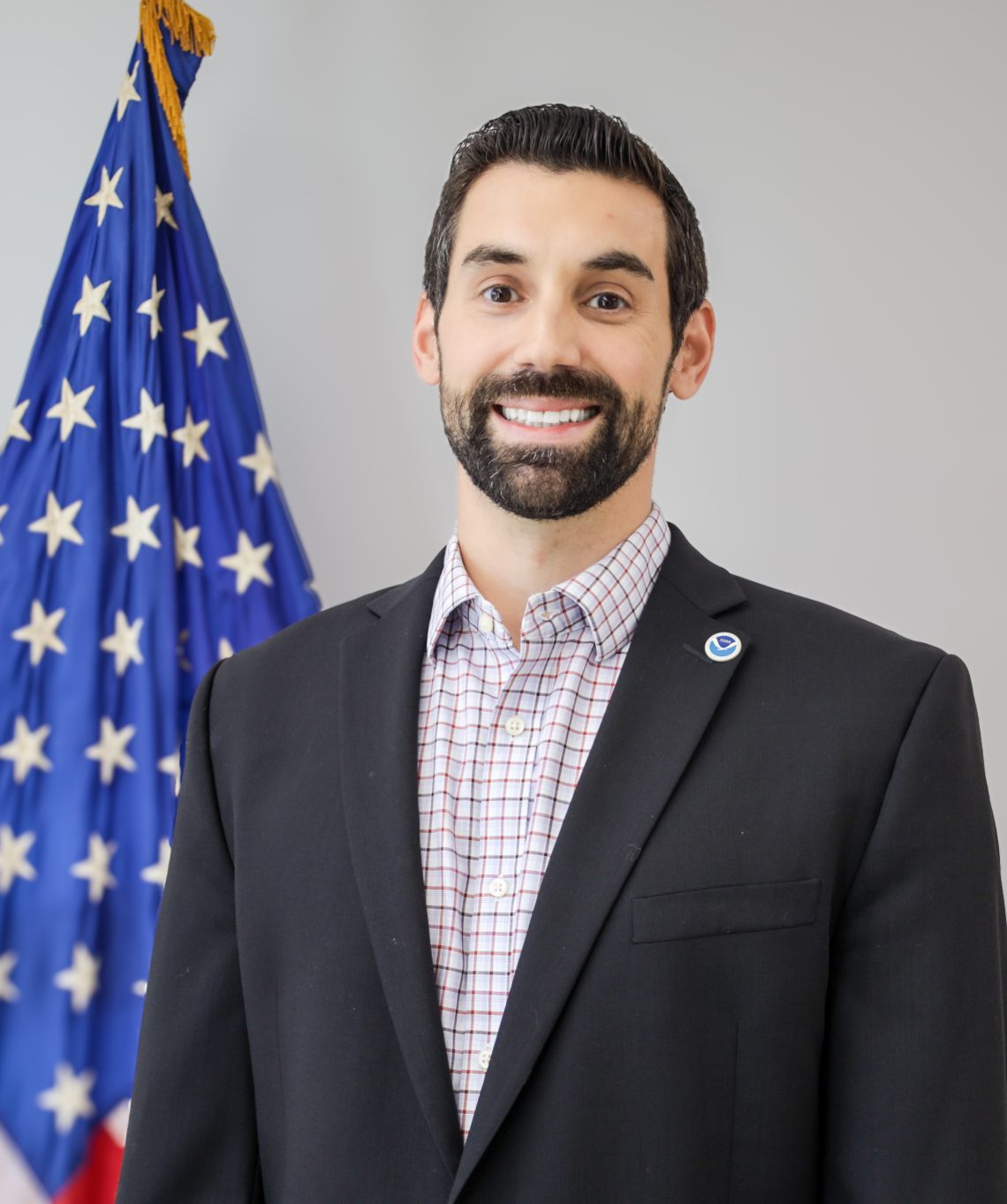
Dr. Ghassan Alaka
Director of the Hurricane Research Division
NOAA’s Atlantic Oceanographic and Meteorological Laboratory
Monday October 19, 2026, 2 PM ET
Abstract:
The Hurricane Research Division (HRD) at NOAA’s Atlantic Oceanographic and Meteorological Laboratory (AOML) leads research efforts dedicated to advancing tropical cyclone (TC) understanding and prediction. In close partnership across NOAA line offices, in particular OAR, NWS, OMAO, and NESDIS, HRD drives progress across the complete Research-to-Operations (R2O) value chain. By fostering a tight Operations-to-Research (O2R) feedback loop, HRD optimizes operational models and observing systems to maximize the return on operational investments and drive high-quality NWS forecast guidance. This presentation reviews HRD’s key scientific accomplishments in recent years and outlines strategic priorities moving forward within the framework of the Hurricane Forecast Improvement Program (HFIP).
Targeted data collection through the Hurricane Field Program, which supports the Advancing the Prediction of Hurricanes Experiment (APHEX), serves as the foundation of this value chain. Using NOAA WP-3D and Gulfstream IV-SP aircraft, alongside emerging capabilities, HRD gathers critical observations across all stages of the TC lifecycle with an emphasis on TC rapid intensification. A major and growing priority involves uncrewed systems (UxS) and other emerging technologies designed to sample hazardous regions, such as the air-sea interface and boundary layer. HRD continues to lead assessments of traditional and emerging reconnaissance data to evaluate impacts, refine concepts of operations, fill critical data gaps, and improve operational numerical model analyses.
HRD leverages these rich observational datasets to drive advancements in traditional numerical weather prediction and innovative artificial intelligence (AI) frameworks. Recent enhancements to the Hurricane Analysis and Forecast System (HAFS) and new AI-based modeling capabilities aim to improve TC track, intensity, and structure predictions. Crucially, HRD’s modeling and diagnostic efforts extend beyond maximum sustained winds to address TC hazard prediction, including wind gusts, extreme rainfall, and associated severe weather risks. By deepening our understanding of TC physical processes, particularly those governing rapid intensification, and refining operational data collection and assimilation pipelines, HRD bridges the gap between research discovery and forecast application.
Biosketch:
Dr. Ghassan (Gus) Alaka is the Director of the Hurricane Research Division at NOAA’s Atlantic Oceanographic and Meteorological Laboratory. He leads research to improve understanding and prediction of tropical cyclone track, intensity, and structure, with an emphasis on transitioning research to operations. He is a lead developer of NOAA’s operational hurricane forecast models, including HAFS and HWRF, and is AOML’s PI for NOAA’s Hurricane Field Program. Gus and the HRD team lead critical research to improve hurricane forecasting by maximizing the impact of reconnaissance data.
Zoom Information
Event site: https://go.umd.edu/alaka
Zoom Webinar: https://go.umd.edu/essicseminarwebinars
Zoom Meeting ID: 971 2692 9944
Zoom password: essic
US Toll: 13017158592
Global call-in numbers: https://umd.zoom.us/u/aMElEpvNu
Resources:
Seminar schedule & archive: https://go.umd.edu/essicseminar
Seminar Google calendar: https://go.umd.edu/essicseminarcalendar
Seminar recordings on Youtube: https://www.youtube.com/user/ESSICUMD
For IT assistance: Cazzy Medley: cazzy@umd.edu