
New Understanding of Wildfire Responses to Weather and Climate Variability May Improve Subseasonal-to-Seasonal Prediction
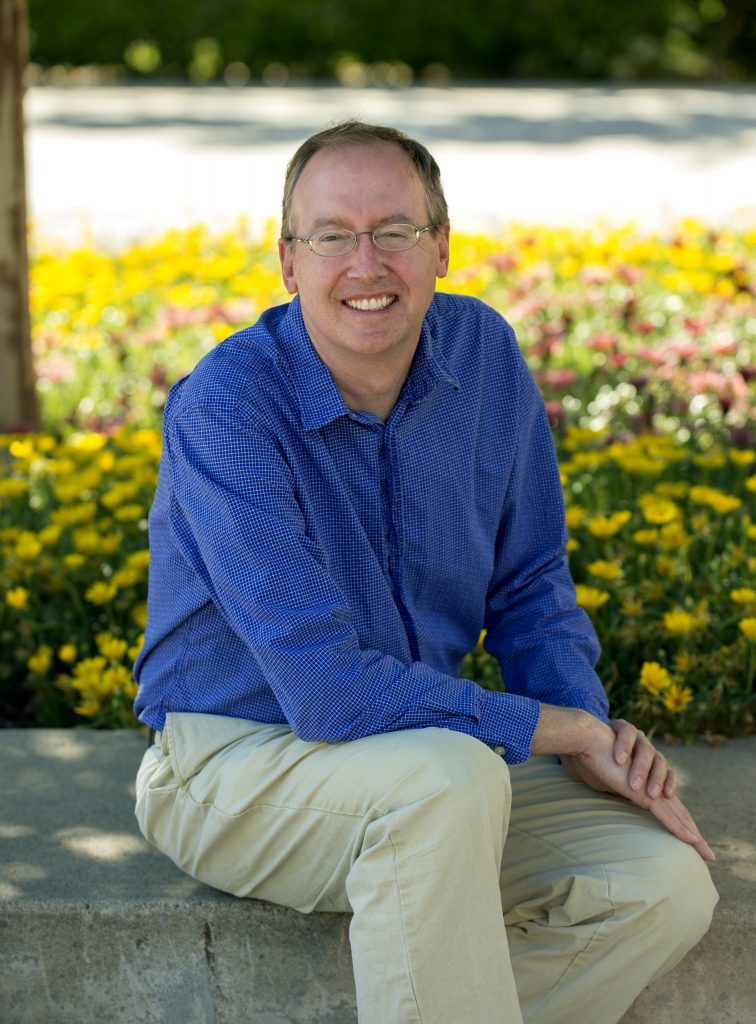
James Randerson
Ralph J. and Carol M. Cicerone Professor
Department of Earth System Science
University of California, Irvine
Monday November 2, 2026, 2 PM ET
Abstract:
We describe three advances in understanding the mechanisms governing wildfire responses to weather and climate variability across biomes, highlighting new opportunities to improve wildfire predictability, ecosystem management, and economic resilience on subseasonal-to-seasonal (S2S) timescales. First, for wind-driven Santa Ana wildfires in Southern California, we show that improved estimates of live fuel moisture at the onset of individual wind events can substantially improve predictions of fire occurrence, burned area, and individual fire size. Second, in the boreal forests of North America, we show how multi-year drought and overwintering (“zombie”) fires have contributed to four consecutive extreme wildfire seasons. Terrestrial water storage anomalies measured up to six months before the fire season provide a basis for predicting seasonal fire severity, partly through their influence on duff-layer moisture and the ability of fires to survive winter and spring. Because many overwintering fires reemerge shortly after snowmelt, improved predictions may enable targeted early-season interventions before fire suppression resources become overextended. Third, at the global scale, we examine how the El Niño–Southern Oscillation (ENSO) influences wildfire activity through widespread perturbations to the terrestrial hydrological cycle. Using more than 25 years of observations from the Global Fire Emissions Database version 5 (GFED5), we show that ENSO state strongly predicts regional burned area and carbon emissions with lead time of more than one year. This predictability arises from large-scale ocean–atmosphere interactions that influence regional precipitation, together with a regional-scale biosphere–atmosphere feedback in which root-zone soil moisture acts as a multi-season reservoir of hydrological memory. Building on this framework, we describe how the current El Niño may increase the risk of extreme wildfire activity during the July–October 2027 dry season in the Amazon, and how such early warnings could inform policies and management strategies to reduce forest damage. Together, these advances show how better understanding of fuel moisture, hydrological memory, and climate teleconnections can extend wildfire predictability across timescales from individual weather events to more than a year in advance, creating new opportunities for proactive fire management.
Biosketch:
James Randerson is Ralph J. and Carol M. Cicerone Professor in the Department of Earth System Science at UC Irvine. He studies the global carbon cycle and how ecosystems respond to climate change. His research integrates satellite observations, field measurements, and Earth system modeling to understand how wildfire activity is changing and how fires influence atmospheric chemistry, climate, and ecosystem function. Randerson received a B.S. in chemistry and a Ph.D. in biological sciences from Stanford University. He conducted postdoctoral work at UC Berkeley and the University of Alaska before joining the faculty at Caltech. In 2003, Randerson moved to UC Irvine, where he currently holds positions in both Earth System Science and Civil and Environmental Engineering. He currently serves on technical and science advisory boards for the Symbiosis Coalition and the One Science Conservancy of The Nature Conservancy. Randerson received the James B. Macelwane Medal in 2005, the Piers J. Sellers Global Environmental Change Mid-Career Award in 2017, and the Stephen Schneider Lecture in 2026 from the American Geophysical Union. He is a Fellow of AGU and a member of the U.S. National Academy of Sciences.
Zoom Information
Event site: https://go.umd.edu/randerson
Zoom Webinar: https://go.umd.edu/essicseminarwebinars
Zoom Meeting ID: 971 2692 9944
Zoom password: essic
US Toll: 13017158592
Global call-in numbers: https://umd.zoom.us/u/aMElEpvNu
Resources:
Seminar schedule & archive: https://go.umd.edu/essicseminar
Seminar Google calendar: https://go.umd.edu/essicseminarcalendar
Seminar recordings on Youtube: https://www.youtube.com/user/ESSICUMD
For IT assistance: Cazzy Medley: cazzy@umd.edu