
The Coupling Between Fracture and Flow in Ice Sheets
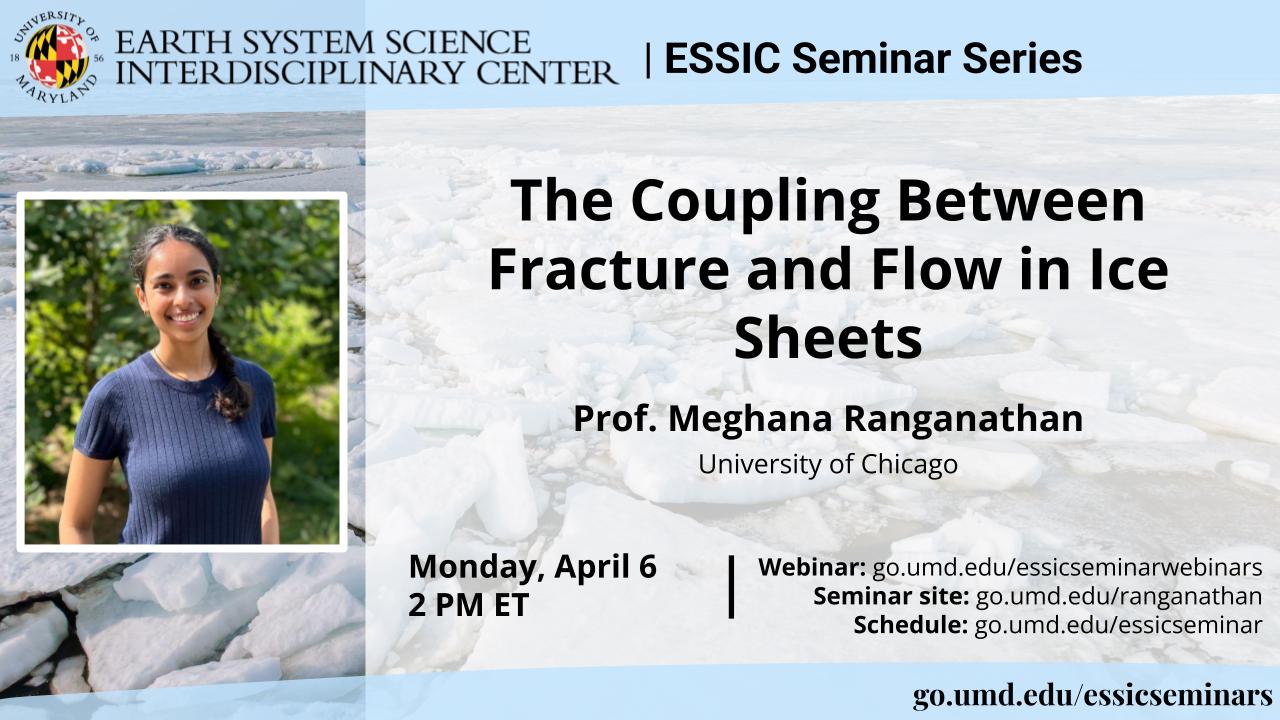
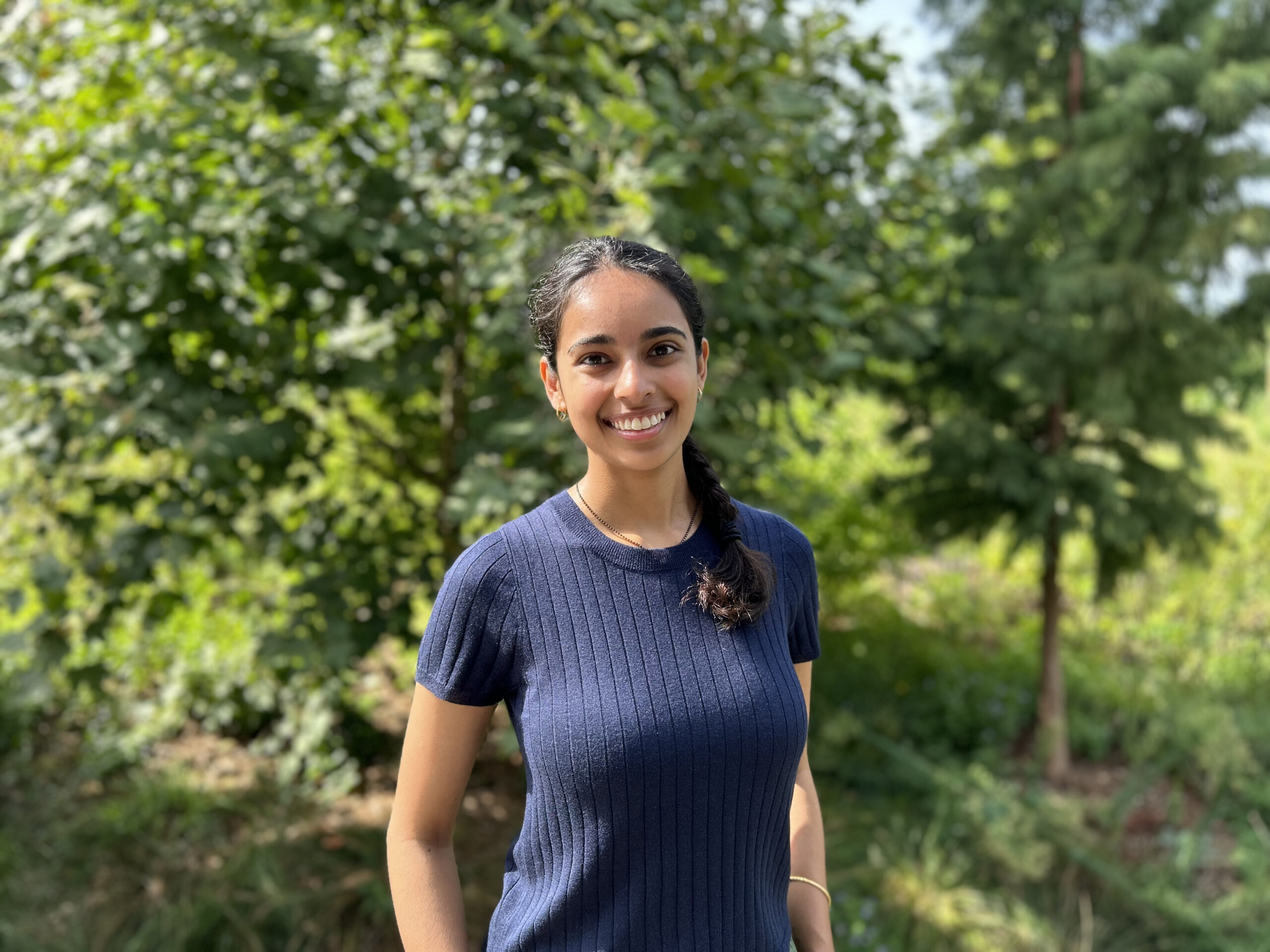
Prof. Meghana Ranganathan
University of Chicago
Monday April 6, 2026, 2 PM ET
Abstract:
Mass loss from the Antarctic Ice Sheet occurs due to the flow of ice, which transports ice from the interior of ice sheets towards the ocean, and the fracture of ice, which ultimately is responsible for calving events in which large chunks of ice separate from the ice sheet to form icebergs. Understanding and modeling the processes of ice flow and fracture, therefore, is critical to accurately represent ice sheet dynamics in models that project future sea-level rise. While flow and fracture are typically treated as separate processes, in reality they are coupled: accelerating ice flow and deformation preconditions regions of ice sheets for fracture, and those fractured zones weaken the structural integrity of the glacier, enabling more rapid flow. This coupling may have significant implications for the stability of Antarctic glaciers. In this talk, I will investigate the nature of this two-way coupling between ice flow and fracture. We find that incorporating fracture effects on ice flow can result in a ~30% enhancement to the ice mass loss that occurs from changes to climate forcing, but that this effect is significantly impacted by the microstructural nature of fracture processes. This suggests that coupling fracture mechanics to microstructural evolution in ice sheet models is likely necessary to fully capture the two-way coupling between flow and fracture and ultimately has implications for our ability to represent ice loss on centennial timescales.
Biosketch:
Meghana Ranganathan is an Assistant Professor of Geophysical Sciences at the University of Chicago. Her research seeks to improve fundamental understanding and projections of glacier and ice sheet change, integrating concepts from materials science, solid Earth geophysics, and applied mathematics to characterize ice sheet change from microphysical processes to macroscale behavior. Before starting at the University of Chicago, she received her Ph.D in Climate Science from the Massachusetts Institute of Technology Department of Earth, Atmospheric and Planetary Sciences and was a NOAA Climate and Global Change Postdoctoral Fellow at the Georgia Institute of Technology, hosted by Dr. Alexander Robel.
Zoom Info:
Event site: https://go.umd.edu/ranganathan
Zoom Webinar: https://go.umd.edu/essicseminarwebinars
Zoom Meeting ID: 918 7733 3086
Zoom password: essic
US Toll: +13017158592
Global call-in numbers: https://umd.zoom.us/u/aMElEpvNu
For IT assistance:
Cazzy Medley: cazzy@umd.edu
Resources:
Seminar schedule & archive: https://go.umd.edu/essicseminar
Seminar Google calendar: https://go.umd.edu/essicseminarcalendar
Seminar recordings on Youtube: https://www.youtube.com/user/ESSICUMD