
Advancing Continental-Scale Hydrologic Modeling: the US National Hydrology AI Digital Twin
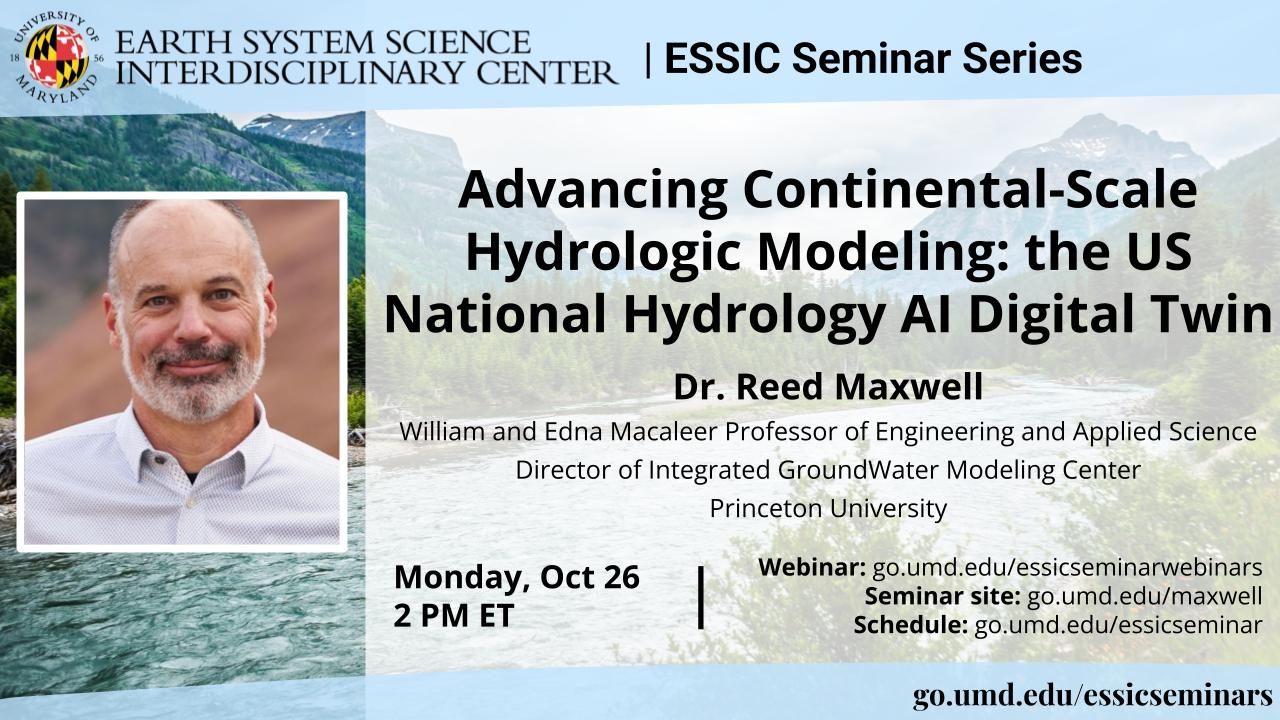
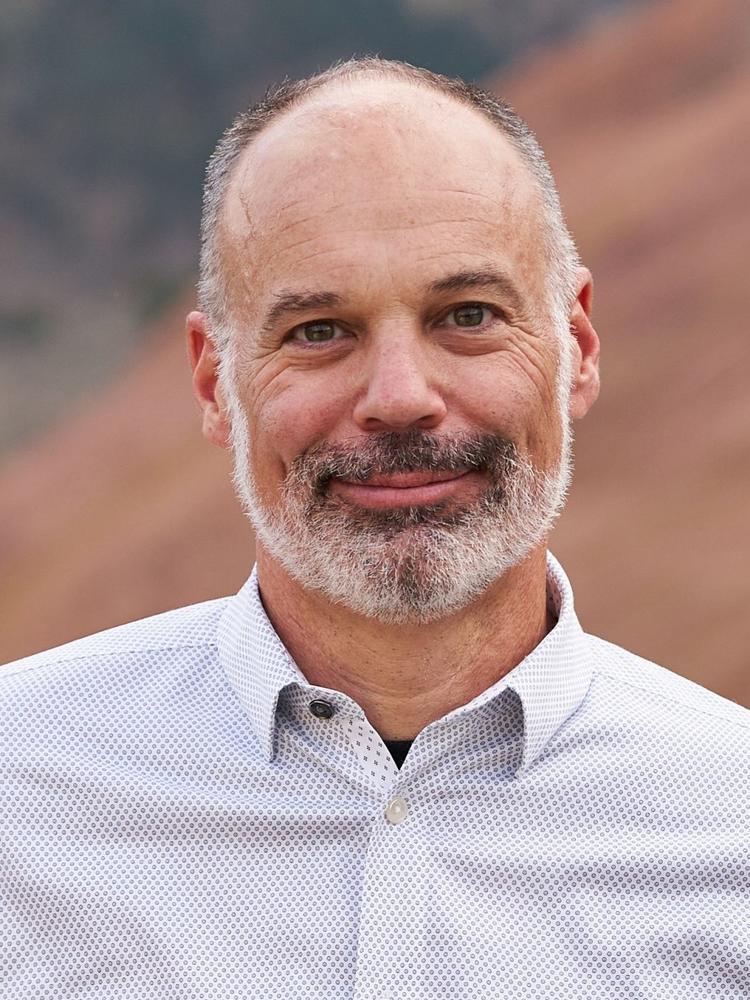
Dr. Reed Maxwell
William and Edna Macaleer Professor of Engineering and Applied Science
Director of Integrated GroundWater Modeling Center
Princeton University
Monday October 26, 2026, 2 PM ET
Abstract:
Understanding water availability, predicting droughts and floods, requires a top-to-bottom accounting of the water cycle from treetops to bedrock. Groundwater supports half the global population, 50% of crop production, and a wide array of ecosystems. However, we lack high fidelity physically accurate models that capture the entire hydrologic cycle including groundwater. Groundwater is so sparsely observed that it cannot be simulated by data-driven statistical or machine-learning approaches alone. This limitation can be addressed with physically-based models, but only at great computational costs. The CONUS2.1 platform is a high-resolution, physically-based model that couples surface and subsurface hydrology, enabling the simulation of complex processes such as groundwater-surface water interactions, evapotranspiration, and land-atmosphere feedbacks. We are evolving this platform into the first digital twin of the full terrestrial hydrologic cycle across the United States. Using AI to accelerate our solutions we will be able to develop a platform that is operational in real time. The model will be continuously updated and improved with new information from remote sensing products and gauge observations. In addition to presenting the digital twin, this talk will focus on a number of recent advancements that leverage GPU acceleration, machine learning emulation and dynamic downscaling of physical processes to accelerate this platform.
Biosketch:
Reed Maxwell is the William and Edna Macaleer Professor of Engineering and Applied Science at Princeton University, with appointments in Civil and Environmental Engineering and the High Meadows Environmental Institute. He studies where freshwater goes — underground, downhill, and into the atmosphere — and how drought, climate, and human demand are changing that cycle. His group tracks groundwater with continental-scale computer models, machine learning, and drone-based fieldwork in the headwaters of the Colorado River. He directs the Integrated GroundWater Modeling Center, is a Fellow of the American Geophysical Union, and has authored more than 200 peer-reviewed journal articles.
Zoom Information
Event site: https://go.umd.edu/maxwell
Zoom Webinar: https://go.umd.edu/essicseminarwebinars
Zoom Meeting ID: 971 2692 9944
Zoom password: essic
US Toll: 13017158592
Global call-in numbers: https://umd.zoom.us/u/aMElEpvNu
Resources:
Seminar schedule & archive: https://go.umd.edu/essicseminar
Seminar Google calendar: https://go.umd.edu/essicseminarcalendar
Seminar recordings on Youtube: https://www.youtube.com/user/ESSICUMD
For IT assistance: Cazzy Medley: cazzy@umd.edu