University of Maryland Study Shows Wetlands’ Growing Role in Carbon Removal
A mangrove “ghost forest” resulting from Hurricane Irma in 2017. Photo by Cheryl Doughty. University of Maryland researchers are uncovering the climate benefits of southern

A mangrove “ghost forest” resulting from Hurricane Irma in 2017. Photo by Cheryl Doughty. University of Maryland researchers are uncovering the climate benefits of southern

The ocean plays a critical role in stabilizing Earth’s climate. As the planet’s largest active carbon sink, it absorbs about 25% of global carbon dioxide

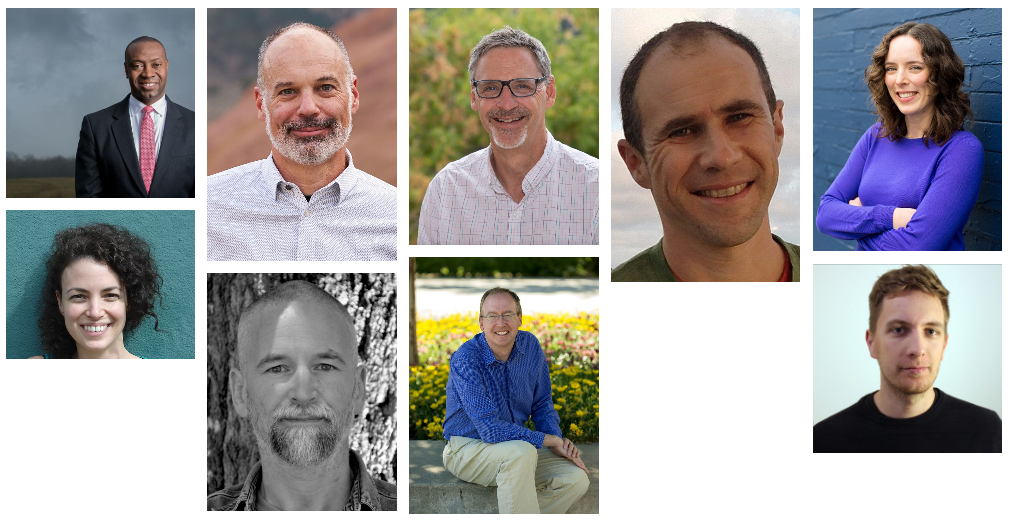
Daniel Cziczo, Daniel Cziczo, Professor & Department Head of Earth, Atmospheric and Planetary Sciences at Purdue Marty Ralph, Director, Center for Western Weather and Water

Many ESSIC scientists attended and presented at this year’s American Meteorological Society Annual Meeting, which took place from 25 to 29 January 2026 in Houston,

Lars Peter Riishojgaard gives the Introduction to the Climate Resilience Network. Photo by Cazzy Medley. On January 20-21, University of Maryland’s Earth System Science Interdisciplinary

Last month, NOAA National Centers for Environmental Information (NCEI) and Center for Satellite Applications and Research (STAR) issued awards to CISESS scientists. Between the two

American Geophysical Union (AGU) held its annual meeting in New Orleans, Louisiana over 15-19 December 2025. AGU is the largest gathering of Earth and space

Last week, the Earth System Science Interdisciplinary Center held their annual Collaborative Partner Reception and Awards Ceremony. During the event, ESSIC Director Lars Peter Riishojgaard

Wildfires are a growing threat to the global population. As temperatures rise, rainfall patterns shift, and the landscape is modified, fires are becoming more difficult

The Department of Atmospheric and Oceanic Science (AOSC) has announced the appointment of Lars Peter Riishojgaard as a Full Professor. Riishojgaard has been the Director

by Guangyang Fang On October 18, 2025, ESSIC/CISESS scientist Guangyang Fang and CISESS interns Anh Pham and Samuel Wiggins were invited to host a STEM

As the climate warms, wildfires are becoming more severe and unpredictable. Shifts in wind, weather, and fuel conditions can cause fires to change direction or