Maureen Cribb
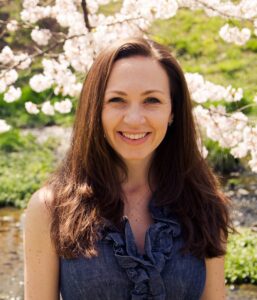
Maureen Cribb has been with ESSIC since 2001, first as a faculty specialist then as a senior faculty specialist, working in Prof. Zhanqing Li’s group. She is also a member of the CISESS Coordinator team. Maureen received a B.Sc. in Applied Mathematics from Concordia University (Montréal, Canada) and a Diploma in Meteorology from Dalhousie University (Halifax, Canada). After a stint as a data analyst at the Bedford Institute of Oceanography near Halifax, she earned an M.Sc. in Atmospheric Science from Dalhousie, investigating the influence of the three-dimensional structure of clouds on the atmospheric absorption of solar radiation under the supervision of Prof. Qiang Fu. She lives, works, and plays in College Park, i.e., biking around on the hiker/biker trails, exploring the local food scene, and watching footie at sports restaurants in the area.