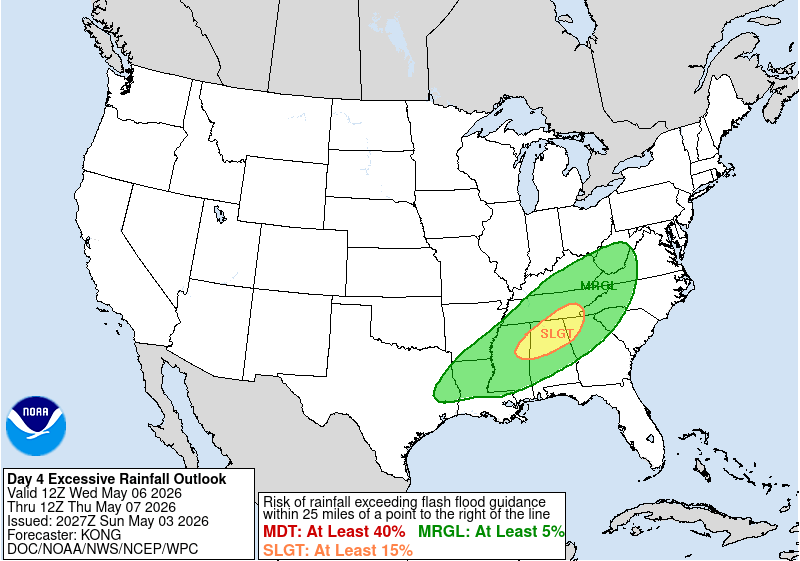
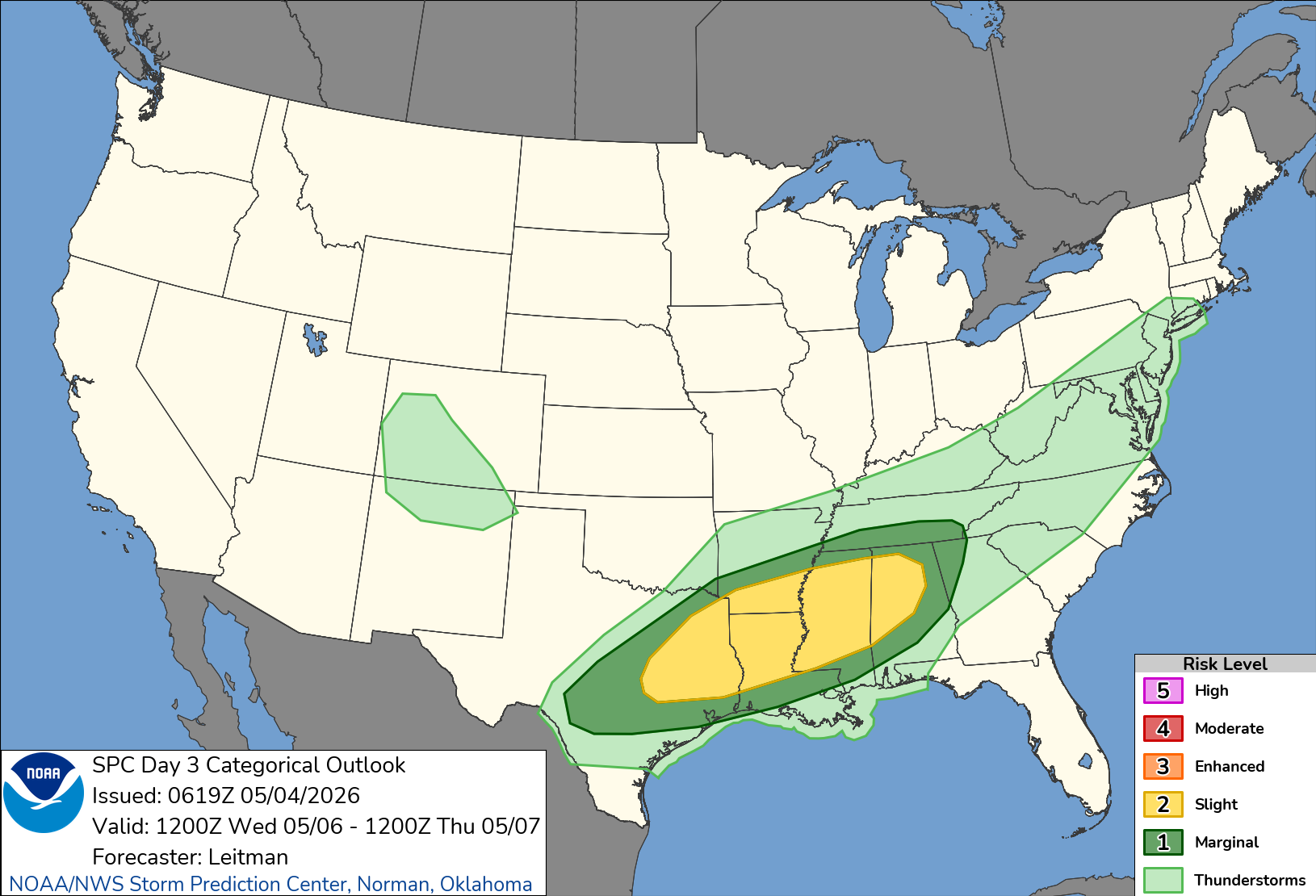
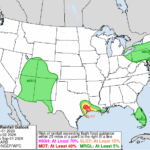
Wild weather that’s typical of Spring didn’t disappoint last week. While Denver received nearly a half foot of snow, severe storms and flash flooding struck the Deep South. The NWS Weather Prediction Center (WPC) issued a Slight Risk for Excessive Rainfall in their Day 4 Excessive Rainfall Outlook (ERO) issued at 2027 UTC 03 May 2026. Likewise, the Storm Prediction Center (SPC) had a Day 3 Slight Risk for severe thunderstorms in the Convective Outlook issued at 0619 UTC 04 May 2026.
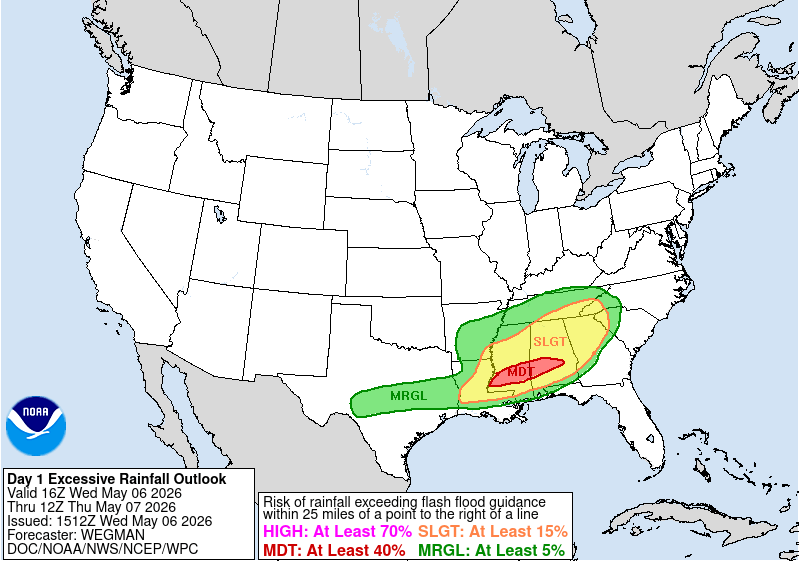
On the morning of 06 May 2026, WPC upgraded the ERO to include a Moderate Risk across south-central MS and AL. A Moderate excessive rainfall risk is relatively rare.
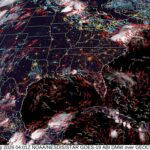
GOES-East CONUS Mid-Level Water Vapor Band 09 displayed the meteorological setup. The trough that brought snow to the Central Rockies can be seen digging to the southeast, while moisture rich air from the Gulf surged into the Southeast ahead of a slow-moving cold front.
Figure 4: GOES-East CONUS Mid-Level Water Vapor Band 09 imagery from 1201 UTC 06 May to 1246 UTC 07 May 2026. This animation was exported from AWIPS, and display files can be shared upon request.
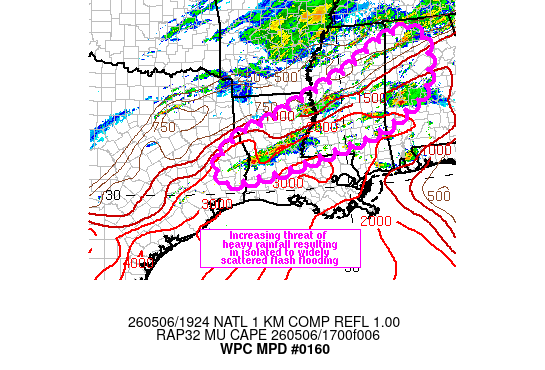
The WPC MetWatch Desk issued a Mesoscale Precipitation Discussion (MPD) at 1925 UTC 06 May 2026 for the possibility of flash flooding over the next six hours, noting “Radar and satellite composite indicate a rapidly growing convective initiation regime across areas of far eastern TX extending northeast through LA/MS/AL”.
An additional MPD was issued at 0059 UTC 07 May 2026 with a “Flash flooding likely” tag for areas from eastern MS to western GA. By ~0200 UTC 07 May 2026, Flash Flood Warnings stretched across central AL before additional warnings were issued further west in MS (warnings are pink polygons in the animation). GOES-East CONUS Band 13 Infrared (IR) imagery from 1201 UTC 06 May to 1221 UTC 07 May 2026 showed late afternoon convection blossom across the Deep South before exploding in coverage. By the morning of 07 May, the convection had been mainly confined to southern AL and GA, along with parts of the FL Panhandle.
Figure 6: GOES-East CONUS IR Band 13 imagery overlaid on NWS Weather Forecast Office (WFO) Flash Flood Warnings from 1201 UTC 06 May to 1221 UTC 07 May 2026. This animation was exported from AWIPS, and display files can be shared upon request.
Individual cells with ample lightning can be seen towards and after sunset in the GOES-East Full Disk Geocolor imagery overlaid with the GLM Flash Extent Density (FED) from 1200 UTC 06 May to 1230 UTC 07 May 2026. The storms produced prolific amounts of lightning overnight, combining into a linear structure by the morning. SPC received over 20 tornado reports from the storms in southern MS just prior to and after sunset.
Figure 7: GOES-East Full Disk Geocolor imagery overlaid with GLM FED from 1200 UTC 06 May to 1230 UTC 07 May 2026. This animation was exported from AWIPS, and display files can be shared upon request. Full Disk imagery was chosen for this RGB due to AWIPS loading times.
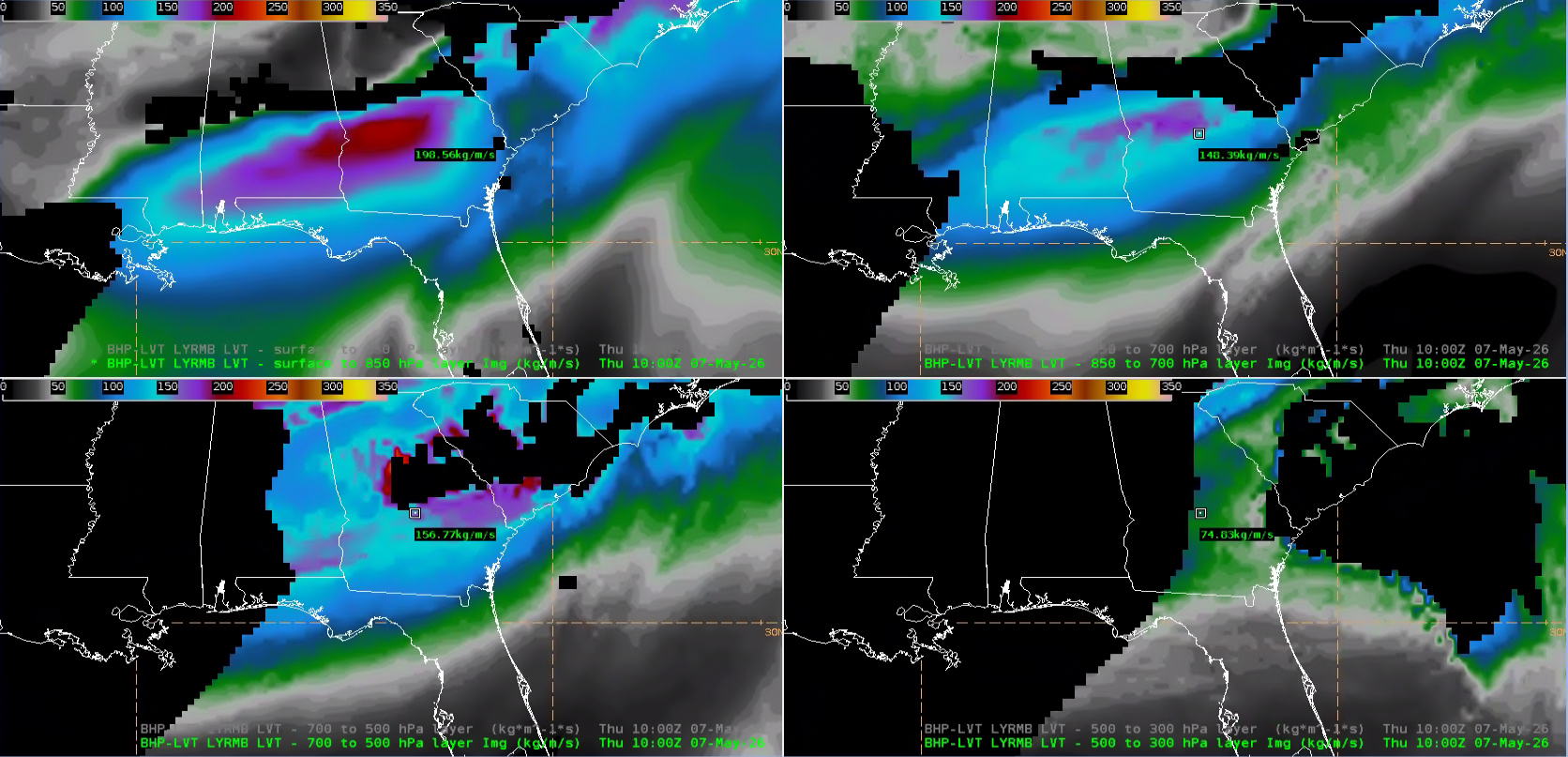
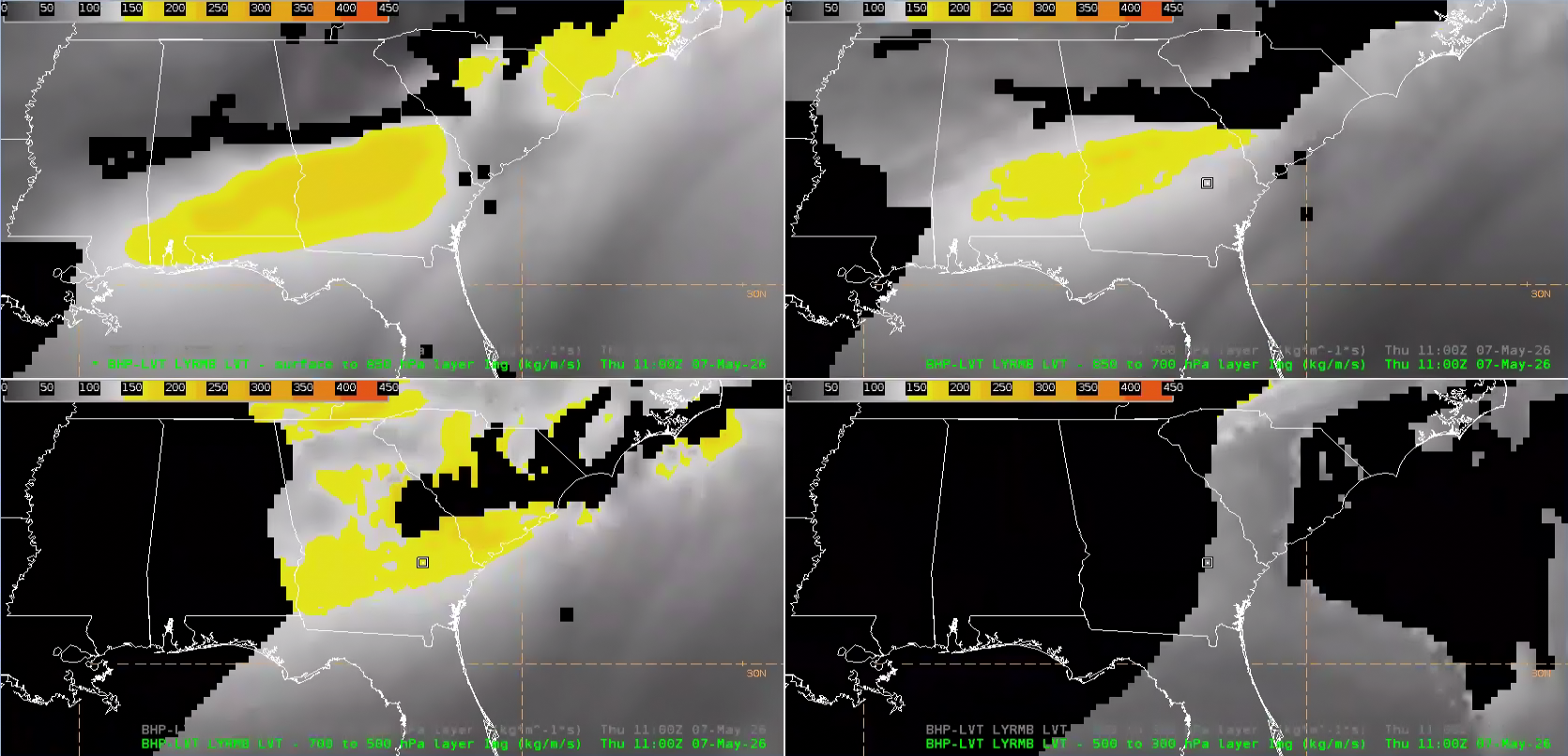
Early in the morning on 07 May 2026, heavy rain was still a concern near the Gulf Coast from MS to FL. The Cooperative Institute for Research in the Atmosphere (CIRA) Layered Vapor Transport (LVT) product observed vapor transport values approaching 600 kg/m/s when summing all four layers, showing an adequate transport of moisture. The CIRA LVT product can now be configured for AWIPS, and display files can be shared upon request. The first image is the LVT output with the traditional CIRA colorbar, though that’s the same colormap used for the Advected Layered Precipitable Water (ALPW) product. The second image is the LVT output with a colorbar that matches CW3E’s Integrated Vapor Transport colormap, though the yellows can be difficult for some forecasters to distinguish values. Both colorbars will be presented to forecasters at the NWS WPC for personal preference.
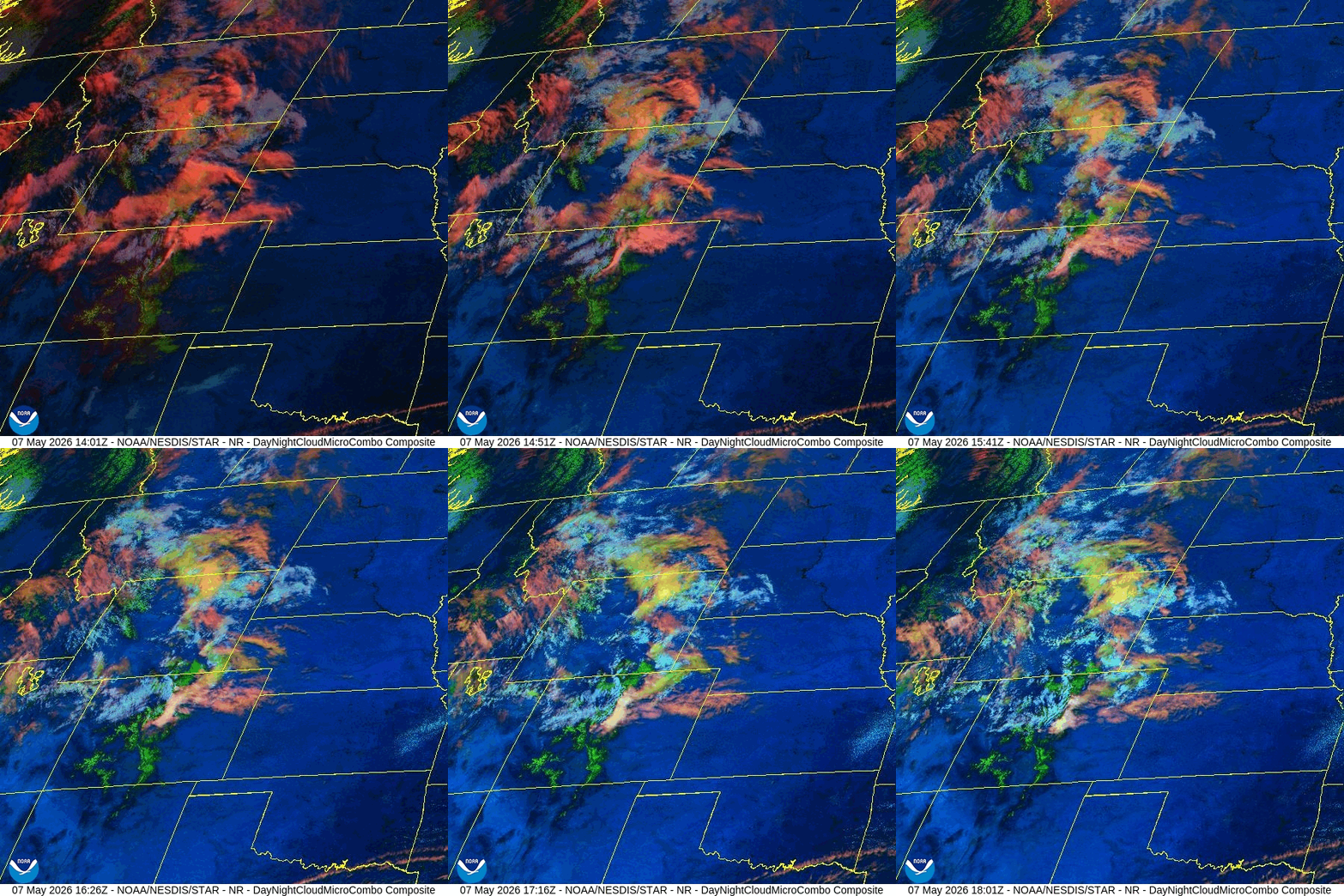
Farther west, the GOES-East CONUS Day Cloud Phase Distinction RGB observed the fresh snowpack across the Central Rockies and High Plains as the sun rose on 07 May 2026. Snow cover is easily seen in the bright green colors, highly reflective in the 0.64 visible band, before quickly melting around cities like Denver.
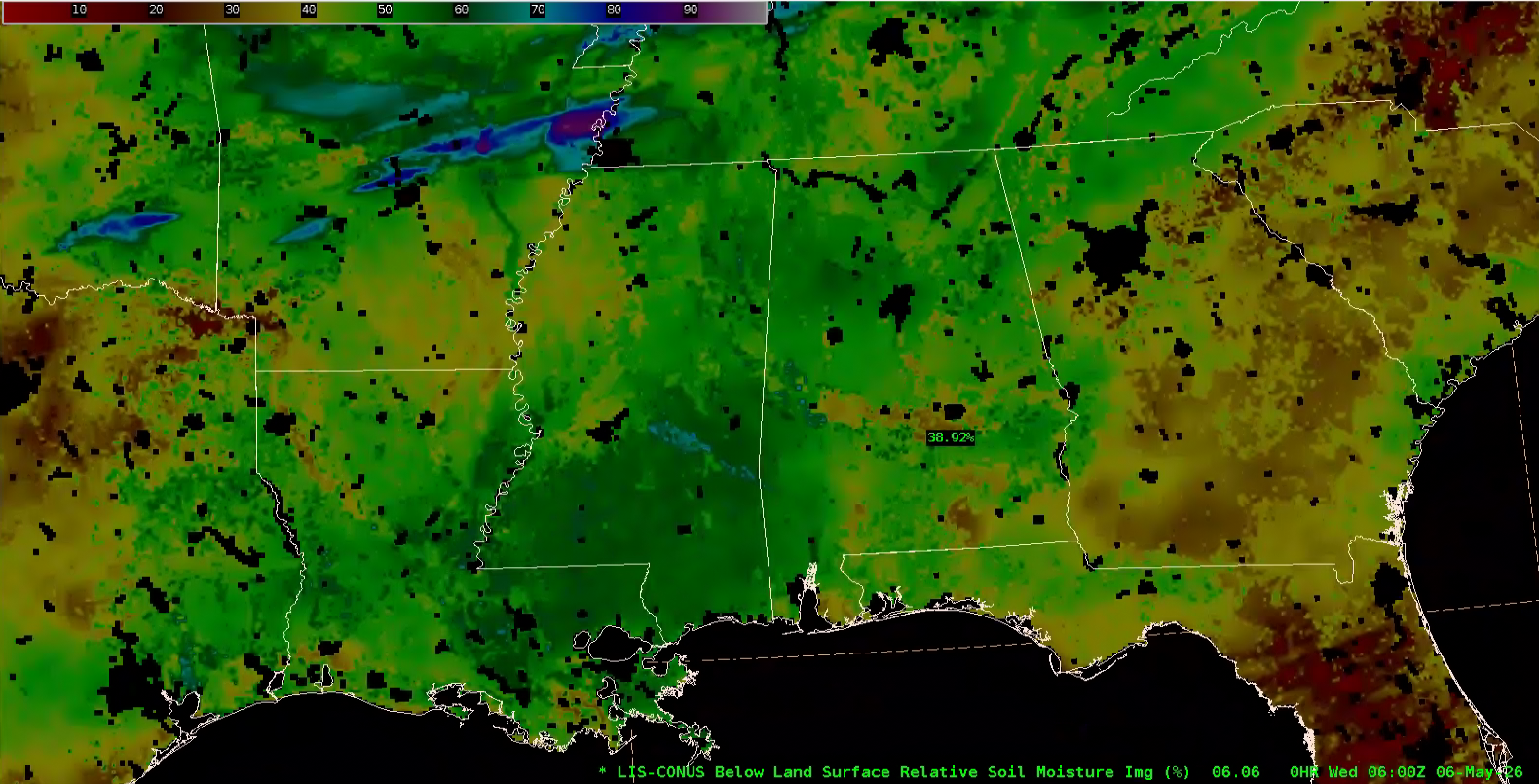
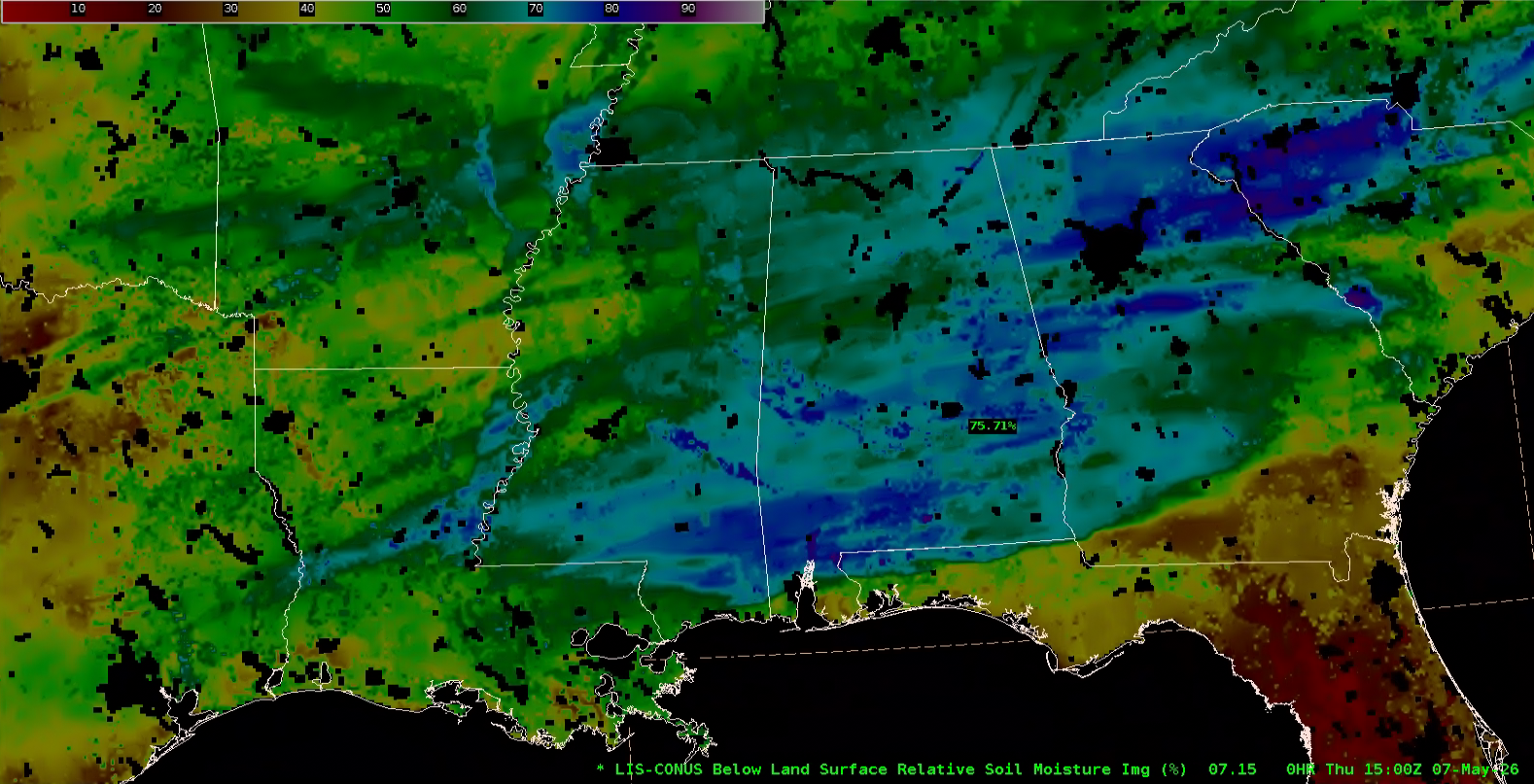
The NASA/SPoRT Land Information System (LIS) 0-10 cm Relative Soil Moisture (RSM) product showed that soils were quite dry, especially across AL and GA, prior to the storms and heavy rainfall, but saw a large boost in moisture about 36 hours later.