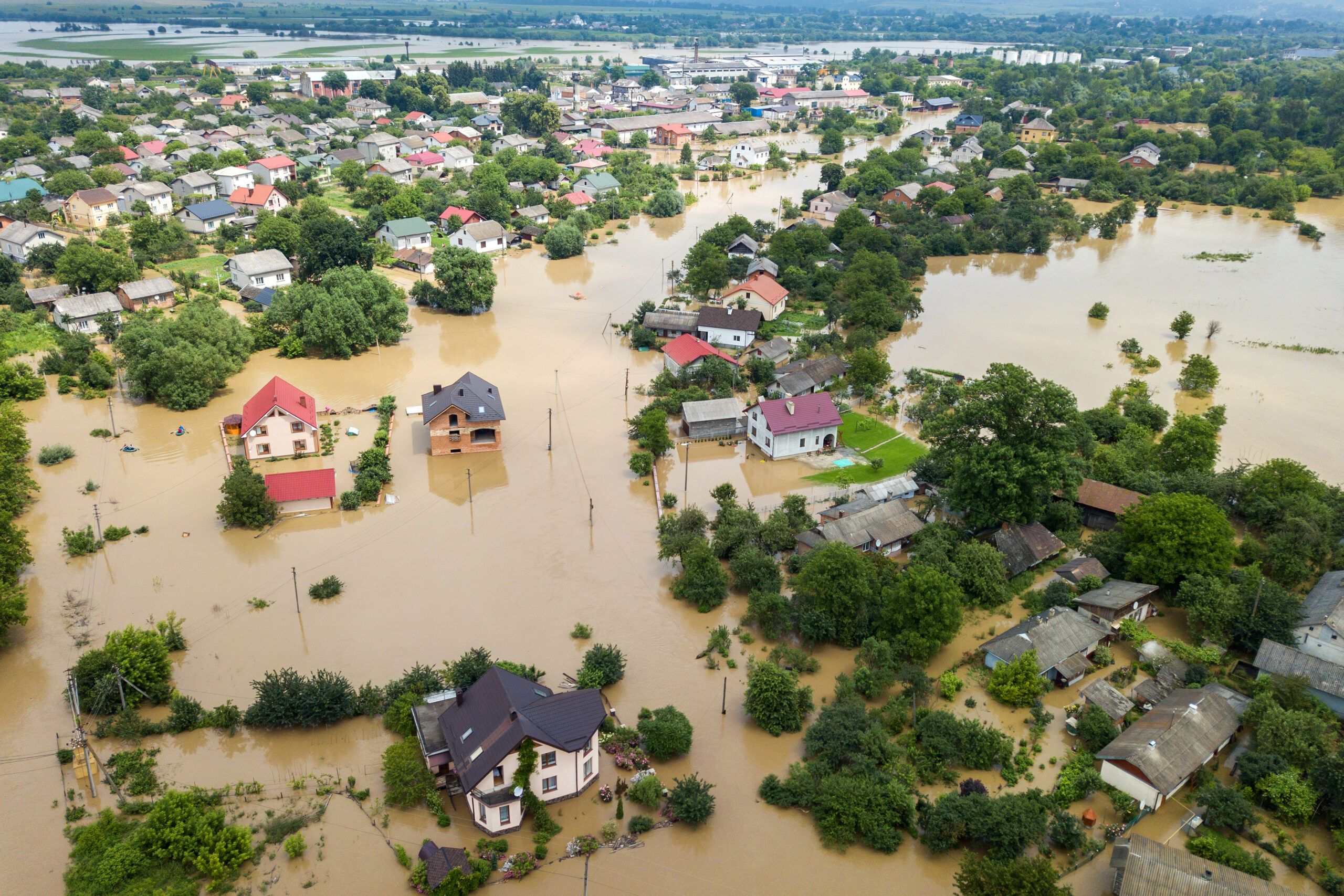
Several ESSIC/CISESS scientists including Malarvizhi Arulraj, Jifu Yin, Christopher Grassotti, Veljko Petkovic collaborated on a multi-author, two-part study led by Douglas Miller, Professor of Atmospheric Sciences at the University of North Carolina, Asheville.
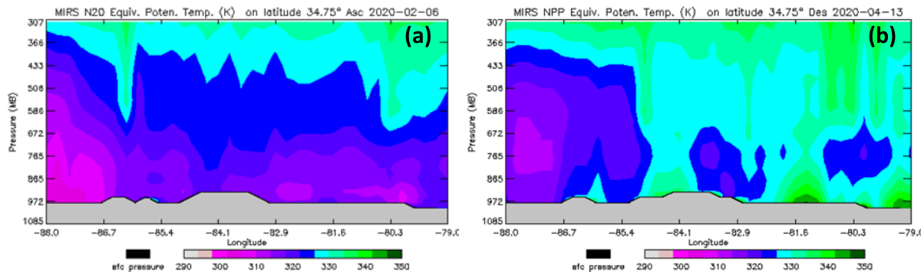
The paper analyzed two cases of extreme rainfall and flooding in the Smoky Mountains during 2020. CISESS scientists used satellite-based estimates of precipitation as well as depictions of the temperature and moisture structure to characterize the similarities and differences between the two severe weather events.
Performed analyses revealed the large-scale and local atmospheric conditions contributing to a rather unusual surface response to the short duration of heavy rainfall. To illuminate some of the conditions unique to these events, the investigation gears towards the utility of several satellite-based algorithms. Considered are NOAA precipitation (GPROF, MiRS, SCaMPR CMORPH), soil moisture and vertical atmospheric profile products. Collocated observations suggest antecedent soil moisture conditioned by rainfall of the first [longer] event made the widespread triggering of landslides possible during the higher intensity rains occurring during the [shorter] event that followed. The contrast in the number of triggered landslides – [2 vs. 21], emphasizes the importance of conditioning of the mid- and lower-soil layer moisture.
The two-part publication came as a result of collaboration between CISESS, STAR (R. Ferraro, B. Kuligowski, X. Zhan, P. Xie), CPC (S.Wu), CIRA (S. Kusselson, J. Forsythe and S. Liu) and SSEC (W. Straka) teams.
To access the papers, click here:
For Part I: “A Study of Two Impactful Heavy Rainfall Events in the Southern Appalachian Mountains during Early 2020, Part I; Societal Impacts, Synoptic Overview, and Historical Context”.
For Part II: “A Study of Two Impactful Heavy Rainfall Events in the Southern Appalachian Mountains during Early 2020, Part II; Regional Overview, Rainfall Evolution, and Satellite QPE Utility”