Despite rising emissions, improved farm management could reduce emissions by about 10% without compromising yields.
A new study from University of Maryland researchers found that global greenhouse gas emissions from rice production have doubled in the last 60 years, despite worldwide initiatives to lower the crop’s climate impact. It’s the most comprehensive global assessment of rice-related greenhouse gas emissions to date, analyzing methane, nitrous oxide and soil carbon changes from 1961 to 2020. The research was published May 22 in the journal Nature Food.
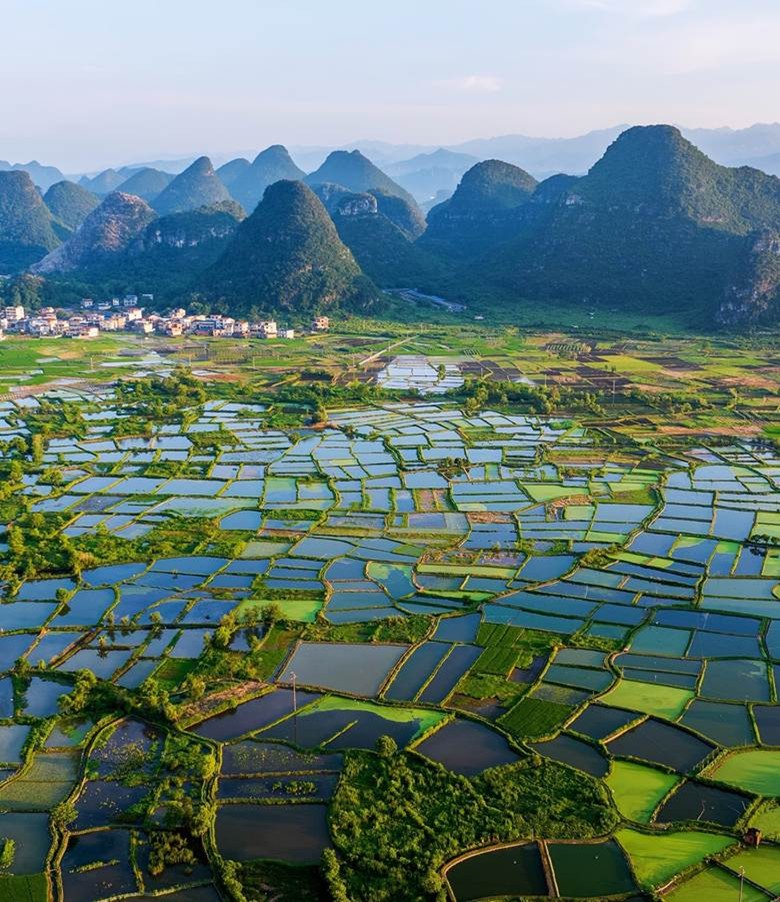
Rice is a daily staple food for over half of the world’s population. Ninety percent of the world’s rice supply comes from Asia, where the grain is cultivated in fields known as rice paddies. Rice paddies are flooded continuously, creating low-oxygen conditions that choke out weeds and allow rice to flourish. However, low-oxygen soil is also the perfect environment for bacteria that produce methane, a potent greenhouse gas driving near-term climate warming.
Meanwhile, rice production is booming with global demand. While Asia dominates production, southern Africa, particularly Angola and Zambia, has doubled its rice paddies since 1960. Consequently, this expansion also caused the region’s methane emissions to double.
“As rice farming intensifies worldwide, reducing its methane footprint without threatening food security has become a global priority,” said study co-author and Atmospheric and Oceanic Sciences Professor Xin-Zhong Liang, who holds a joint appointment in the Earth System Science Interdisciplinary Center (ESSIC).
The researchers took an integrated approach, combining machine learning training on more than 21,000 field observations, a process-based ecosystem model and a global meta-analysis. They quantified total emissions, identified key drivers and evaluated how future mitigation strategies could contribute to climate targets.
“Our goal was to understand the full climate impact of rice systems—not just methane, but all major greenhouse gases together—and to identify realistic pathways for mitigation,” said Liang.
Expanding rice production was not the only driver of the methane surge. Another contributor was a farming method called crop residue return. This practice, previously thought to be “climate-smart,” involves mixing crop scraps like stalks and leaves into the flooded rice soil to improve soil structure and nutrient cycling. However, this also saturates the soil with carbon and boosts methane production. The researchers attributed higher methane emissions in East Asia to the high incorporation of straw in rice paddies.
Despite rising emissions, the study highlights a clear opportunity: Improved farm management could reduce emissions by about 10% without compromising yields, through practices such as optimized water management, reduced residue returns and improved fertilizers.
“Our findings illustrate the importance of farm management practices, but also the danger of a one-size-fits-all approach,” Liang said. “Practices that are beneficial in one area may hurt rather than help in others. We need to rethink which management solutions are actually optimal for resilience in different areas, which requires evaluating system-level interactions at local and regional scales. Beyond that, we need to make sure that this information is available to policymakers and farmers at those same scales.”
Developing this regional assessment capability and improving its accessibility to decision-makers is a key focus of Liang’s ongoing research, particularly through the Dashboard for Agricultural Water Use and Nutrient Management, which partners with midwestern farmers in the United States to build predictive tools helping growers more easily assess climate-water-nutrient-crop interactions at scales most relevant to them.
“There are practical, scalable solutions that farmers can adopt today to maintain or improve yields while contributing to near-term climate targets, including methane reduction goals,” Liang said. “We need to continue to evaluate these in the context of regional systems, and build pathways to share that information so that farmers and policymakers can make informed decisions about their management practices.”