Wang Expands MODIS Albedo Product Validation
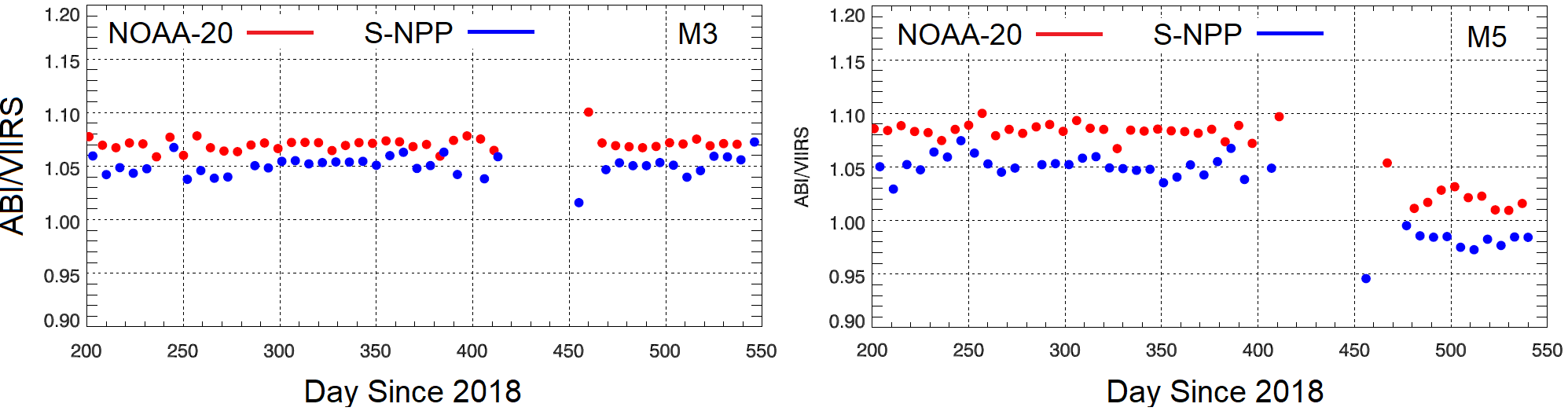
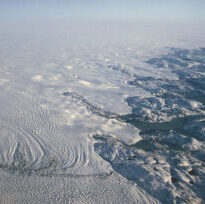
ESSIC Assistant Research Scientist Zhuosen Wang is a co-author on a new paper, “Evaluation of satellite remote sensing albedo retrievals over the ablation area of the southwestern Greenland ice sheet”.

ESSIC Assistant Research Scientist Zhuosen Wang is a co-author on a new paper, “Evaluation of satellite remote sensing albedo retrievals over the ablation area of the southwestern Greenland ice sheet”.

Professor James Farquhar of the University of Maryland (UMD) Department of Geology and the Earth System Science Interdisciplinary Center (ESSIC) has been named a 2020 UMD Distinguished University Professor. The title of Distinguished University Professor is the highest academic honor bestowed by the university. Considered a national achievement, this award given to just 7% of tenured faculty honors impact and significant contribution to the nominee’s field, knowledge, profession, and/or practice.

Youtong Zheng, ESSIC/CISESS Post-doctoral Associate, has been awarded the prestigious Yuxiang Early Career Award in recognition of his research and achievements. This award is administered by the

ESSIC Visiting Associate Research Professor Ariana Sutton-Grier has a new paper out in Science of the Total Environment about the impact of climate change on ecosystems and biodiversity.

ESSIC Associate Research Scientist Kelly Brunt was recently featured in a NOVA Virtual Field Trip, where she spoke on her own field work as well as ICESat-2, the satellite laser altimeter working to accurately and precisely measure changes in our polar regions.

A NOAA group including ESSIC/CISESS Visiting Associate Research Scientist Ralph Ferraro was recently awarded a NOAA Bronze Medal, the highest honor that can be granted by NOAA administrators. The group also included NESDIS recipients Al Wissman, Karen St. Germain, Mitch Goldberg, and Harry Cikanek, the Director of the NOAA Center for Satellite Applications and Research.

In March, a large region of very low ozone opened up above the Arctic, rivaling the historic Antarctic ozone hole that forms in the southern hemisphere each year. Extensive regions of low column ozone in the Arctic is a rare event that came about due to a very cold polar stratospheric vortex, which caused the formation of high altitude clouds and ozone-destroying reactions.

On April 30, 2020, NOAA Coral Reef Watch (CRW) and NESDIS’ Office of Satellite and Product Operations retired CRW’s heritage twice-weekly global 50km satellite coral bleaching heat stress monitoring product suite, replacing it with CRW’s next-generation daily global 5km coral bleaching heat stress monitoring products.

A study led by ESSIC Assistant Research Scientist Bailing Li was one of the most downloaded papers in the recent publication history of Wiley. The paper, titled “Global GRACE Data Assimilation for Groundwater and Drought Monitoring: Advances and Challenges” and published in Water Resources Research, is among the top 10% most downloaded papers between January 2018 and December 2019.

Santiago Gassó, ESSIC Associate Research Scientist, was recently interviewed by the local NPR station (KTEP) at the University of Texas, El Paso for the broadcast “Science Studio”.