University of Maryland Hosts Maryland Community Leaders to Strengthen Climate Resilience
Cazzy Medley
Press Releases
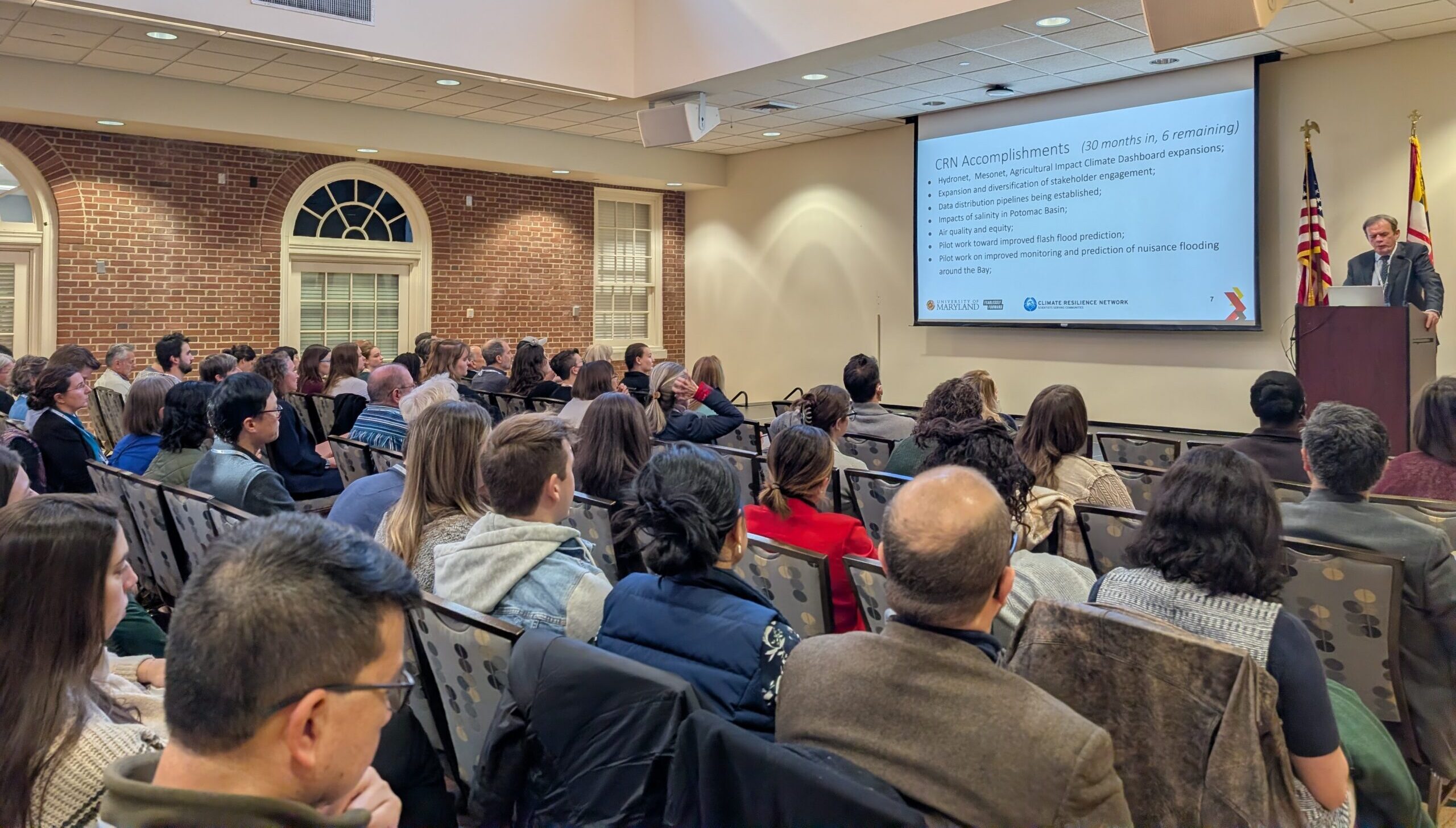
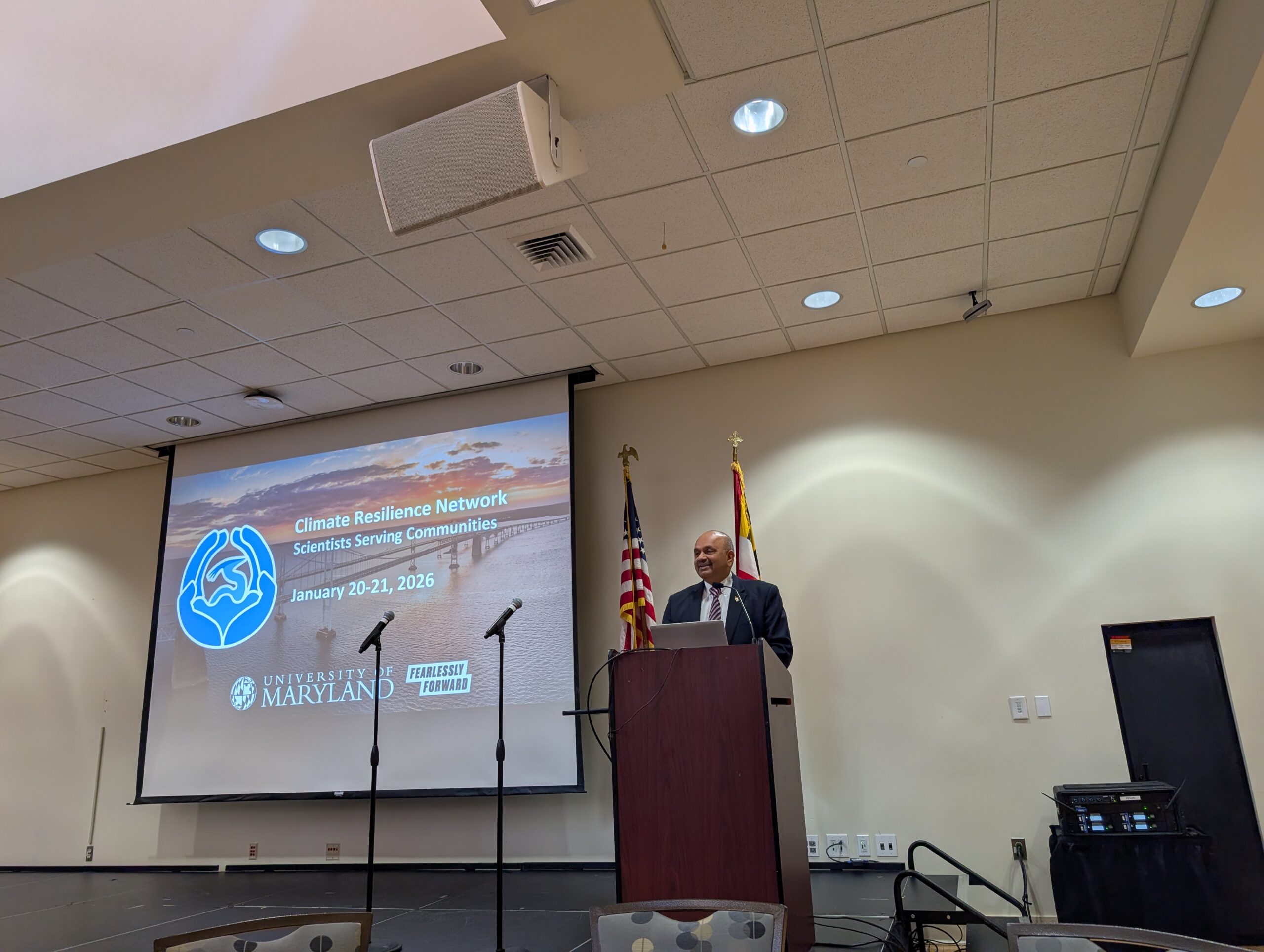
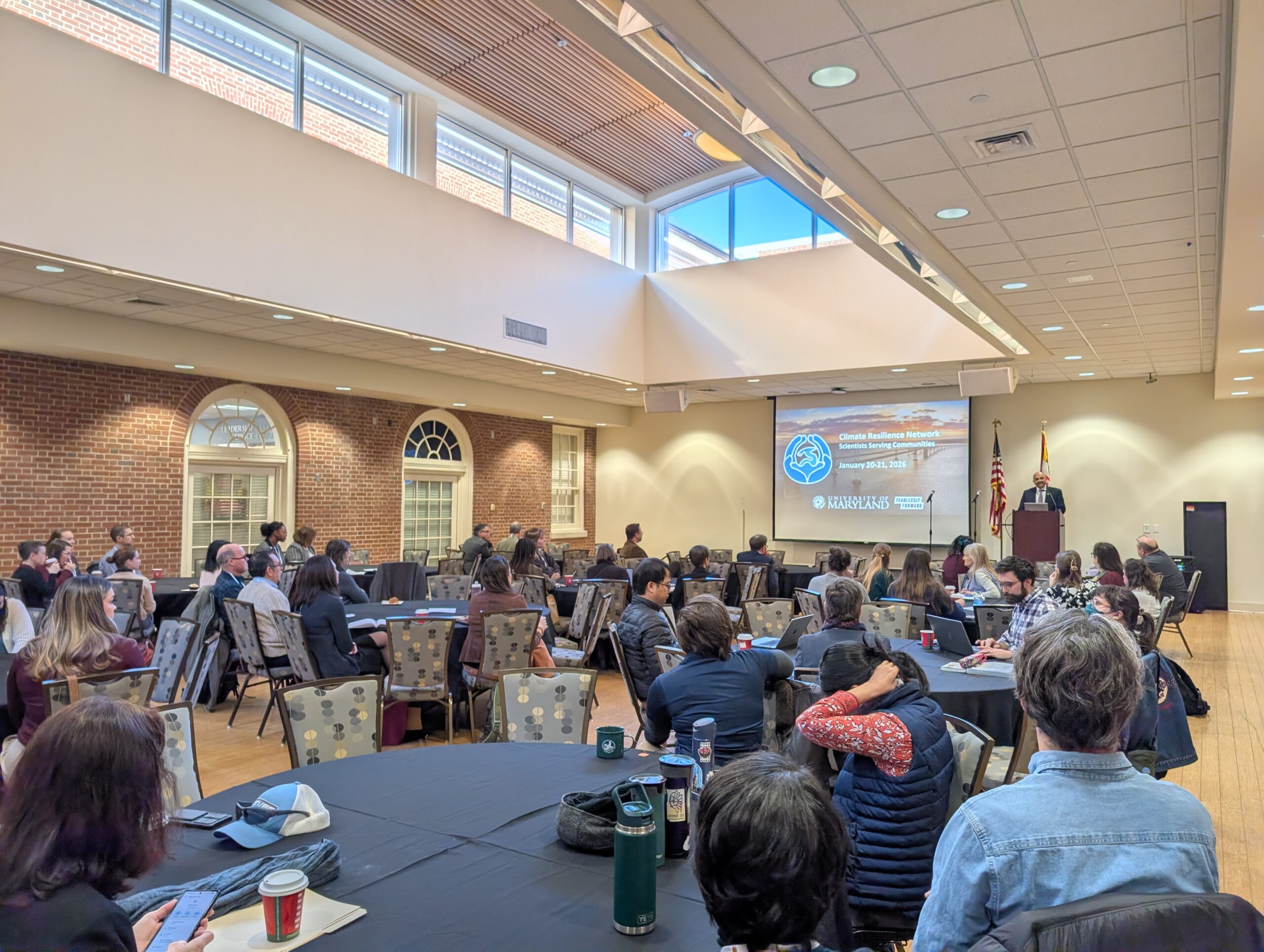
Lars Peter Riishojgaard gives the Introduction to the Climate Resilience Network. Photo by Cazzy Medley.
On January 20-21, University of Maryland’s Earth System Science Interdisciplinary Center (ESSIC) successfully hosted its third annual Scientists Serving Communities workshop, bringing together over 200 researchers and community leaders from across Maryland to advance climate resilience through collaboration, dialogue, and shared learning. Held at the Adele H. Stamp Student Union on the College Park campus, the event provided an inclusive, no-cost forum for community stakeholders to directly engage with University scientists and subject matter experts.
“With Scientists Serving Communities, we seek to bridge the gap between climate research and practical decision-making, said Lars Peter Riishojgaard, ESSIC Director, “Thanks to this collaboration between academia, government, and various business sectors, the University is now starting to deliver actionable science-based information that will benefit communities across Maryland.”
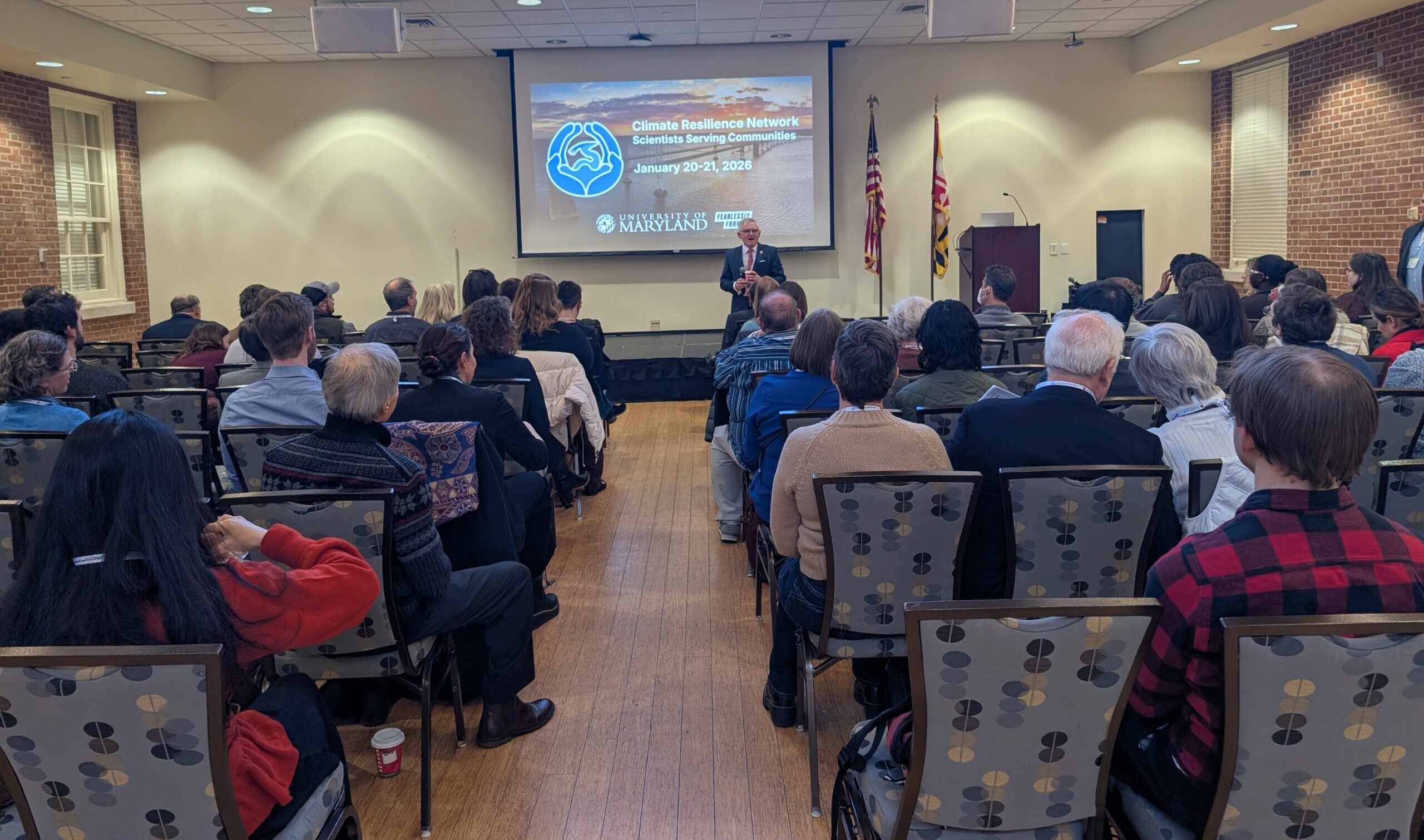
The workshop opened with remarks from Patrick O’Shea, University of Maryland (UMD) Vice President and Chief Research Officer, who emphasized the University’s dedication to building resilience through collaborative networks. Riishojgaard followed with an introduction to the Climate Resilience Network (CRN), a collaboration among ESSIC, Marine Estuarine Environmental Sciences Graduate Program, and UMD’s departments of Atmospheric and Oceanic Sciences, Geology, and Geographical Sciences to apply current research to local Maryland issues. In his talk, Riishojgaard emphasized the “Valley of Death,” or the gap between academic research and its practical application that the CRN seeks to bridge.
Pat O'Shea welcomes the audience to the university of Maryland. Photo by Cazzy Medley.
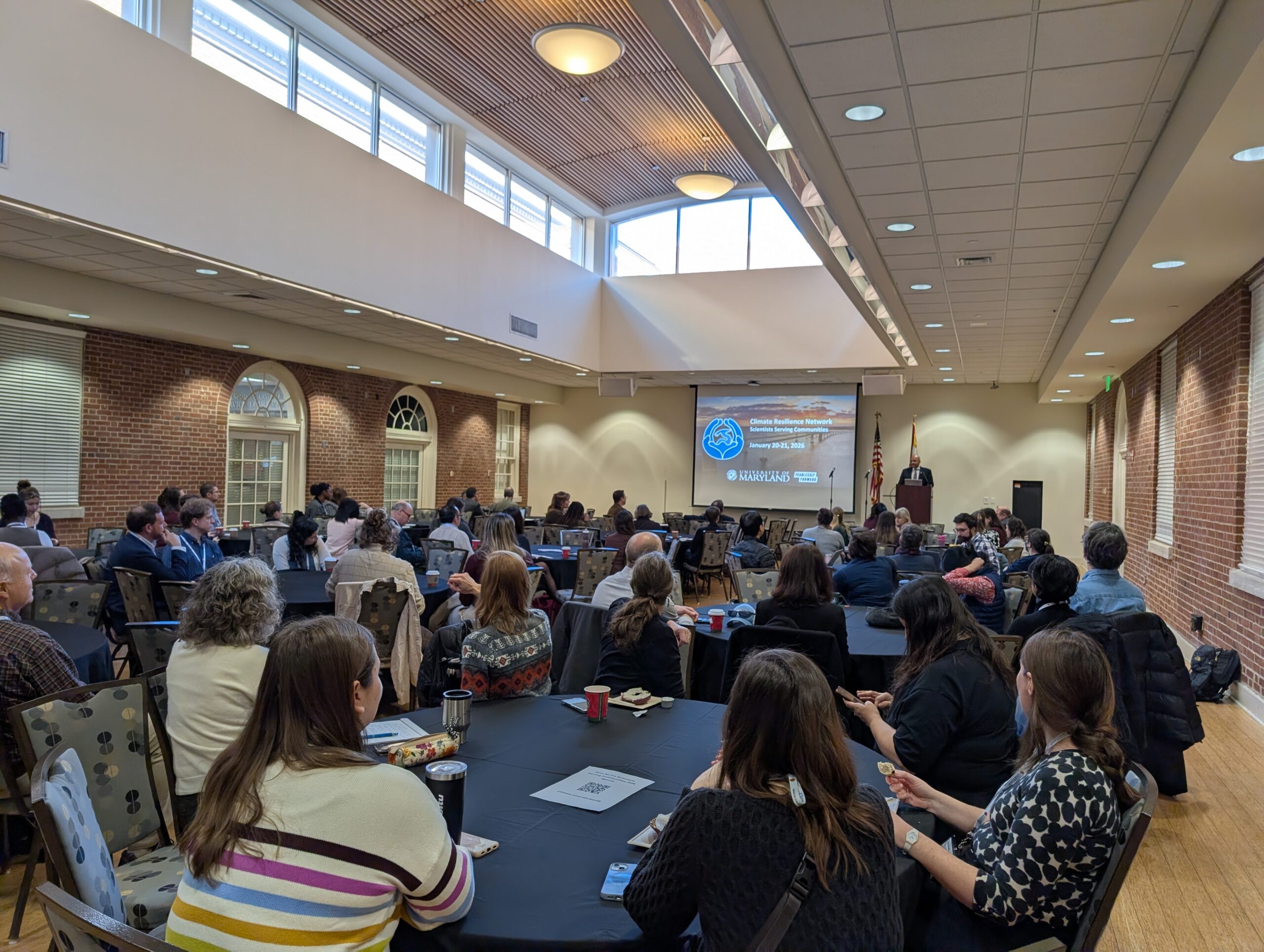
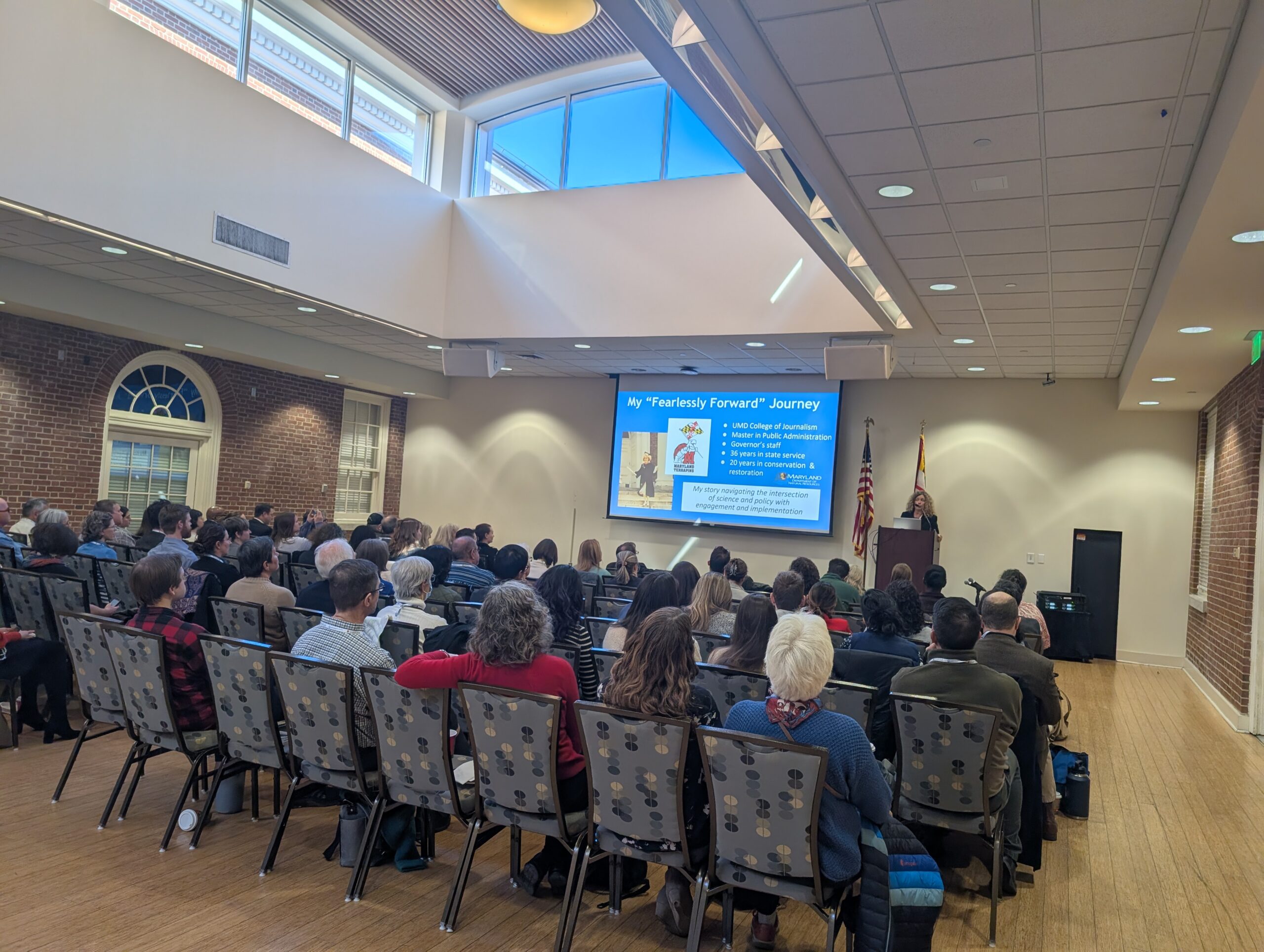
Kristen Saunders, Director of the Center for Watershed and Bay Resilience at the Maryland Department of Natural Resources, delivered the keynote address. She spoke about moving science beyond theoretical discussions and into practical applications, stressing the importance of engaging local communities and policymakers in meaningful ways to ensure research has real-world impact.
Amitabh Varshney, Dean of the College of Computer, Mathematical, and Natural Sciences, opened the second day of the workshop highlighting the significance of interdisciplinary approaches to tackling climate resilience. The conference’s plenary session was given by Christine Hagan, Gloria Aparicio Blackwell, and Jazz Lewis of UMD’s Office of Federal Relations. They provided insights into the federal, state, and county landscape and opportunities for research-informed policy engagement.
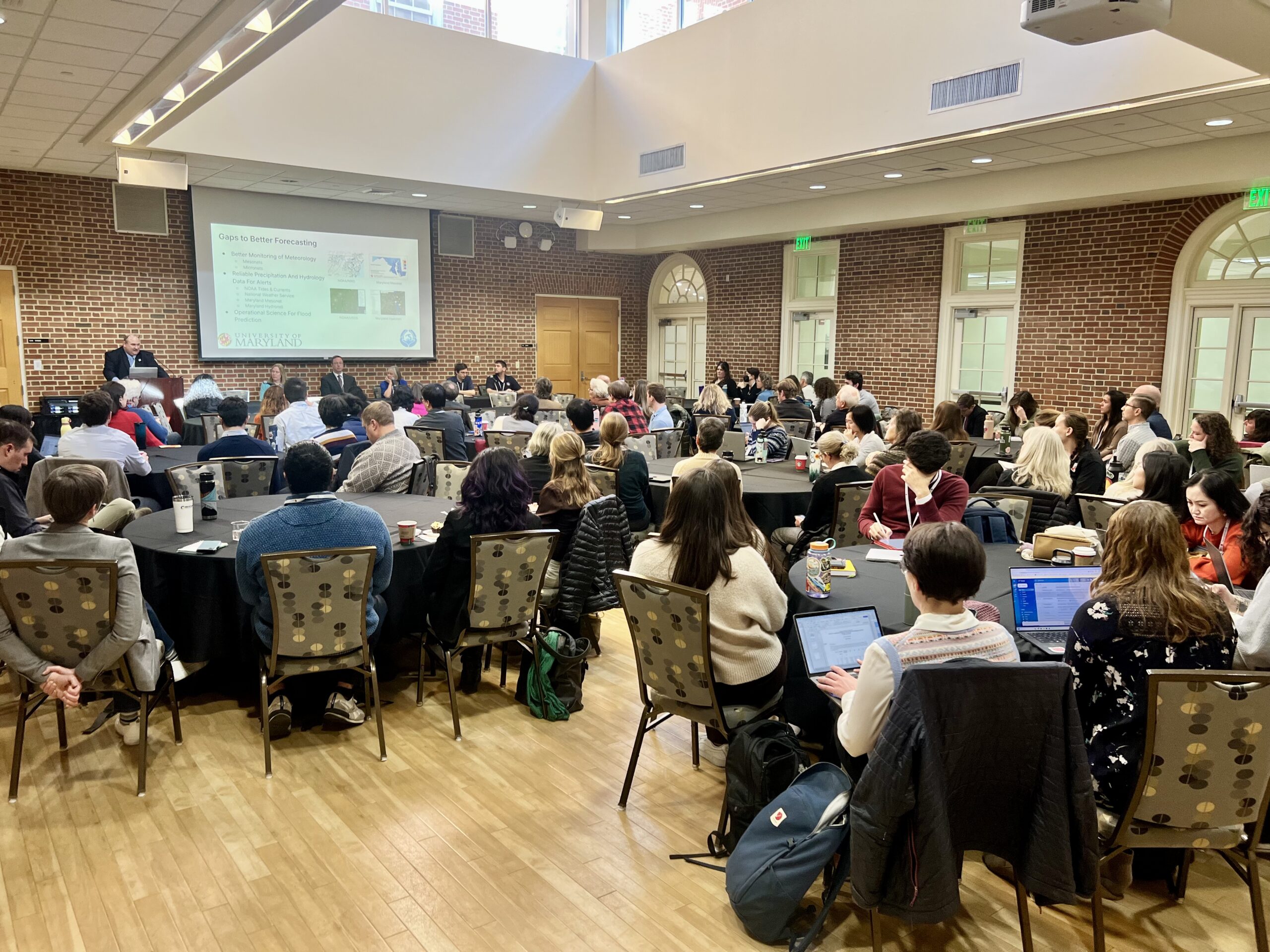
The bulk of the workshop featured a series of moderated breakout sessions organized around twelve key environmental and climate-related topics relevant to communities throughout the state. Each session was hosted by a panel of 3-5 experts, ranging from academic, state, and federal researchers to practitioners. Many organizations were represented, including NOAA, NASA Goddard Space Flight Center, the Chesapeake Stormwater Network, the Maryland Department of Natural Resources, and the Resilience Authority of Charles County.
Panelists set the stage for the session, while attendees shared local challenges and identified opportunities where scientific research could more effectively support climate adaptation and resilience efforts. These open forums allowed scientists to better understand on-the-ground challenges and enabled stakeholders to gain insight into emerging research and tools.
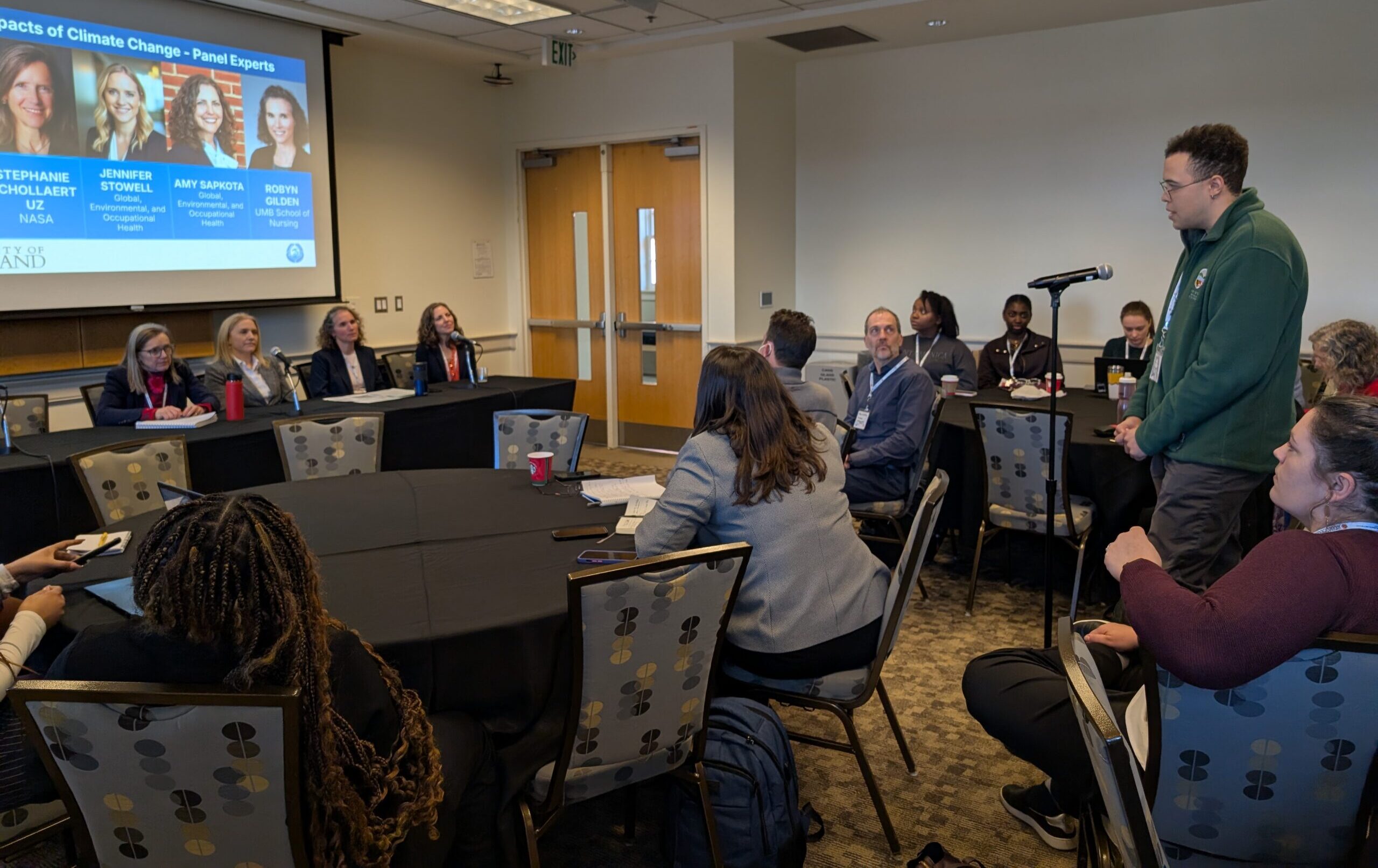
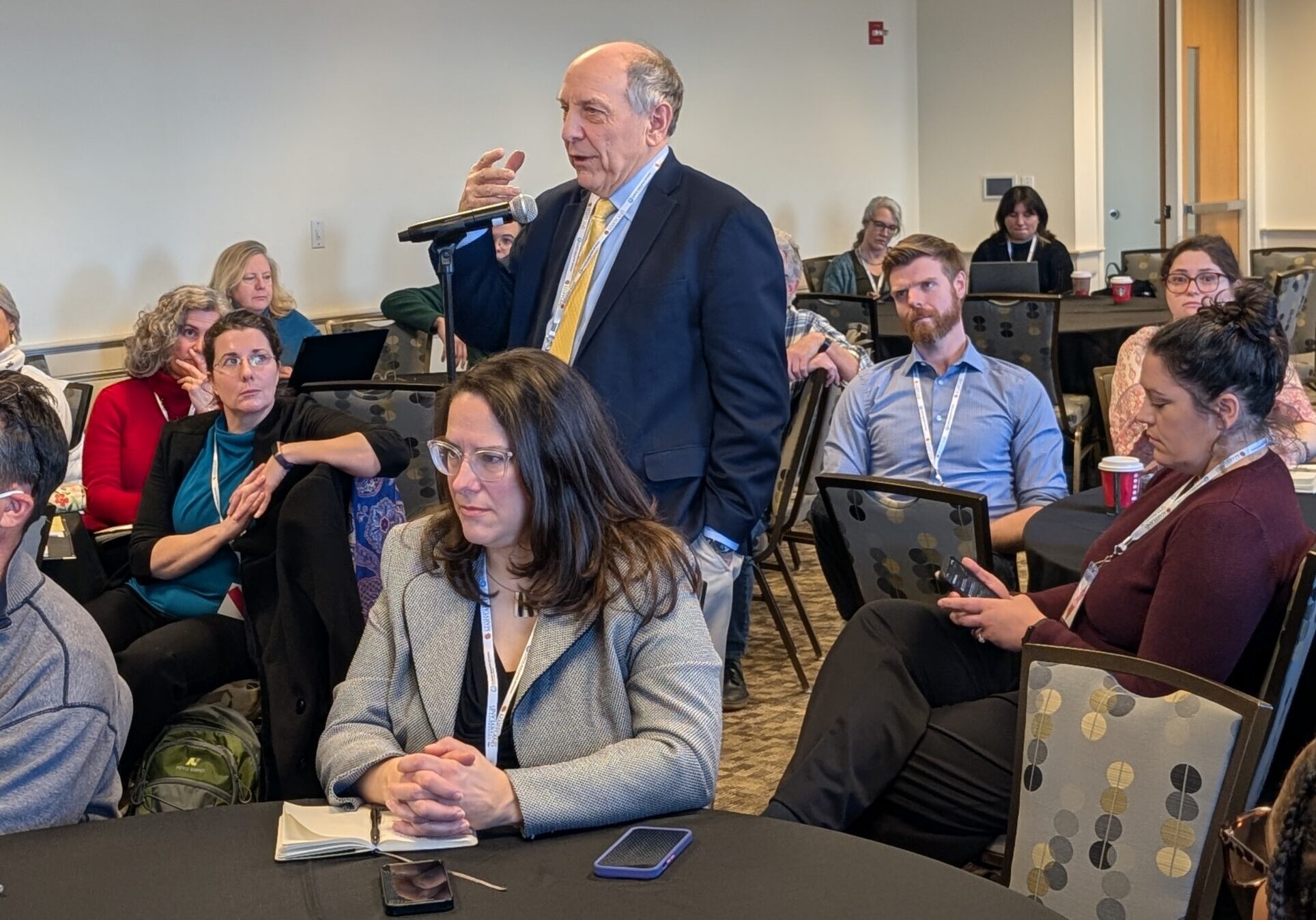
An audience member poses a question to the Health Impacts of Climate Change panel. Photo by Cazzy Medley.
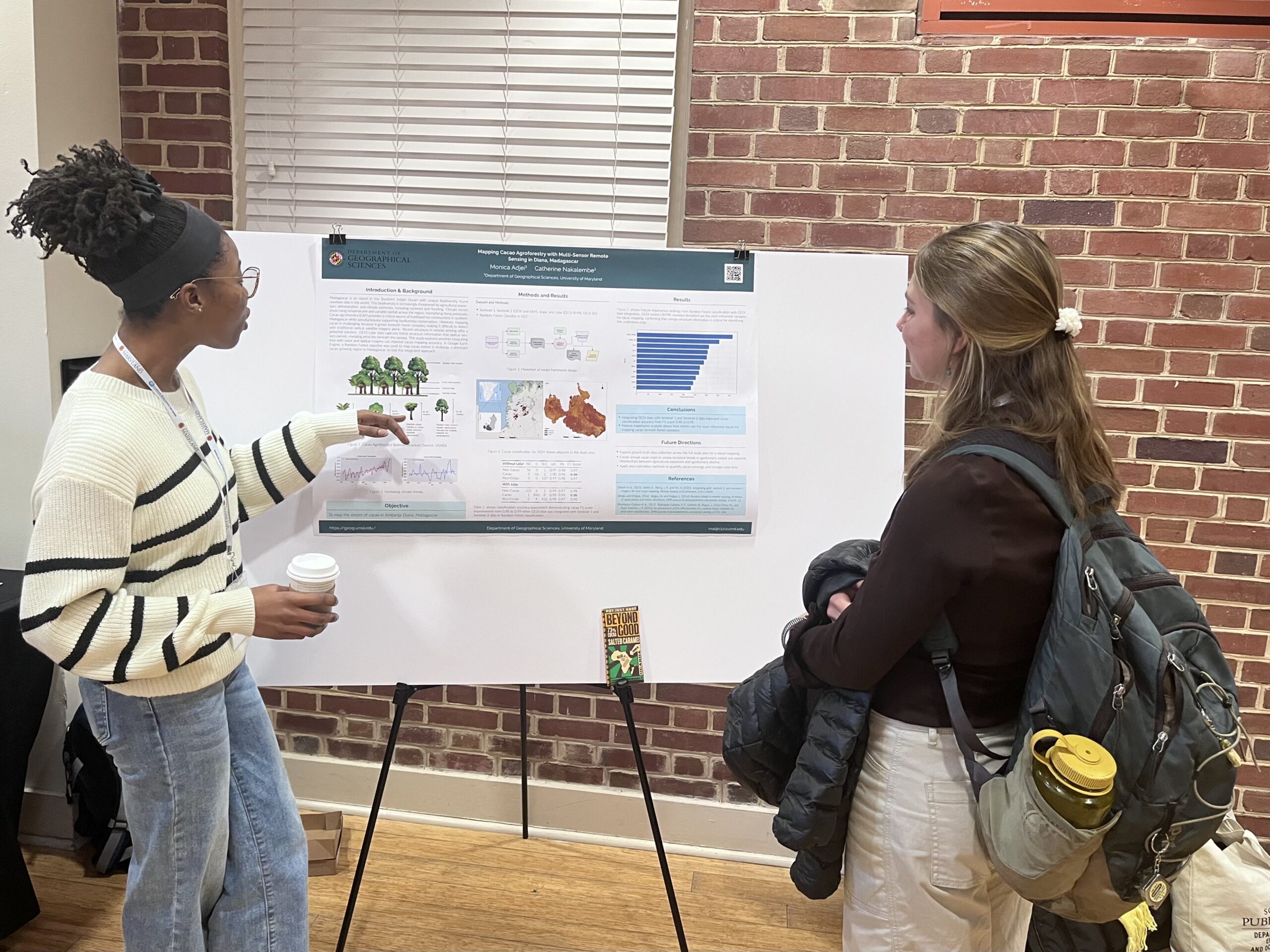
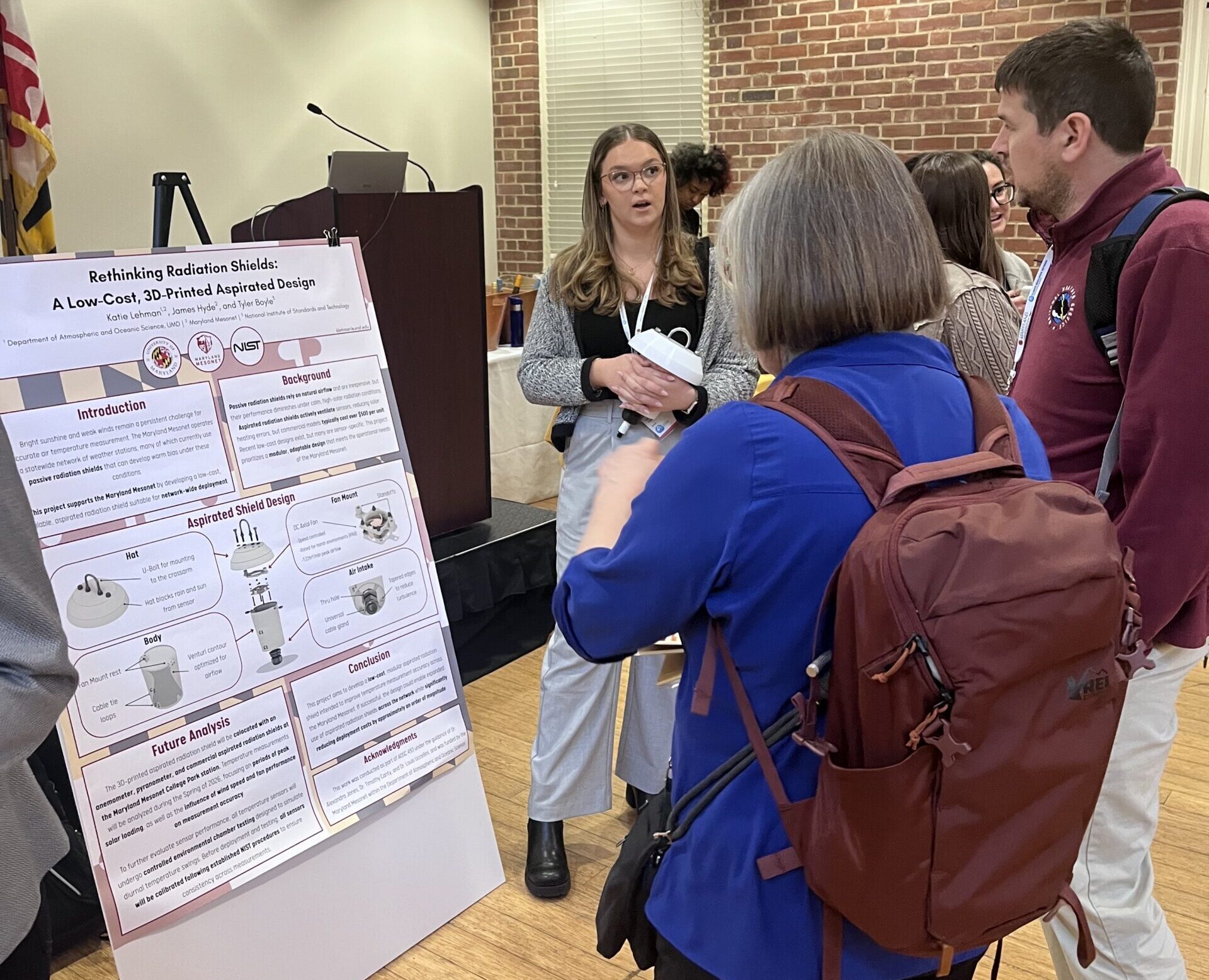
The event also included a reception and poster session, featuring work from CRN interns. Posters and abstracts are available on the conference website.
After the workshop, the conference organizing committee put together a publicly-available Final Summary Prelimary Document to summarize the findings, recommendations, and potential actions for each of the twelve topics discussed. Throughout the sessions, attendees and panelists stressed the need for better communication, improved data collection and visualization, and cross-disciplinary collaboration to tackle climate challenges. A final report is being prepared and will be shared on the conference website at a later date.
By fostering meaningful dialogue and collaboration, ESSIC continues to bridge the gap between research and practice, reinforcing the University of Maryland’s commitment to serving communities and advancing climate resilience throughout the state.
Earth System Science Interdisciplinary Center (ESSIC) is the lead institute for the Climate Resilience Network. ESSIC is home to more than 200 scientists working across disciplines including weather, climate, ecology, and agriculture. The center operates within the College of Computer, Mathematical and Natural Sciences (CMNS) at the University of Maryland and maintains strong affiliations with the Colleges of Behavioral and Social Sciences and the Marine Estuarine Environmental Sciences Graduate Program through its interdisciplinary partnerships.
Full Conference Gallery
Day 2 began with opening remarks by CMNS Dean Amitabh Varshney.
Photo by Cazzy Medley
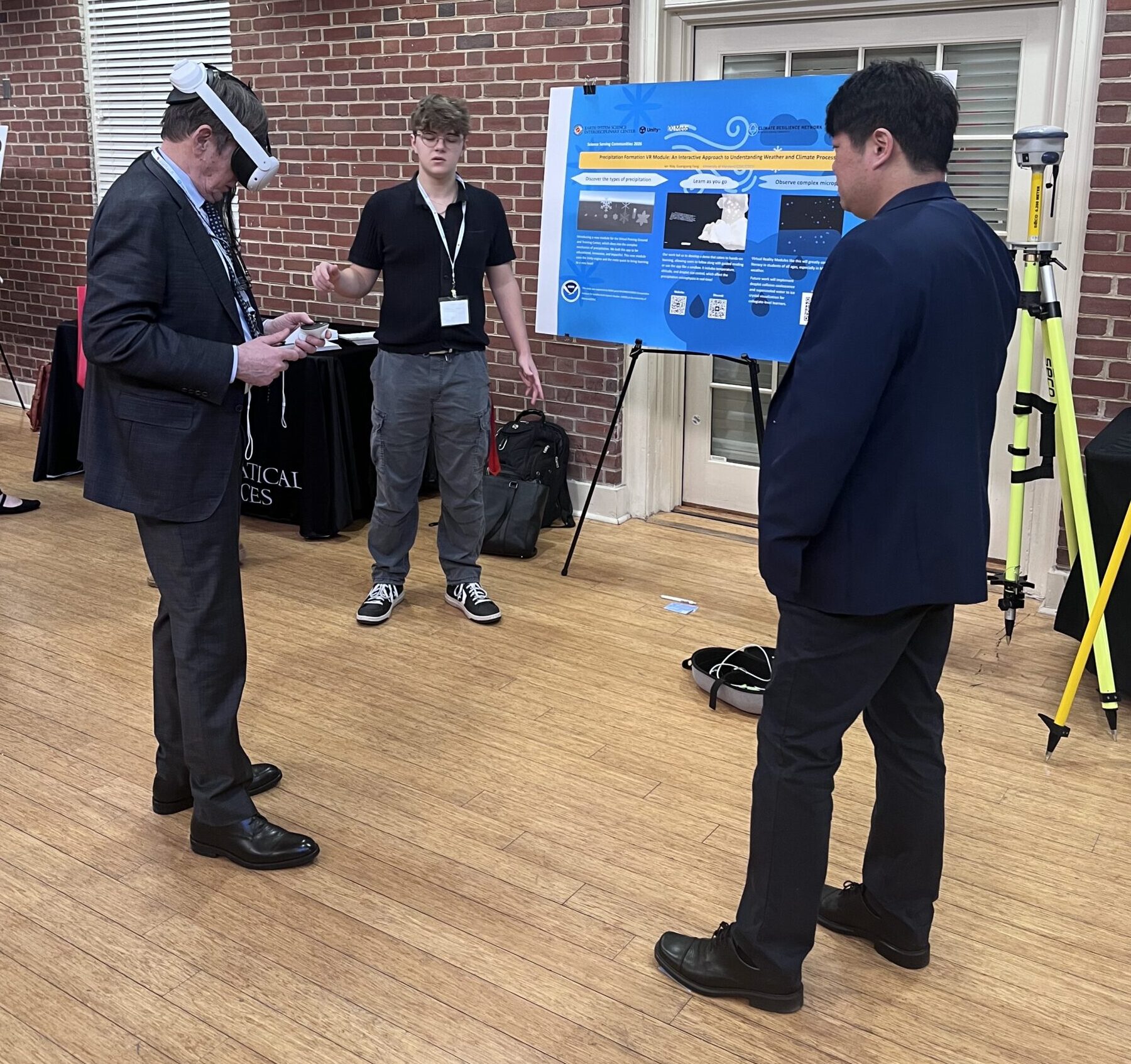
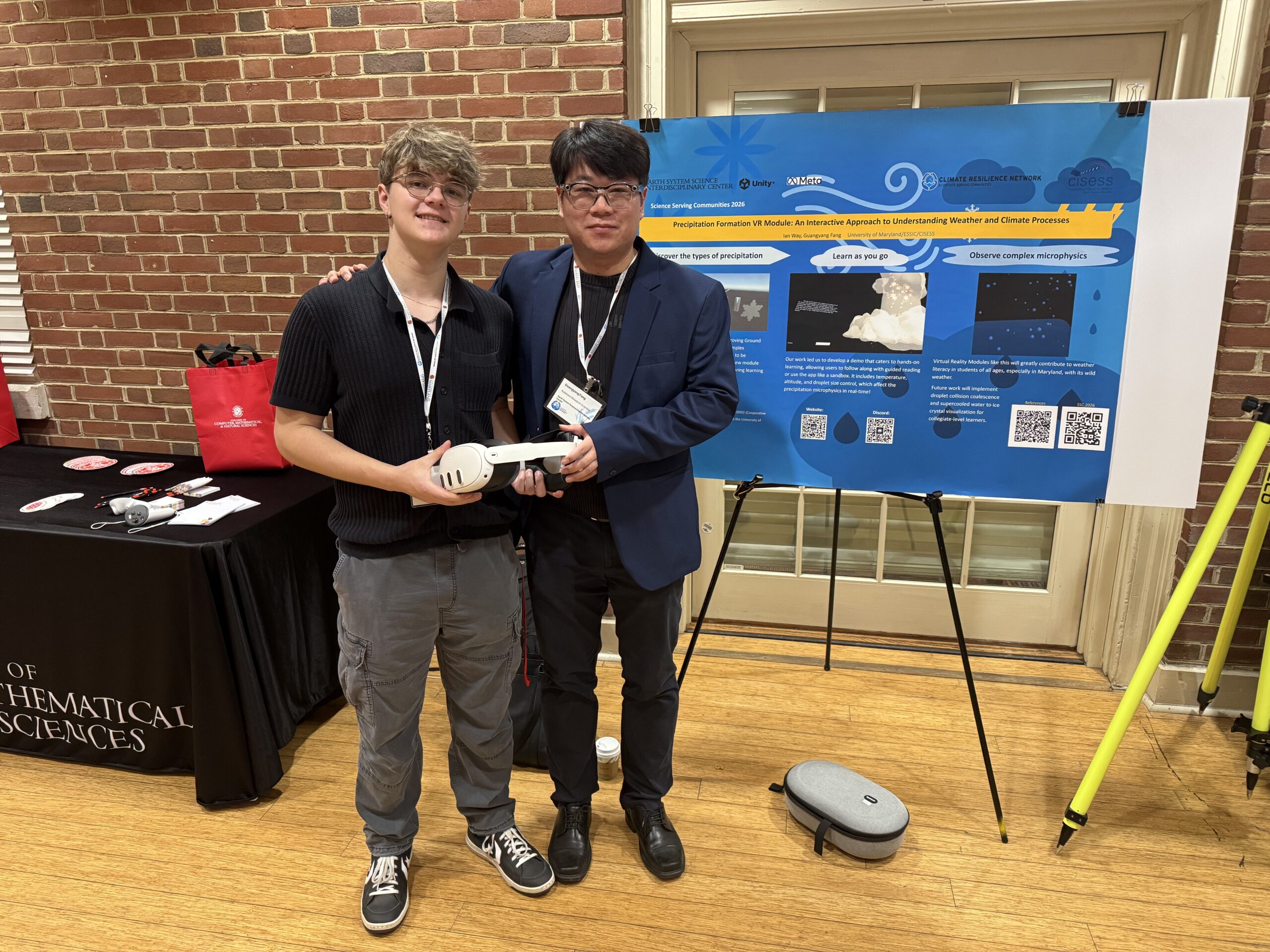
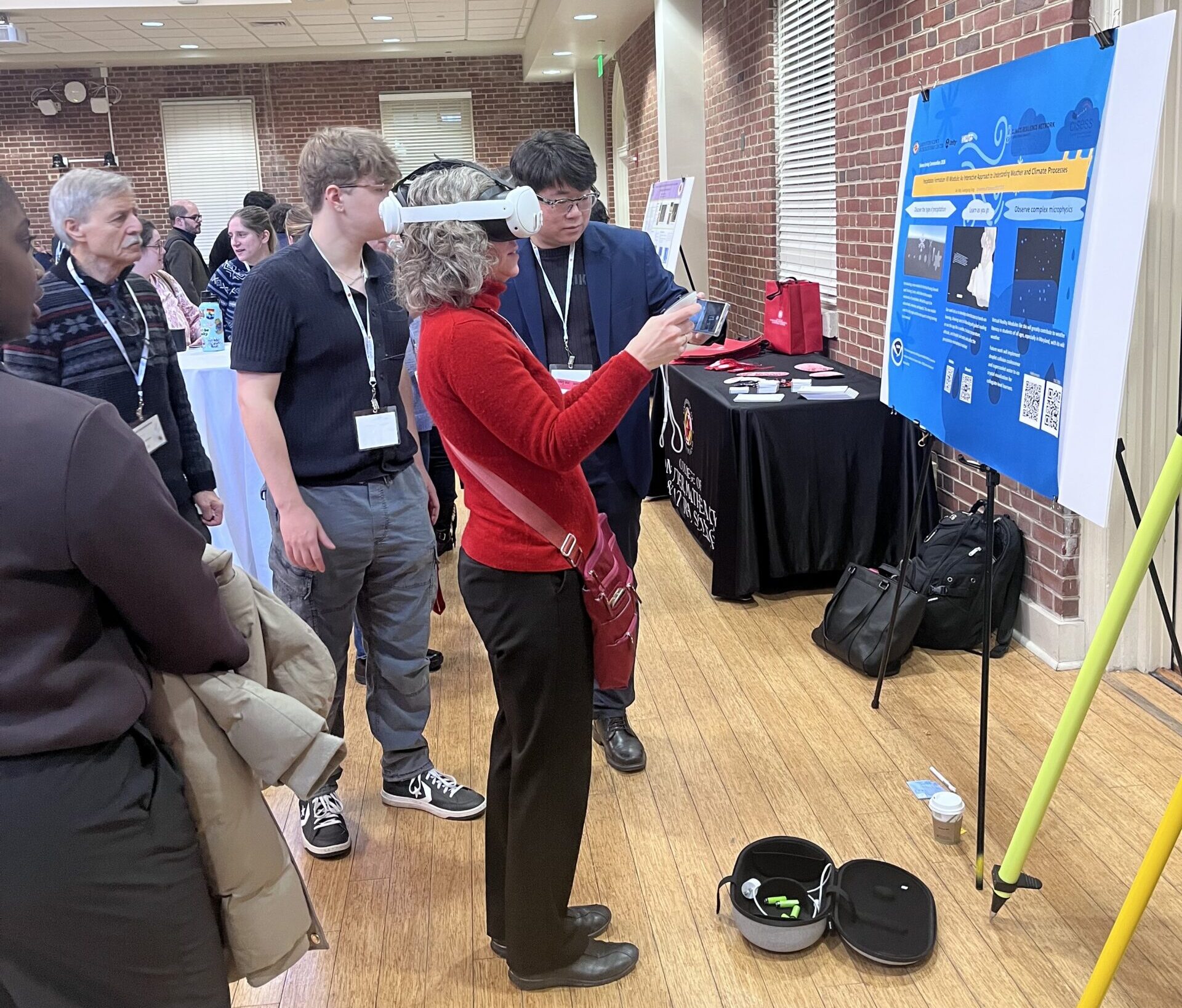
Lars Peter Riishojgaard tries the VR activity with Ian Way and Guangyang Fang. Photo by Kate Cooney.
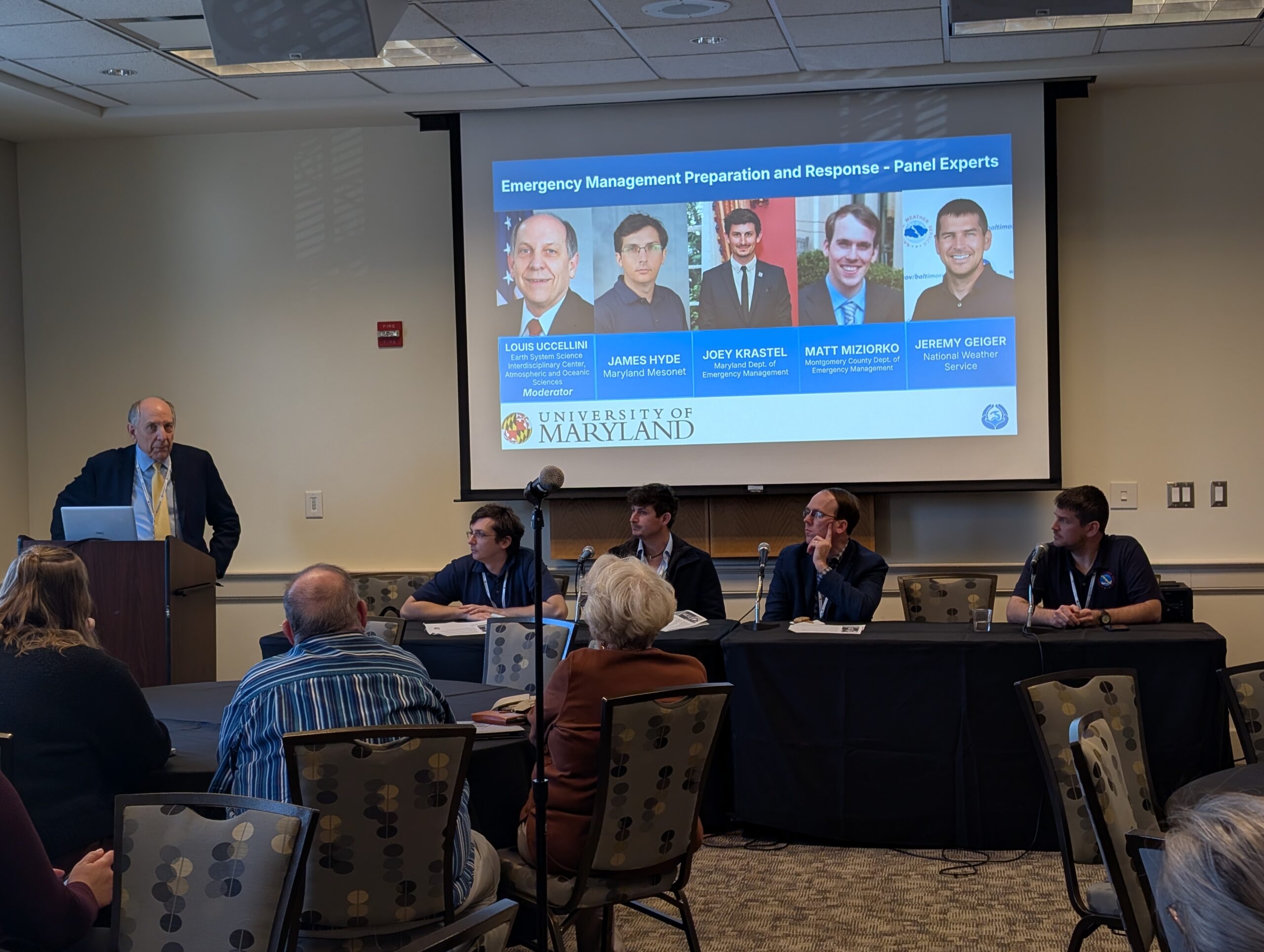
The "Emergency Management Preparation and Response" session was moderated by Louis Uccellini. Panelists - James Hyde, Joey Krastel, Matt Miziorko, Jeremy Geiger. Photo by Cazzy Medley
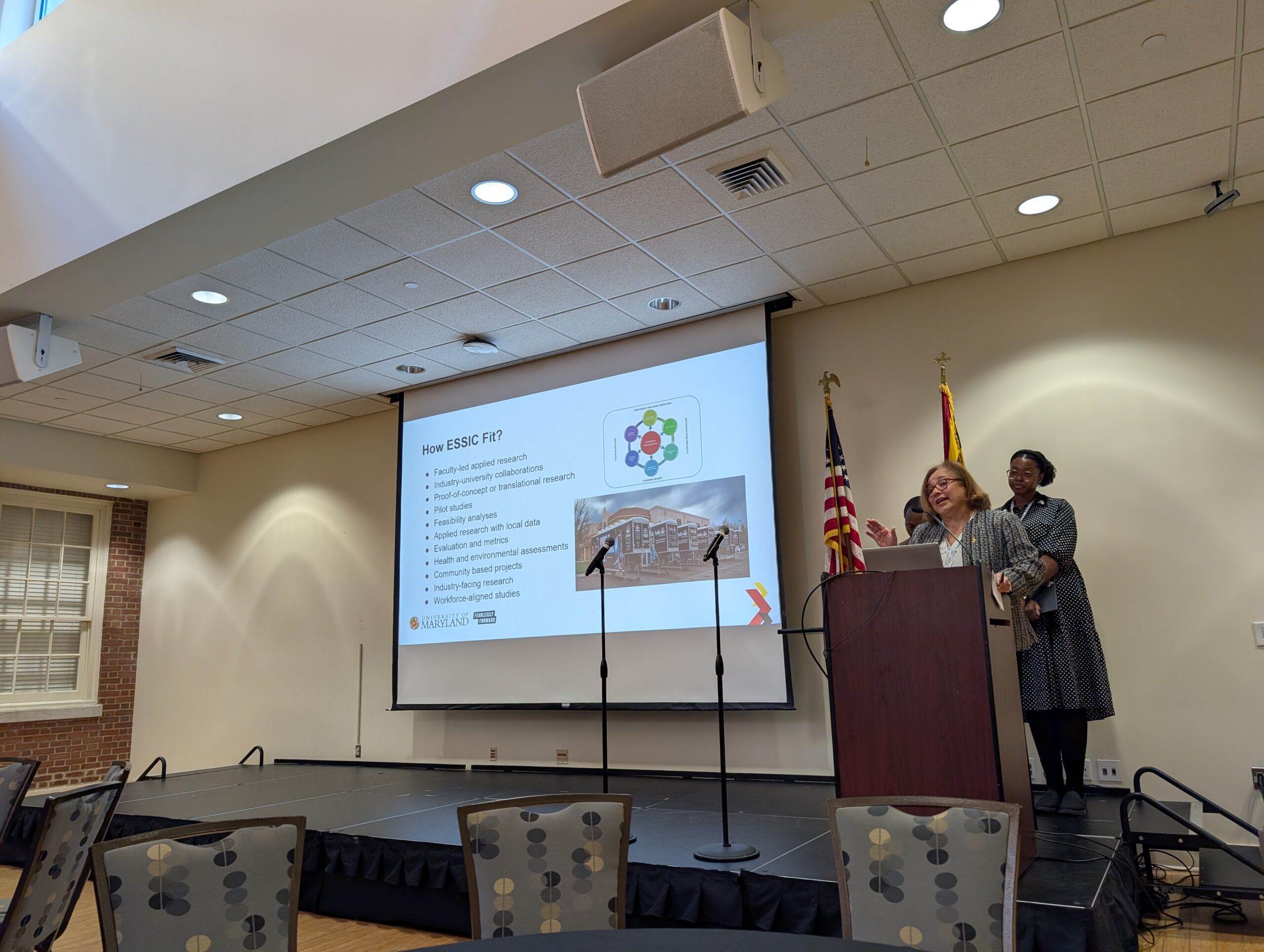
Day 2's Plenary session was "Updates from the Office of Government Relations". Presented by Jazz Lewis, Christine Hagan, and Gloria Blackwell. Pictured: Gloria Blackwell. Photo by Cazzy Medley
Photo by Cazzy Medley
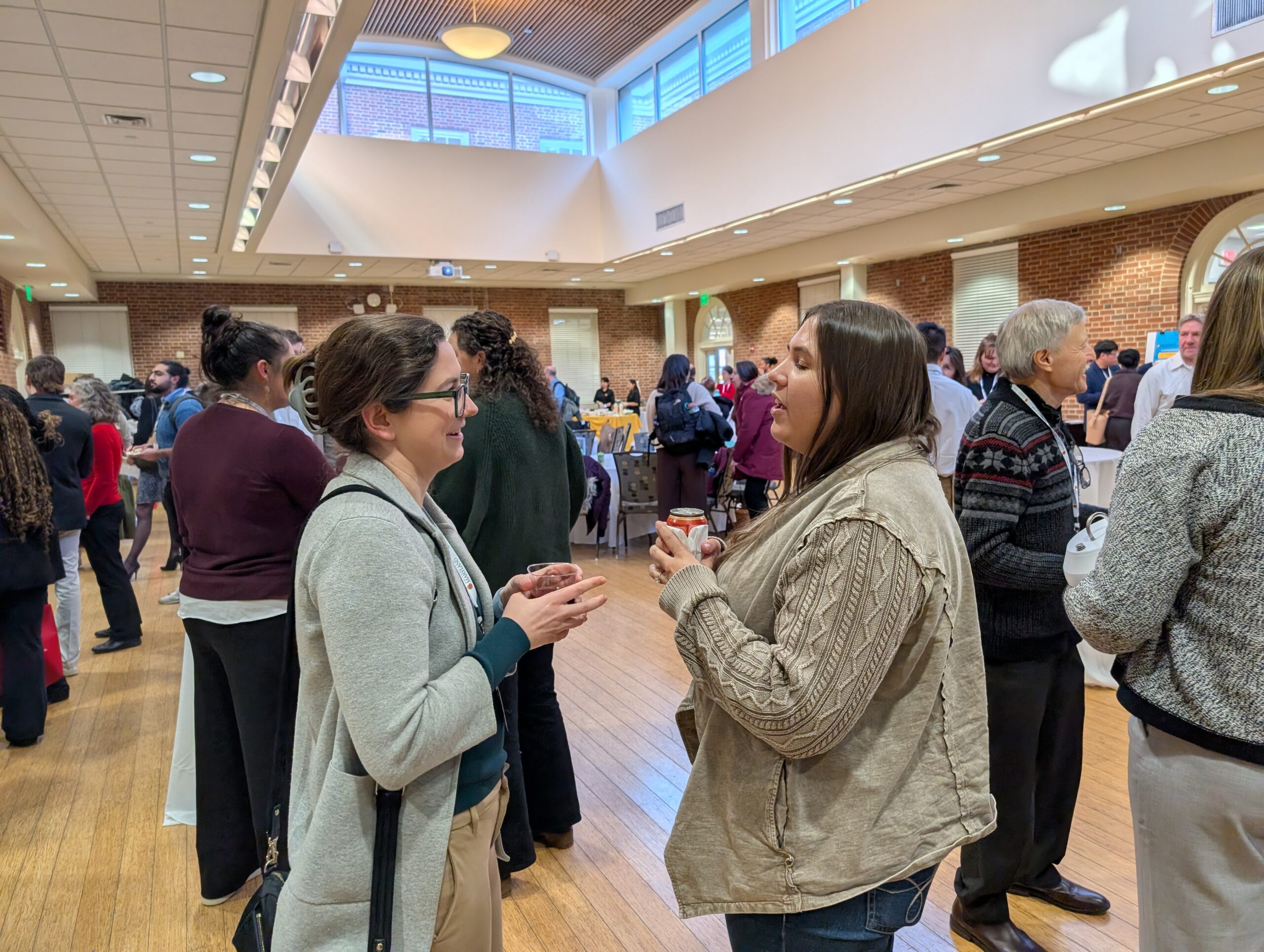
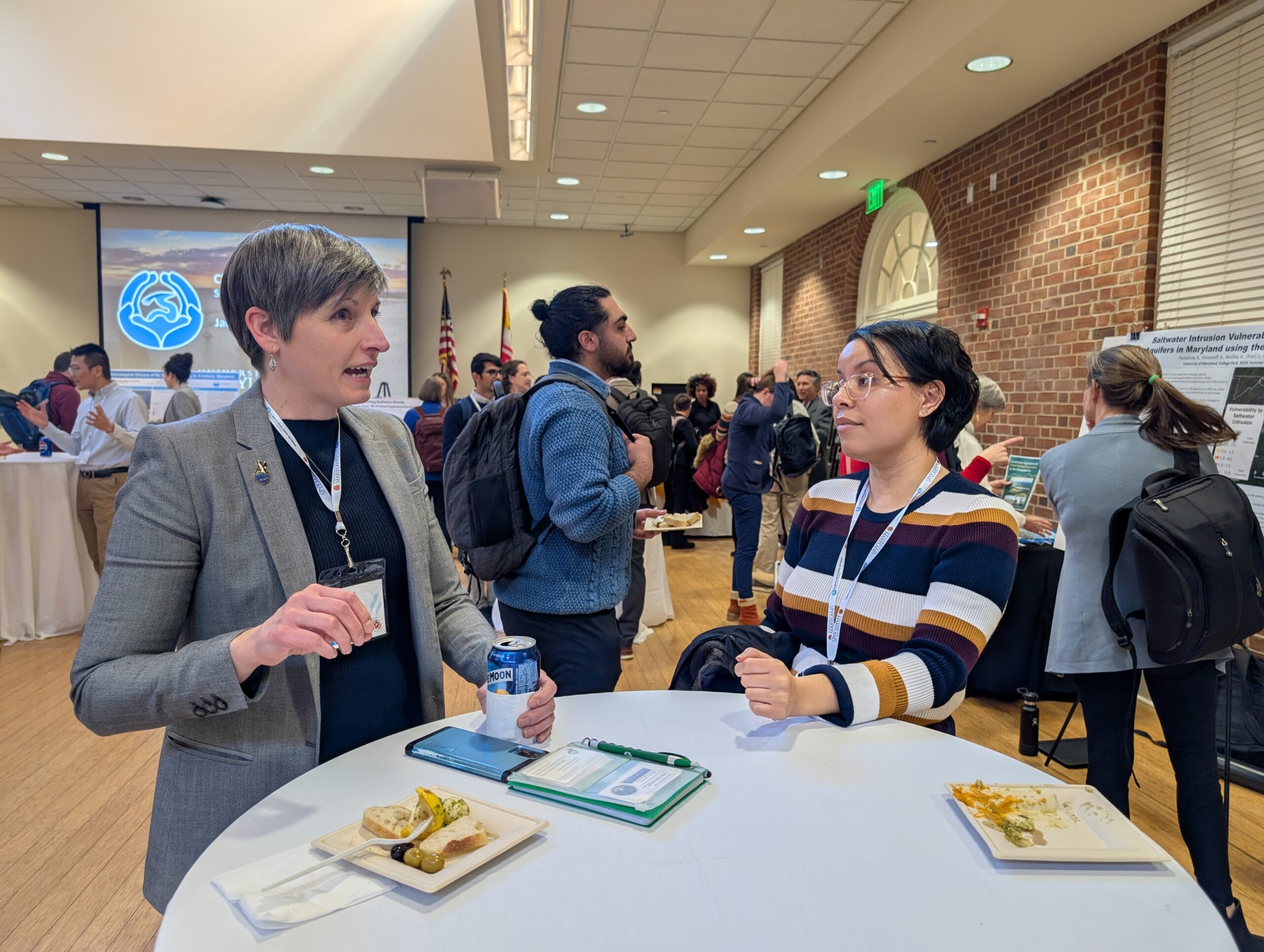
Attendees networked during the reception. Photo by Cazzy Medley.
Student Monica Adjei presents her work at the poster session. Mentor: Catherine Nakalembe. Photo by Kate Cooney
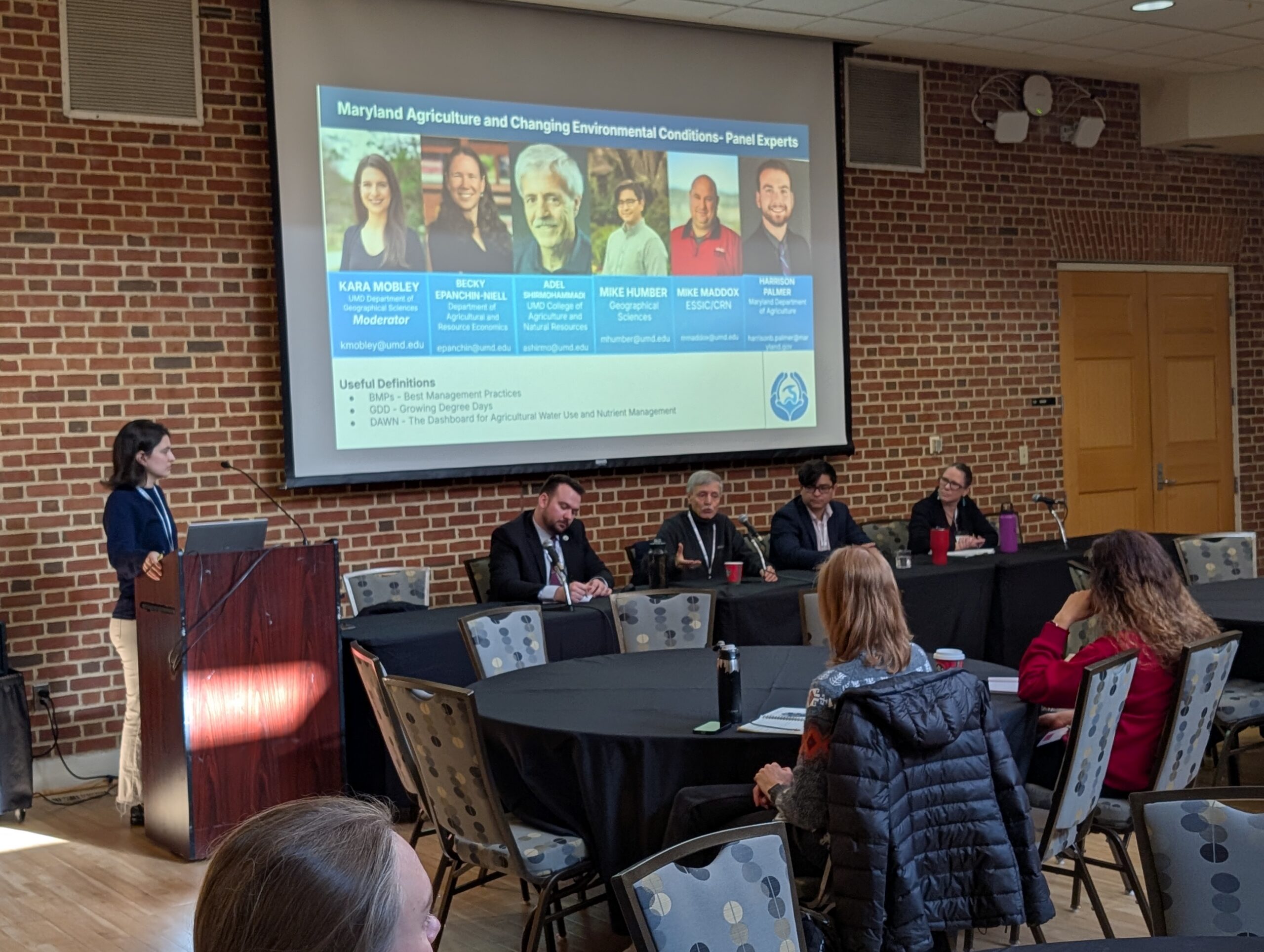
The "Maryland agriculture and changing environmental conditions" session was moderated by Kara Mobley. Panelists - Harrison Palmer, Adel Shirmohammadi, Michael Humber, Becky Epanchin-Neill. Photo by Jennifer Collins.
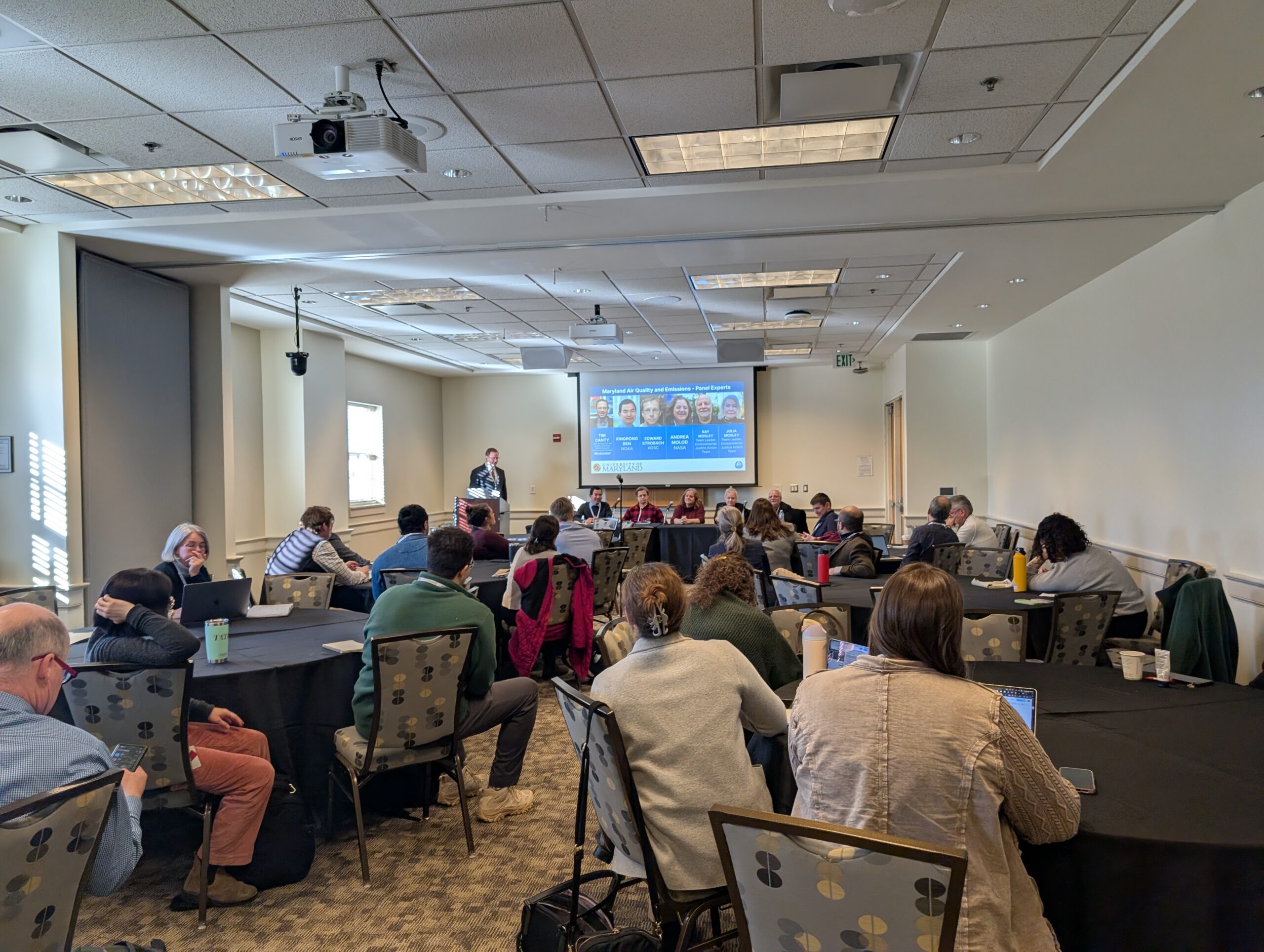
The "Maryland air quality and emissions" session was moderated by Tim Canty. Panelists - Xinrong Ren, Edward Strobach, Ray Mosley, Julia Mosley, Andrea Molod.
Photo by Cazzy Medley
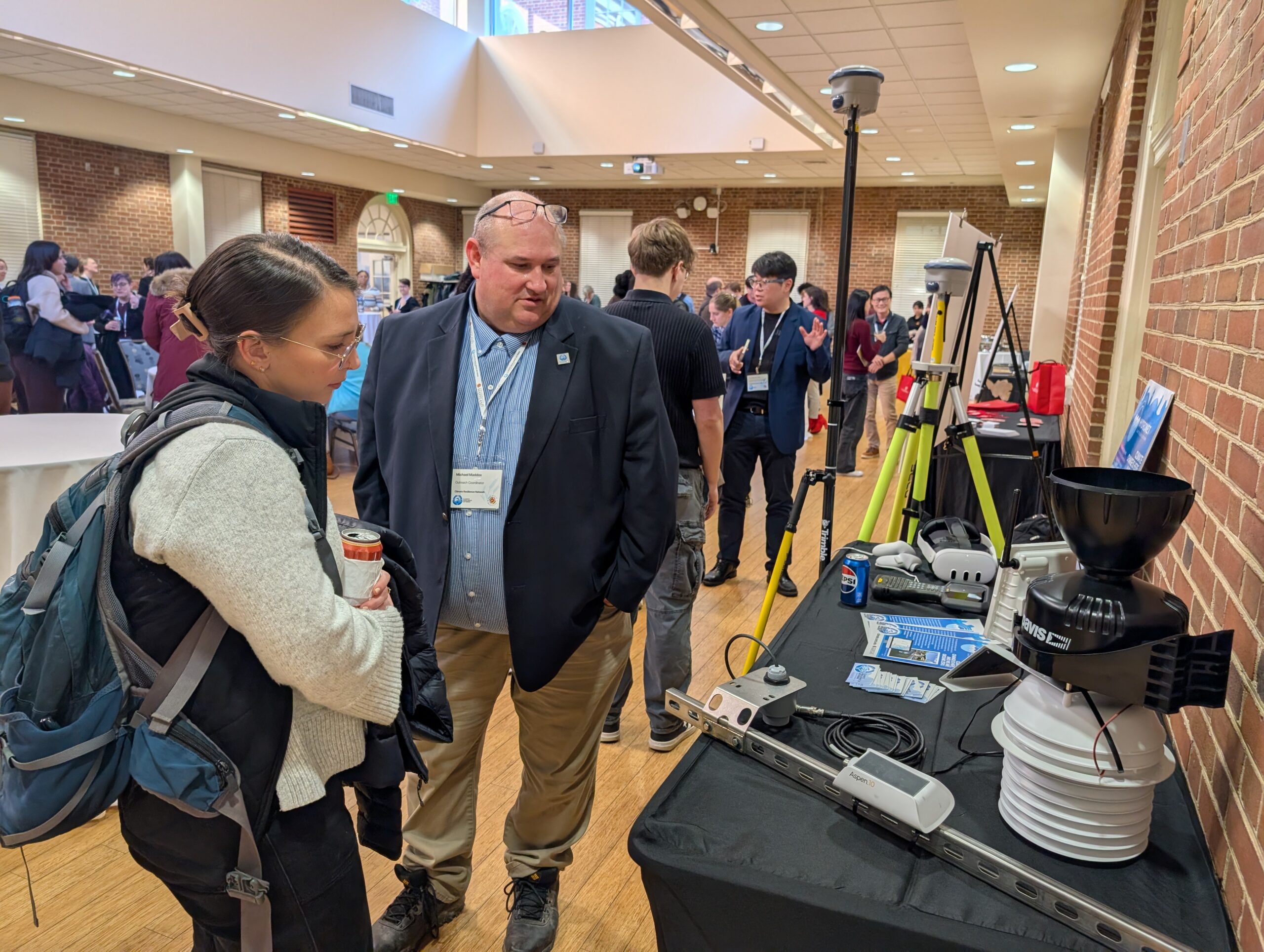
Mike Maddox presented the DAWN project during the reception. Photo by Cazzy Medley
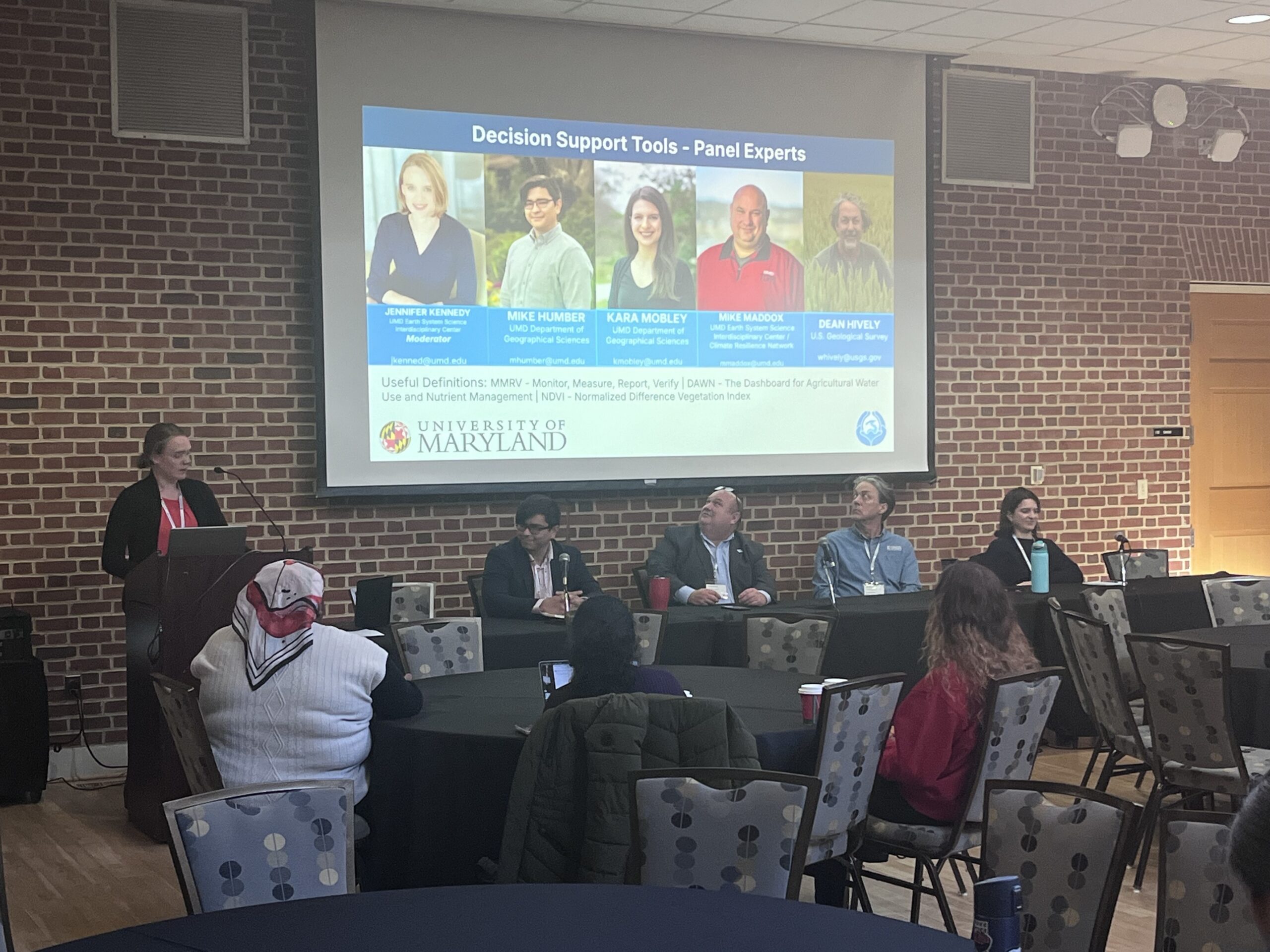
Decision Support Tools
Moderator - Jennifer Kennedy. Panelists - Mike Humber, Mike Maddox, Kara Mobley, Dean Hively
Photo by Kate Cooney
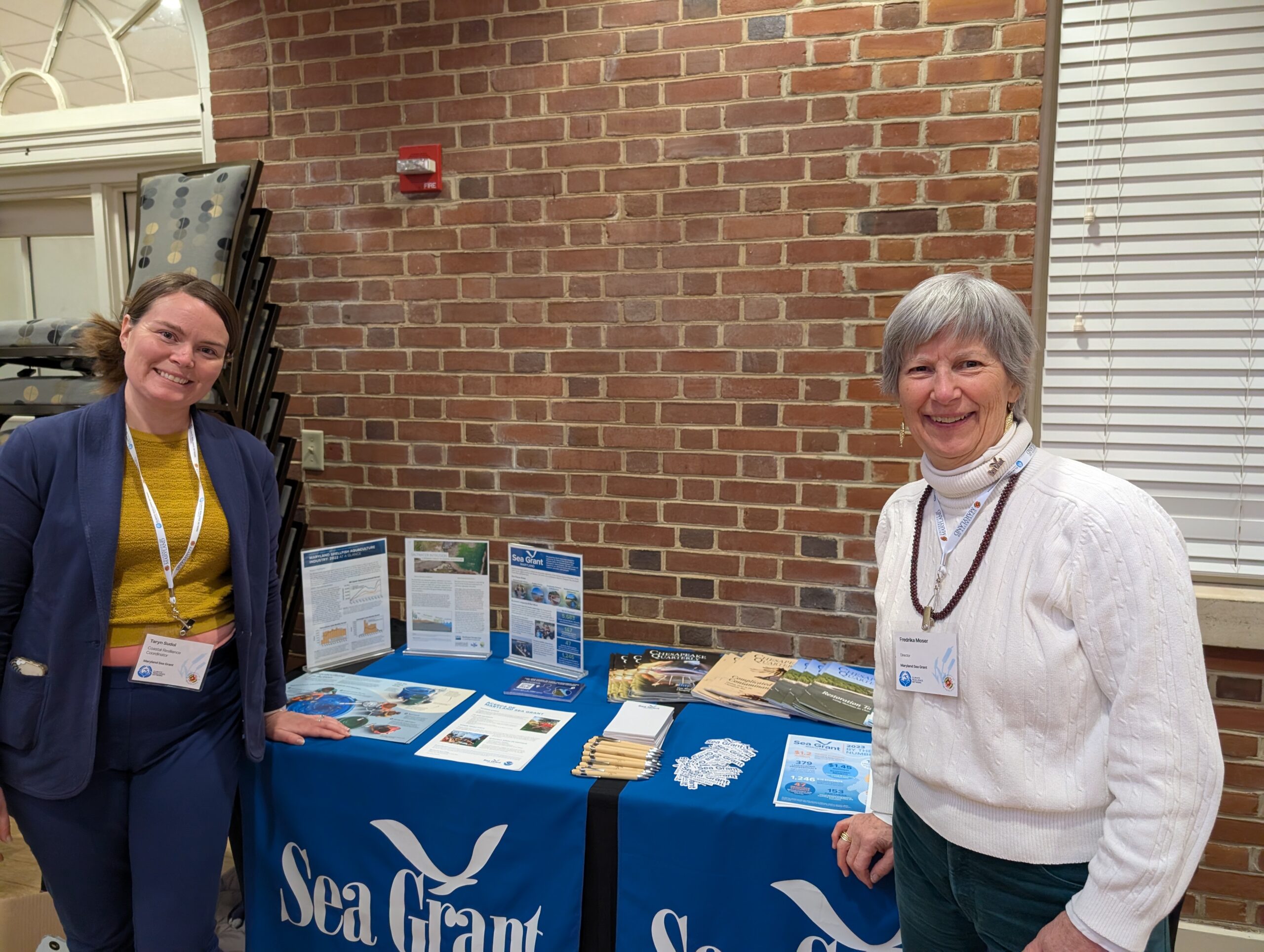
Sea Grant also had a booth at the reception.
Photo by Cazzy Medley
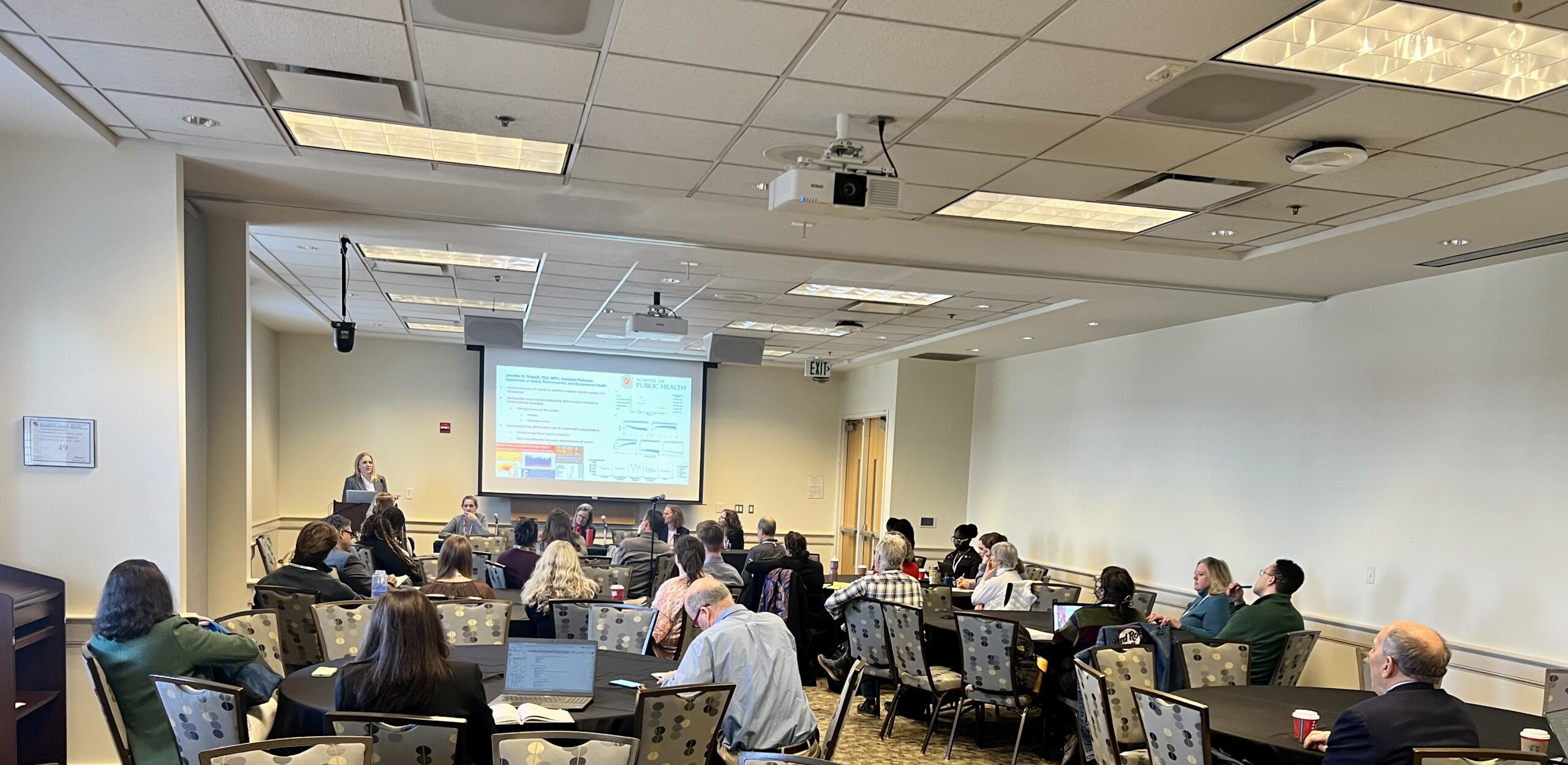
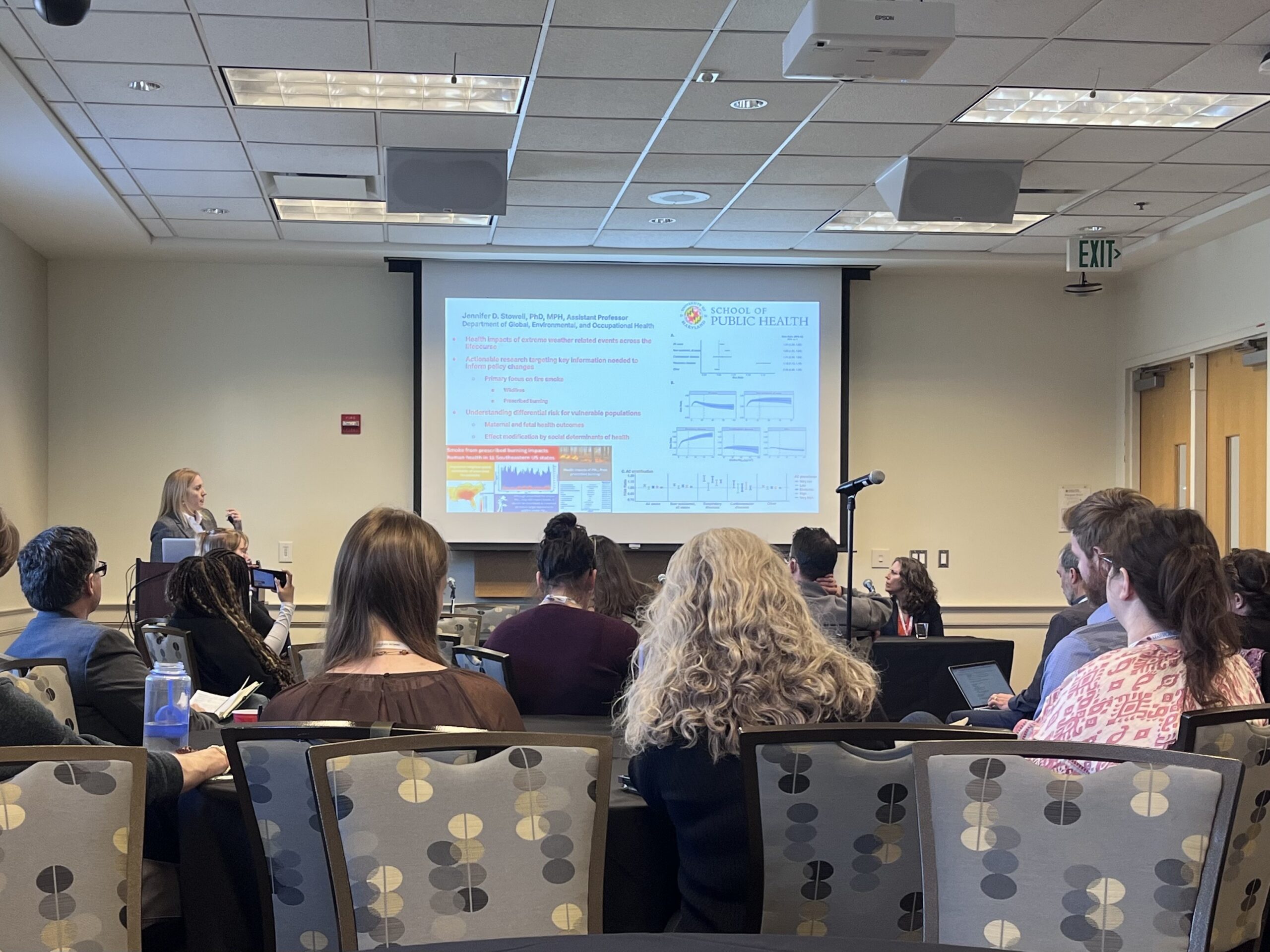
The session "Health impacts of climate change" was moderated by Katharine Stover. Panelists - Amy Sapkota, Stephanie Schollaert Uz, Robyn Gilden.
Photo by Jennifer Collins
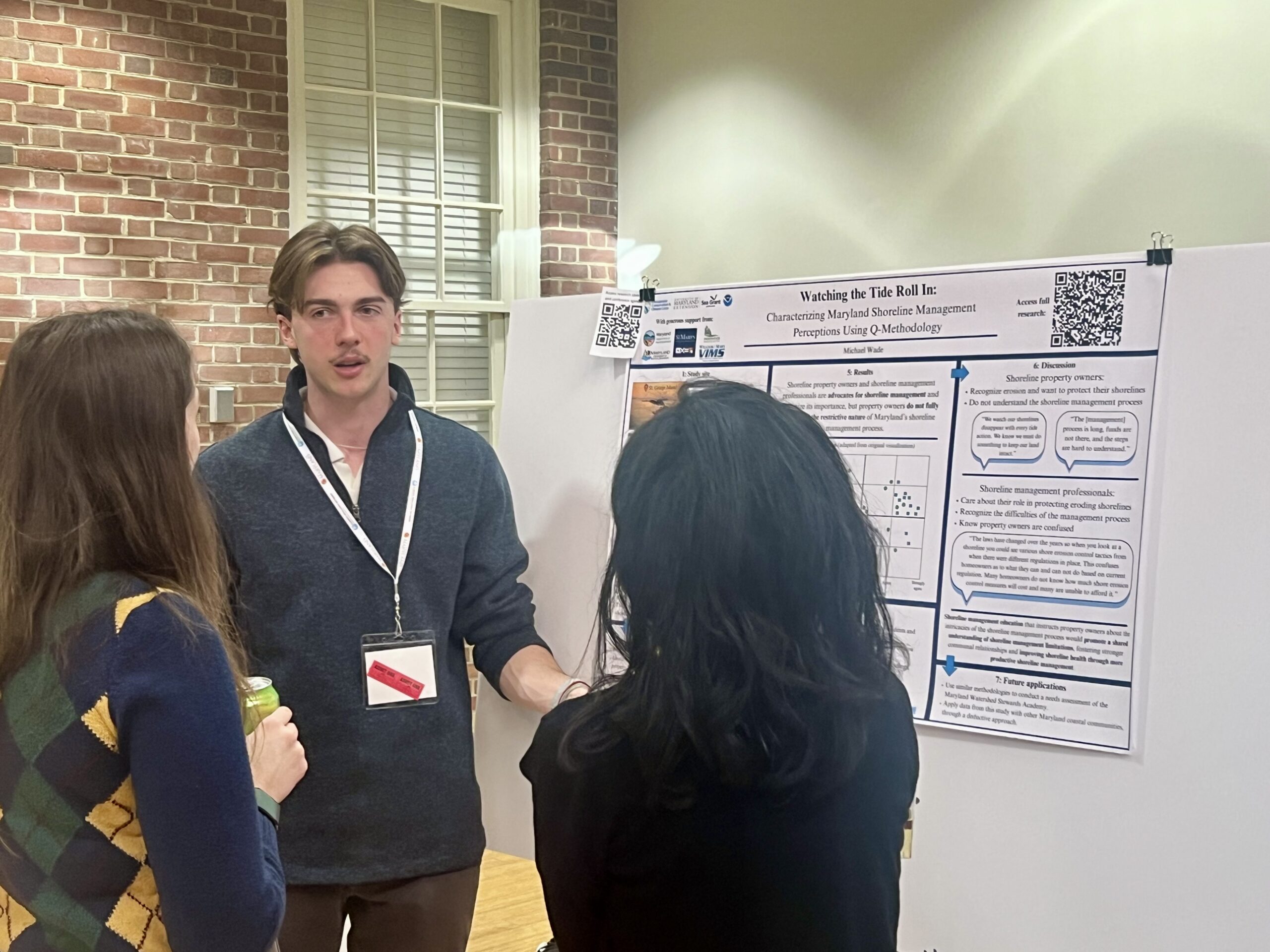
Student Michael Wade presents his work at the poster presentation. Mentor: Parisa Rinaldi. Photo by Jennifer Collins.
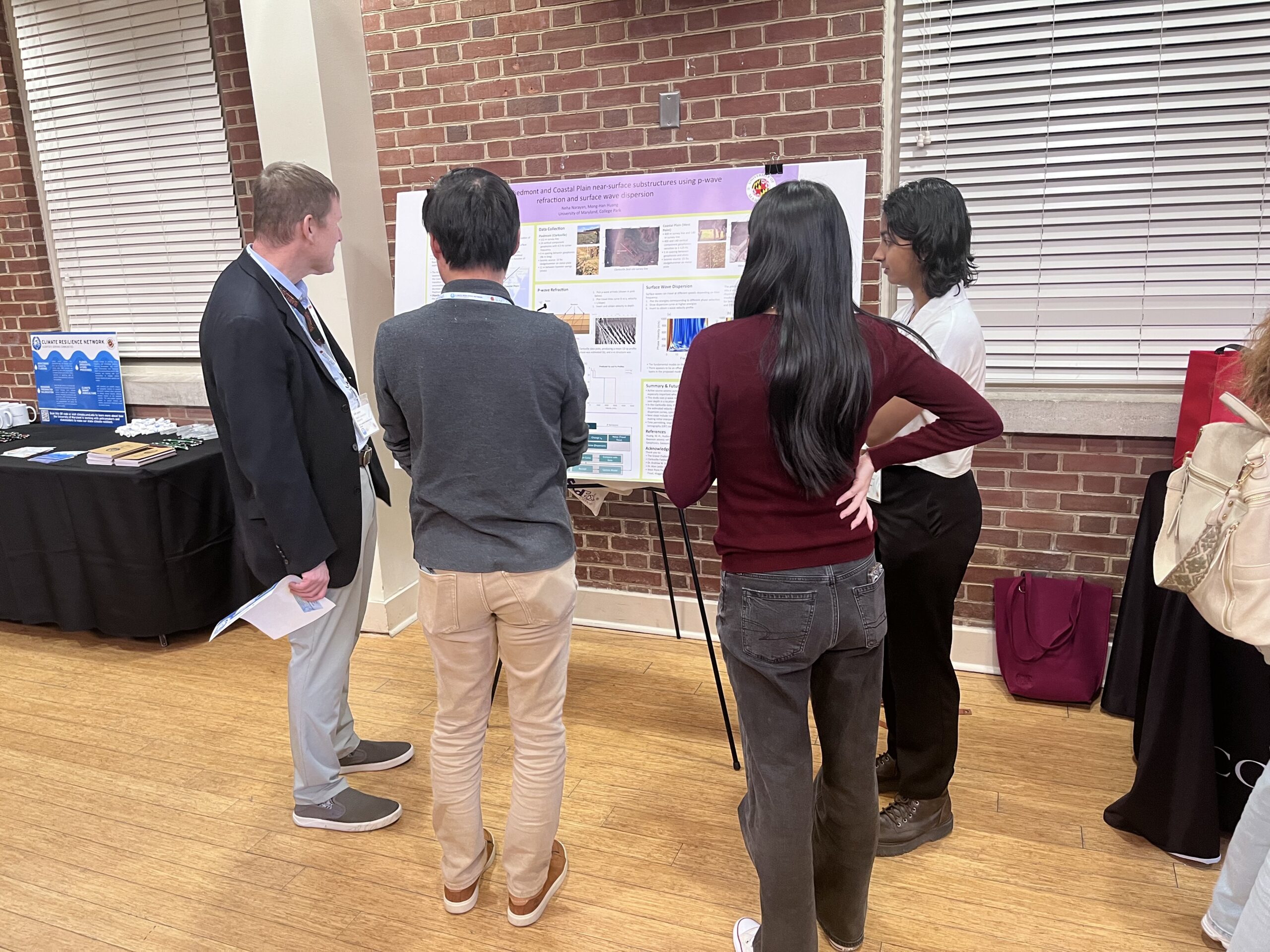
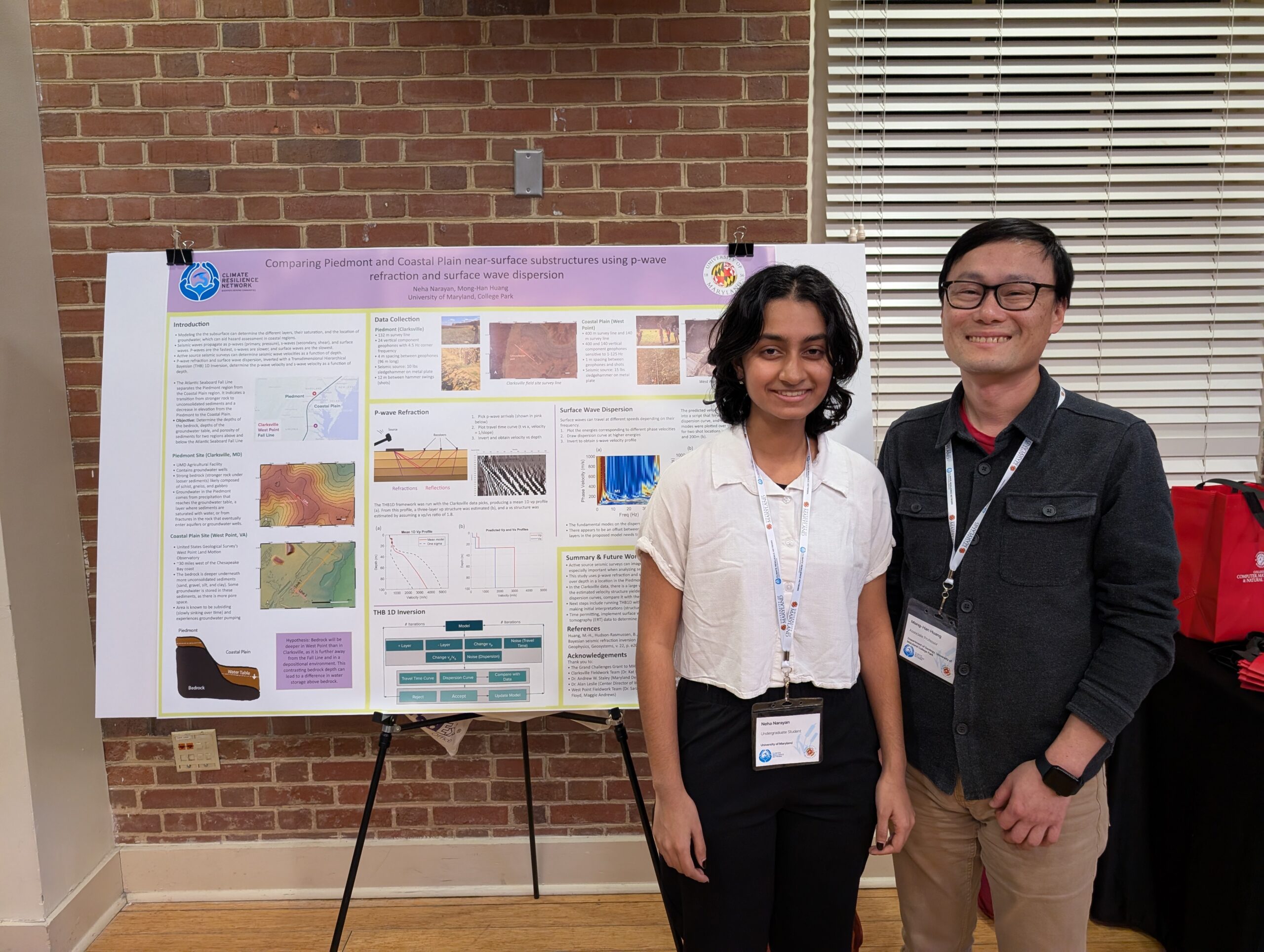
Neha Narayan (student). Mong-Han Huang (mentor). Photo by Cazzy Medley
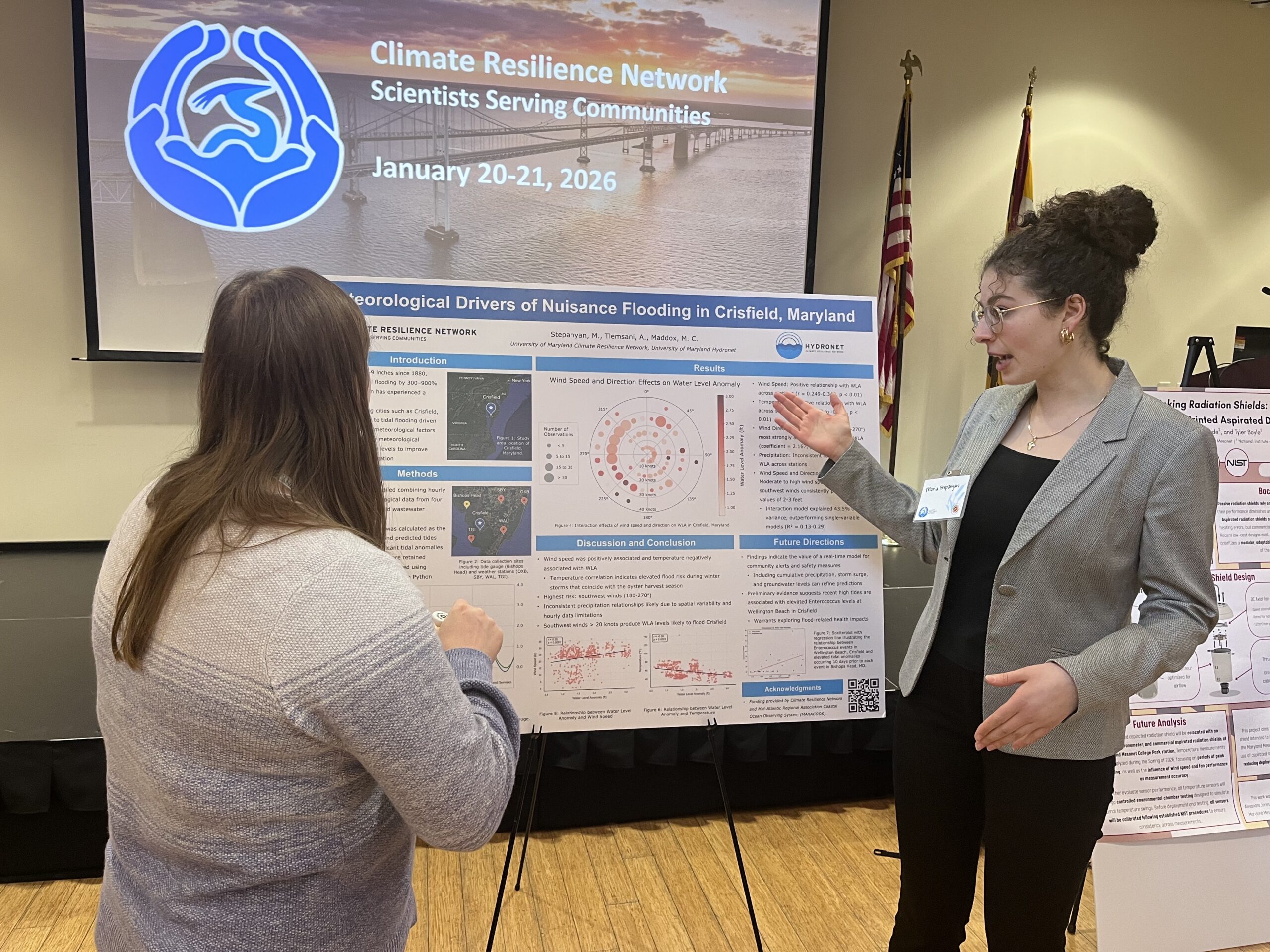
Student: Maria Stepanyan presents her poster. Mentor: Mike Maddox. Photo by Kate Cooney.
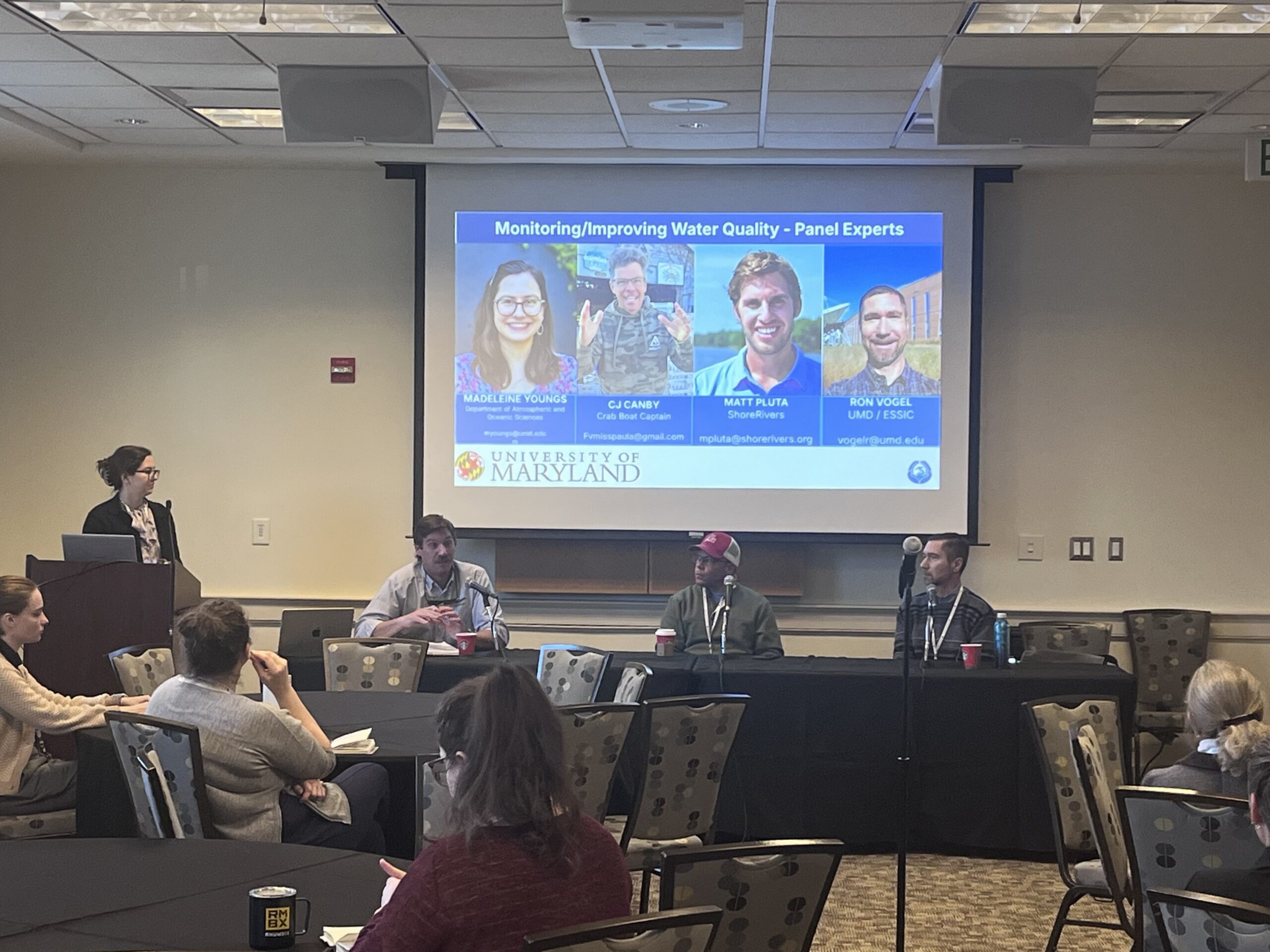
The "Monitoring and improving water quality" session was moderated by Madeleine Youngs. Panelists were Ron Vogel, Matt Pluta, CJ Canby. Photo by Kate Cooney
Student: Ian Way. Mentor: Guangyang Fang. Photo by Kate Cooney
Student Katherine Lehman presents her work at the poster session. Mentors: James Hyde and Tyler Boyle. Photo by Kate Cooney
The session "Health impacts of climate change" was moderated by Katharine Stover. Panelists - Amy Sapkota, Stephanie Schollaert Uz, Robyn Gilden.
Photo by Jennifer Collins
The "Flooding and extreme events" session was moderated by Mike Maddox. Panelists - Jeremy Geiger, Karen Prestegaard, Jen Merritt, James Hyde.
Photo by Jennifer Collins
Attendees networked during the reception. Photo by Cazzy Medley.
Ariana Sutton-Grier uses the VR setup with Ian Way and Guangyang Fang. Photo by Kate Cooney.
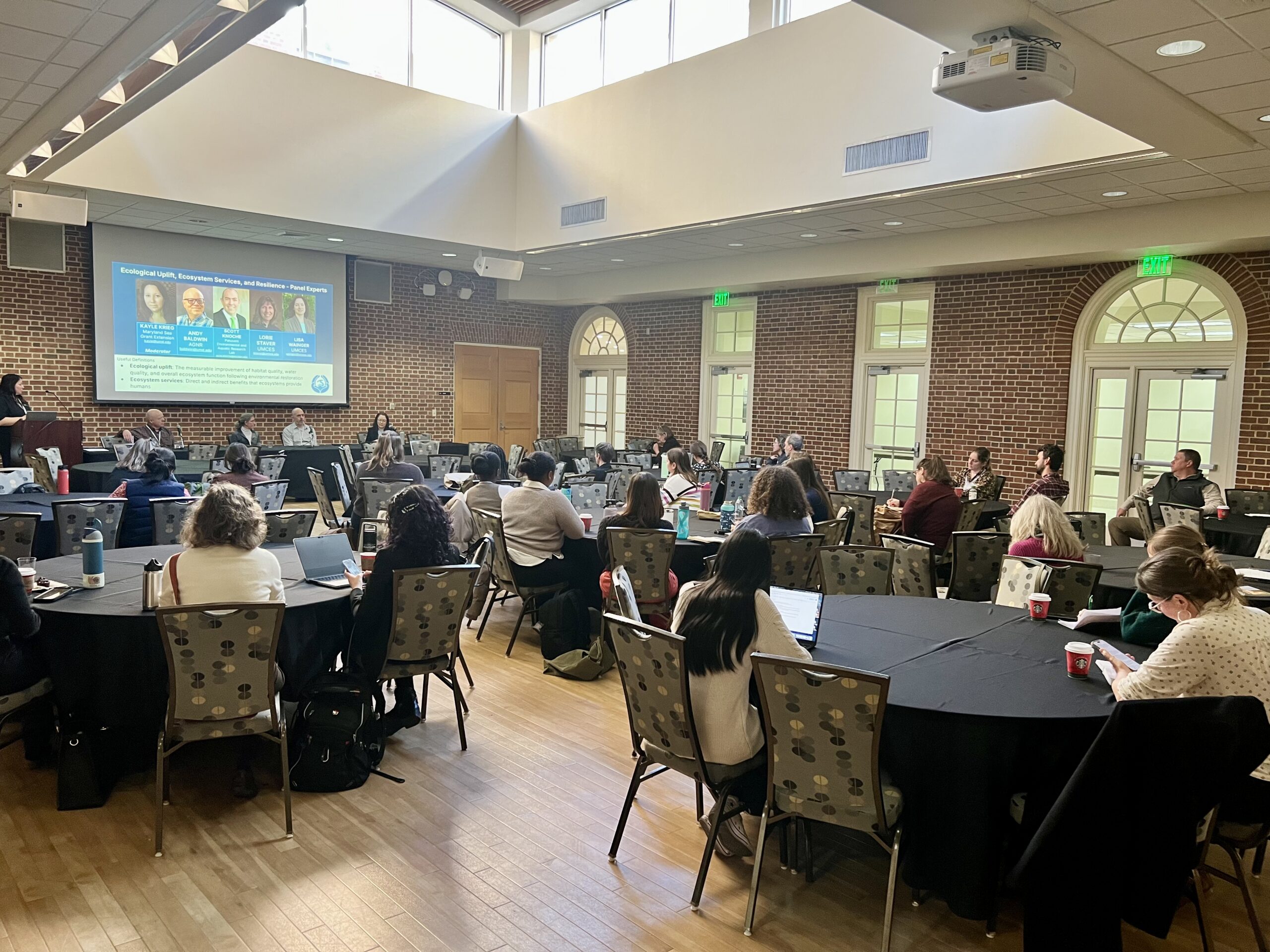
The "Ecological Uplift Ecosystem Services and Resilience" session was moderated by Kayle Krieg. Panelists - Lisa Wainger, Scott Knoche, Andy Baldwin, Lorie Staver.
Photo by Jennifer Collins
Amitahb Varshney, Dean of CMNS, gave opening remarks on Day 2. Photo by Cazzy Medley.
Amitahb Varshney, Dean of CMNS, gave opening remarks on Day 2. Photo by Cazzy Medley.
An audience member poses a question to the Health Impacts of Climate Change panel. Photo by Cazzy Medley.
Louis Uccellini poses a question to the panel. Photo by Cazzy Medley.
Kristen Saunders gives the keynote address. Photo by Cazzy Medley.
Lars Peter Riishojgaard gives the Introduction to the Climate Resilience Network. Photo by Cazzy Medley.
Pat O'Shea welcomes the audience to the university of Maryland. Photo by Cazzy Medley.