This article was written by Cliff Rossi, ESSIC adjunct research scientist, for Johns Hopkins Carey Business School.
As National Preparedness Month kicks off, the advice we usually hear is comforting in its simplicity: buy a few cases of bottled water, stock up on non-perishable canned goods, buy extra batteries, and map out a family meetup spot.
While those emergency basics still matter, they belong to an older era of risk. Today, the most severe damage a storm or wildfire inflicts on a family often happens long after the sky clears—in the form of unpaid insurance claims, unpayable deductibles, or a home rendered uninsurable and unsellable.
In a landscape shaped by shifting climate dynamics, physical survival kits are no longer enough on their own. True household resilience requires us to look at our homes the way an underwriter or a financial analyst would: as major financial assets vulnerable to both physical damage and market friction.
The disasters we plan for aren't the only ones hitting us
For decades, seasonal preparation meant looking at the calendar and watching the coast. Hurricane season had a clear start and end; wildfire risk belonged to remote Western forests; and if you didn’t live in a designated flood plain, rising water wasn’t on your radar.
That mental model has quietly broken down. Natural hazards are shifting in three distinct ways that catch everyday homeowners off guard:
- Expanding footprints: Wildfire risk is no longer confined to deep wilderness; it now routinely pushes into suburban neighborhoods along the wildland-urban interface. Meanwhile, atmospheric rivers and severe convective storms are bringing localized flooding to regions hundreds of miles away from traditional coastal zones.
- The rise of secondary perils: Category 5 hurricanes command headlines, but severe convective storms—the ones bringing localized hail, straight-line winds, and sudden downpours—collectively cause tens of billions of dollars in damage every year. Because these events happen so frequently, they steadily push up regional insurance rates year after year.
-
The downpour problem: Warmer air holds more water vapor, leading to intense localized rain events. Modern downpours regularly overwhelm municipal storm drains, turning ordinary street runoff into sudden basement or ground-floor flooding in neighborhoods that haven’t seen a flood in generations.
What is quietly breaking in the homeowners insurance market?
If your annual home insurance bill made you double-check the numbers recently, you’ve experienced a systemic national trend firsthand. Between 2020 and 2024, average home insurance premiums across the United States climbed by more than 40%—drastically outpacing general inflation. In high-exposure states like Florida, Texas, Louisiana, and California, premiums have spiked even higher, leaving many households struggling to keep up.
To understand why this is happening, it helps to look under the hood of the insurance system, where three major forces are compounding at once:
- Reinsurance spikes: Insurance companies buy their own insurance—called reinsurance—to protect themselves against catastrophic, multi-billion-dollar event years. Following consecutive years of massive weather losses globally, reinsurers raised their prices sharply. Primary insurance carriers have had to absorb those capital costs and pass them directly along to homeowners.
- Surging reconstruction costs: The cost of building materials, roofing supplies, and skilled trade labor jumped significantly in recent years. Because homeowners policies promise to cover the replacement cost of a structure, insurers automatically adjusted home valuations—and the premiums attached to them—upward.
- Carrier withdrawals: To protect themselves from catastrophic aggregate losses, major insurance companies in high-risk states have chosen not to renew existing policies or have stopped writing new ones altogether. This leaves millions of homeowners relying on state-backed “insurers of last resort,” which typically offer narrower coverage options at significantly higher price points.
The great flood risk blind spot
The single biggest financial gamble many homeowners make isn’t a bad stock trade; it’s an assumption about water.
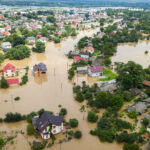
Standard homeowners insurance policies (HO-3) almost universally exclude overland flood damage. Yet every year, millions of families mistakenly believe that their primary policy will cover them if heavy rain, a swollen creek, or a storm surge sends water into their home.
According to Federal Reserve estimates, roughly 70% of annual residential flood losses in the U.S.—totaling over $17 billion—are completely uninsured.
Part of the confusion stems from standard mortgage rules. Banks generally require flood insurance only for properties located within FEMA-designated high-risk zones. But changing rainfall patterns mean that more than 20% of all flood claims now occur outside those designated zones. In fact, outside high-risk flood zones, nearly 80% of at-risk single-family homes carry no flood coverage whatsoever.
Under FEMA’s updated pricing model (Risk Rating 2.0), flood policies are now priced based on a home’s specific physical features—such as ground elevation, foundation type, and exact distance to water. Skipping flood insurance simply because a lender didn’t force you to buy it leaves your primary store of personal wealth exposed to total loss.
Turning risk into action: Hardening your property asset
You cannot control global weather trends, reinsurance markets, or state regulatory decisions. But as a homeowner, you have direct agency over your property’s physical vulnerability. Investing in physical mitigation is essentially converting variable risk into controlled capital improvements—protecting your family, preserving your property value, and often earning policy discounts along the way.
- Fortifying against wind and storms: During high-wind events, roofs face severe upward pressure. If you are replacing your roof, opting for a sealed roof deck—where a self-adhering membrane covers the seams between sheathing boards—prevents up to 95% of water intrusion even if outer shingles blow off. Combining this with hurricane straps that tie roof trusses directly to wall studs creates a continuous load path that keeps the structure intact. Furthermore, upgrading garage doors to impact-rated models eliminates one of the most common failure points where severe wind forces enter and blow out a home’s roof from the inside.
- Defending against water and runoff: Managing water risk starts at the foundation. Installing a dual sump pump system equipped with a secondary battery-operated backup ensures your basement stays dry even during widespread power outages. At the municipal interface, adding a sewer backwater valve to your main drain line stops municipal lines from backing up into your living spaces during extreme deluges. Outside, ensuring soil slopes downward away from your foundation and installing French drains prevents hydrostatic pressure from building up against basement walls.
-
Building wildfire protection: For properties exposed to wildfire hazards, small physical changes near the home yield outsized returns. Establishing a non-combustible zone of up to five feet around the perimeter—replacing wood mulch, plants, and wooden decking with gravel, river rock, or concrete—dramatically lowers the chance of home ignition from windblown embers. Covering attic, crawlspace, and foundation vents with 1/8-inch or 1/16-inch metal mesh screens creates a physical barrier that keeps embers from entering interior spaces.
The new financial reality of homeownership
National Preparedness Month is a great reason to test flashlight batteries and check water supplies. But it should also be the moment we step back and evaluate our broader financial defense line.
Taking time once a year to review your insurance policy’s roof valuation terms, evaluating standalone flood coverage, keeping a cloud-stored video record of your personal property, and making targeted structural upgrades to your home turns abstract climate worry into practical financial management. In a changing world, taking charge of your property’s resilience is the most effective way to safeguard your home, your family, and your financial future.