Early Career Scientist Spotlight: Weston Anderson
ESSIC Assistant Research Scientist Weston Anderson was recently featured in NASA’s Sciences and Exploration Directorate Early Career Scientist Spotlight.

ESSIC Assistant Research Scientist Weston Anderson was recently featured in NASA’s Sciences and Exploration Directorate Early Career Scientist Spotlight.
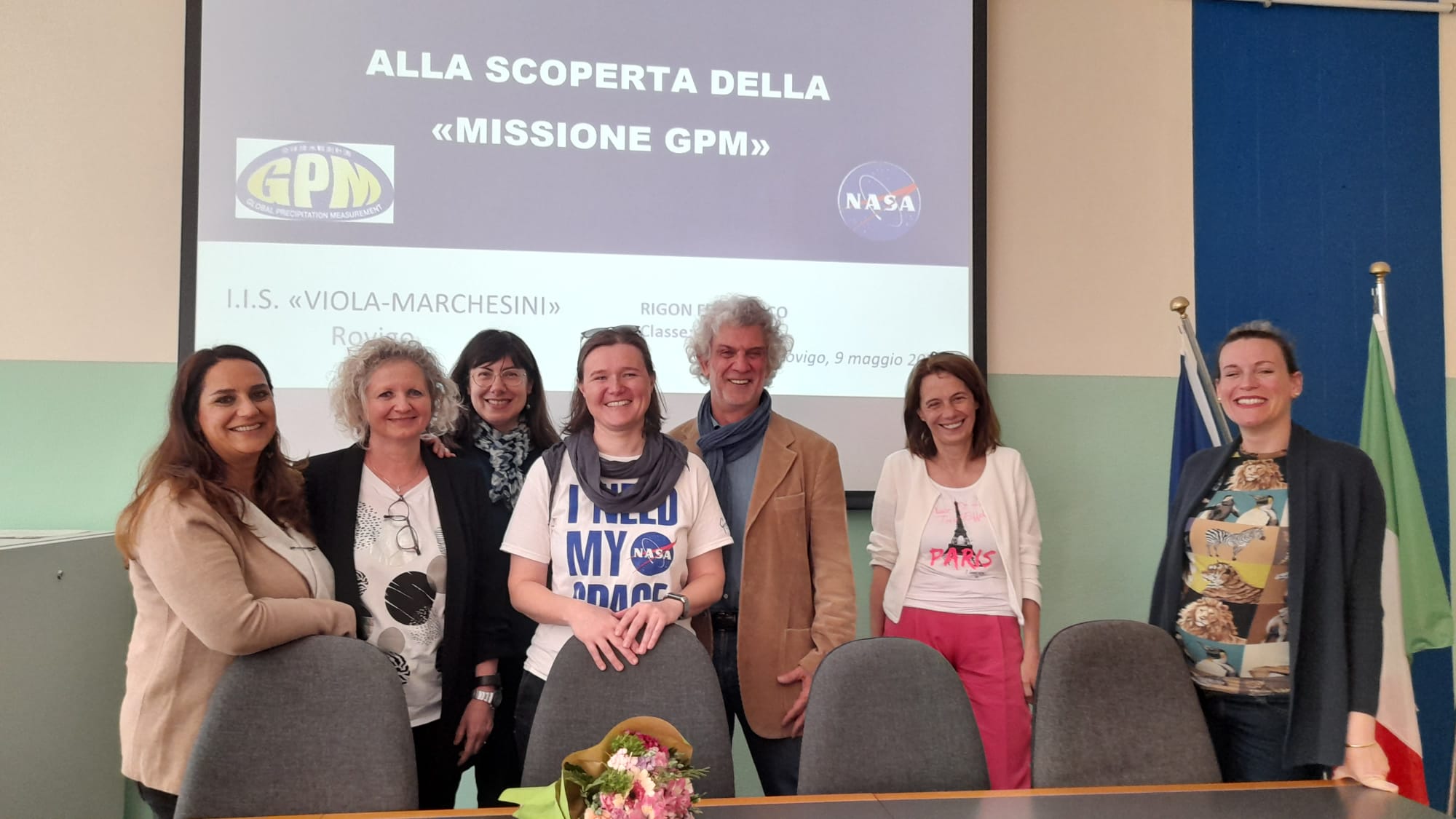
This month, the 2023 Global Precipitation Measurement Mission (GPM) Mentorship program comes to an end. The project, coordinated by ESSIC Assistant Research Scientist Lisa Milani with the help of colleagues Andrea Portier and Vaso Mantas, involved ten Italian teachers from four different schools. The effort included three lectures about “the Water Cycle”, “Weather and Climate” and “GPM products and applications” and targeted middle- and high-school teachers aiming to apply outreach material in the classroom context. After the three lectures, the teachers involved their students in a practical project applying language, programming and science contents and skills.
ESSIC Research Scientist Sampa Das has been selected as a recipient of the 2023 Robert H. Goddard Honor Award, NASA’s Center-level award selected annually by an awards committee based on the nominations from the peers. Das received an award under the category of “Excellence in Science”. She is one of the 9 individuals selected for 2023 across the Sciences and Exploration Directorate.
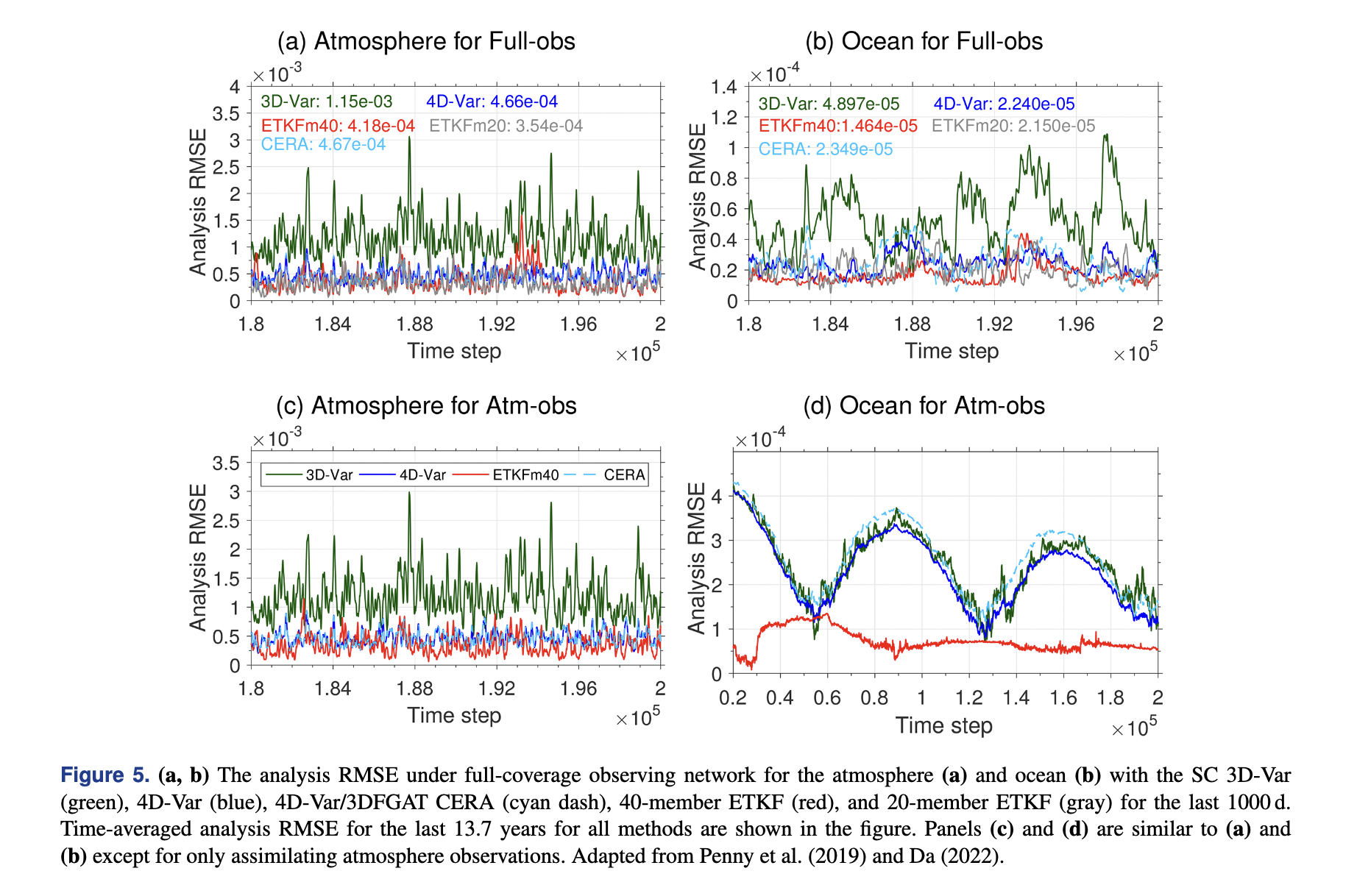
A team of international researchers led by ESSIC Scientist Distinguished University Professor Eugenia Kalnay and including Dr. Cheng Da recently reviewed their latest research progress on coupled data assimilation in a new paper published in Nonlinear Processes in Geophysics titled, “Review article: Towards strongly coupled ensemble data assimilation with additional improvements from machine learning”.
ESSIC scientist Jing Wei is the winner of the Remote Sensing 2023 Young Investigator Award.
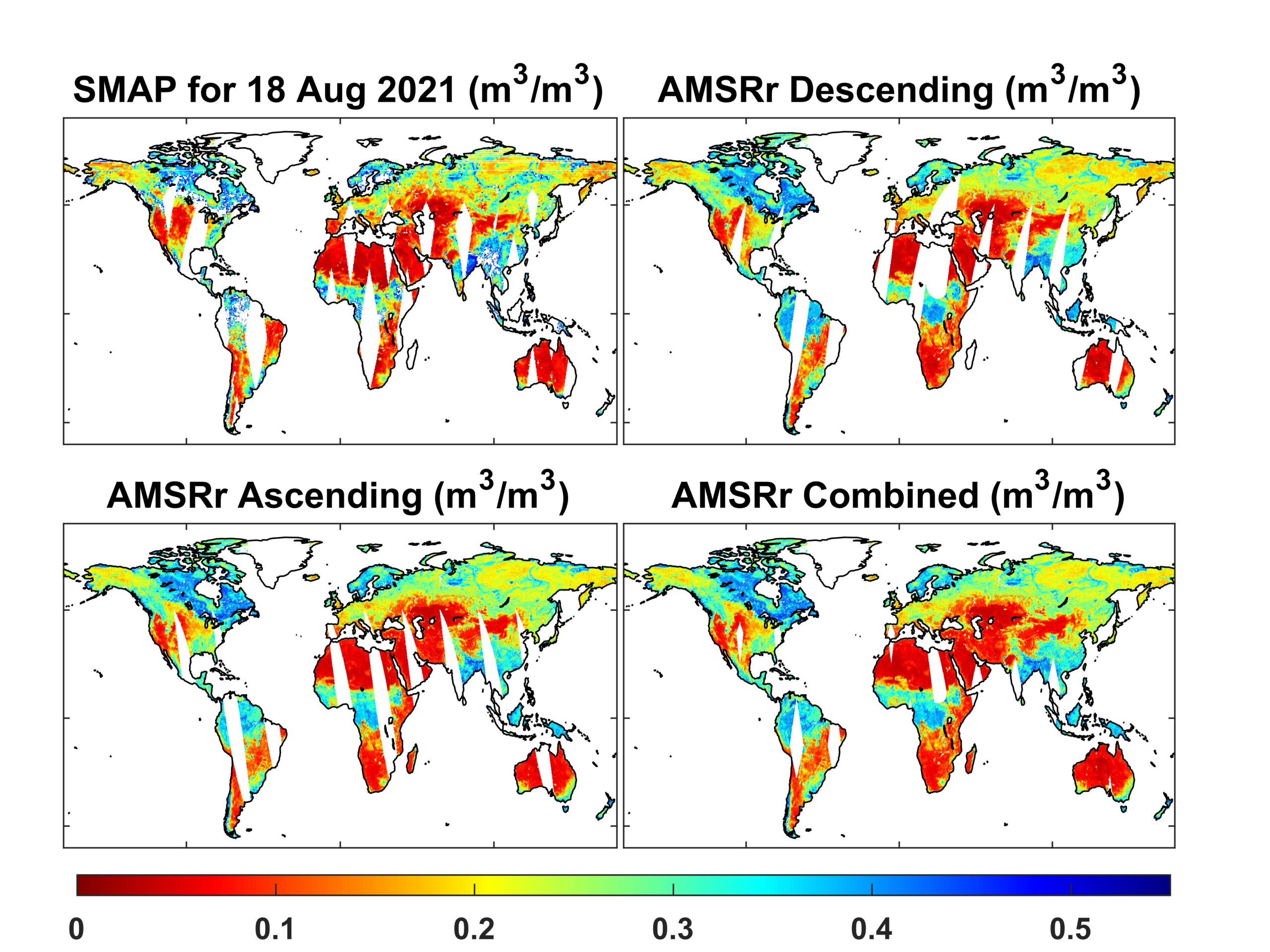
ESSIC/CISESS scientist Jifu Yin is the first author on a two-part series published in IEEE Transactions on Geoscience and Remote Sensing on refining the Advanced Microwave Scanning Radiometer 2 (AMSR2) soil moisture retrieval algorithm. The paper’s co-authors include ESSIC scientists Jicheng Liu, Huan Meng and Ralph Ferraro.
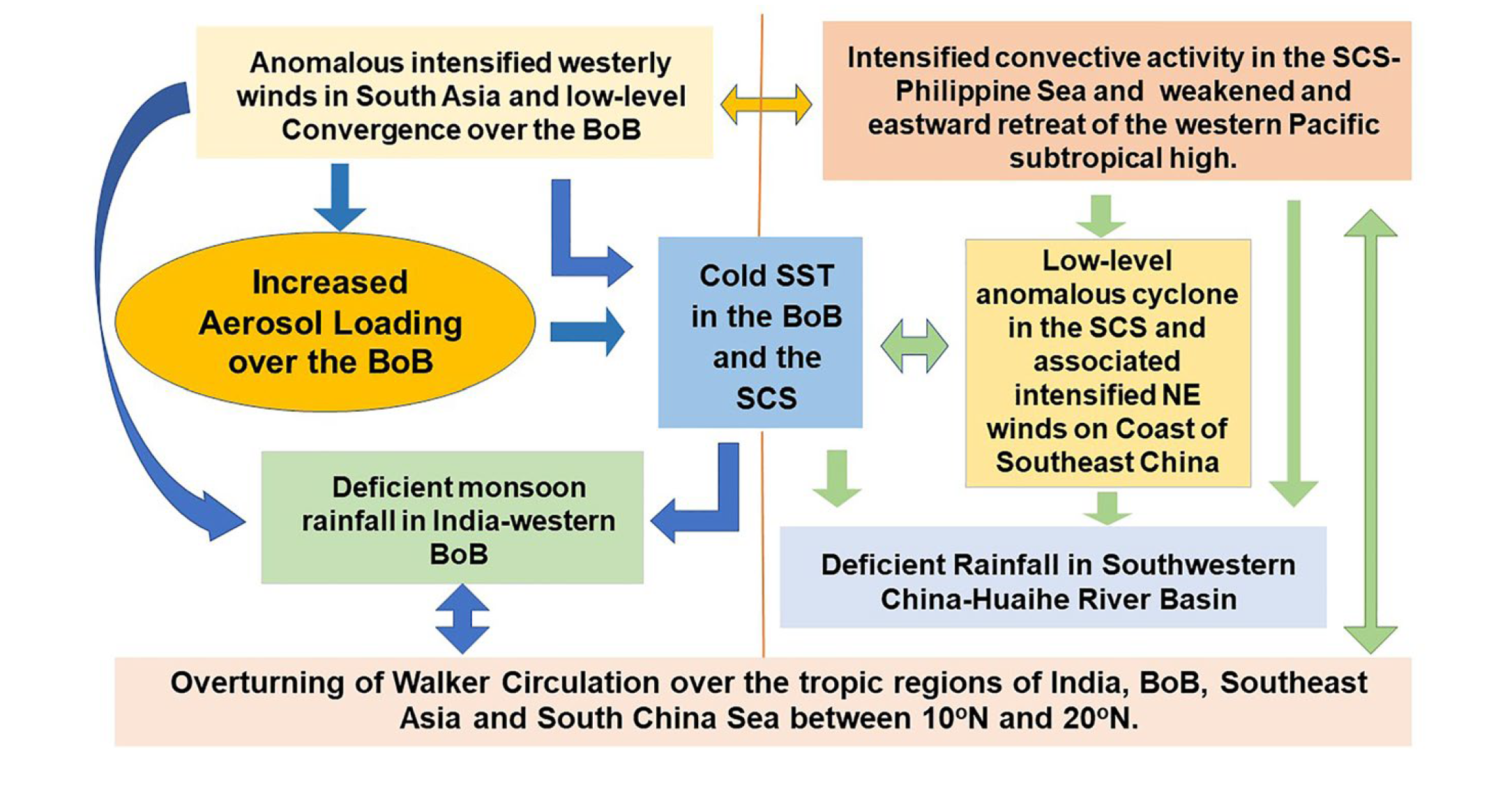
ESSIC/CISESS Scientist Yongsheng Zhang recently published a study on the year-by-year
aerosol variations over the Bay of Bengal (BoB) and Arabian Sea (AS) in early spring and their
relationship to the Asian summer monsoon rainfall anomalies using satellite-observed aerosol
products.
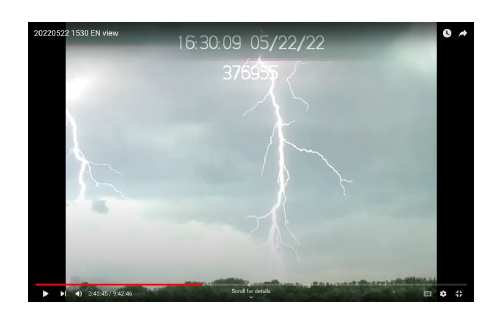
In January 2022, ESSIC/CISESS Scientist Daile Zhang won a CISESS Seed Grant to evaluate NOAA’s Geostationary Lightning Mappers (GLMs) on the GOES-16 and -17 Satellites and the upgraded Mid-Atlantic Lightning Mapping Array (MALMA) using a network of low-cost and innovative atmospheric electricity and lightning measurement tools to take lightning videos. Recently, the initial Seeds Grant period ended and Zhang reported her results.
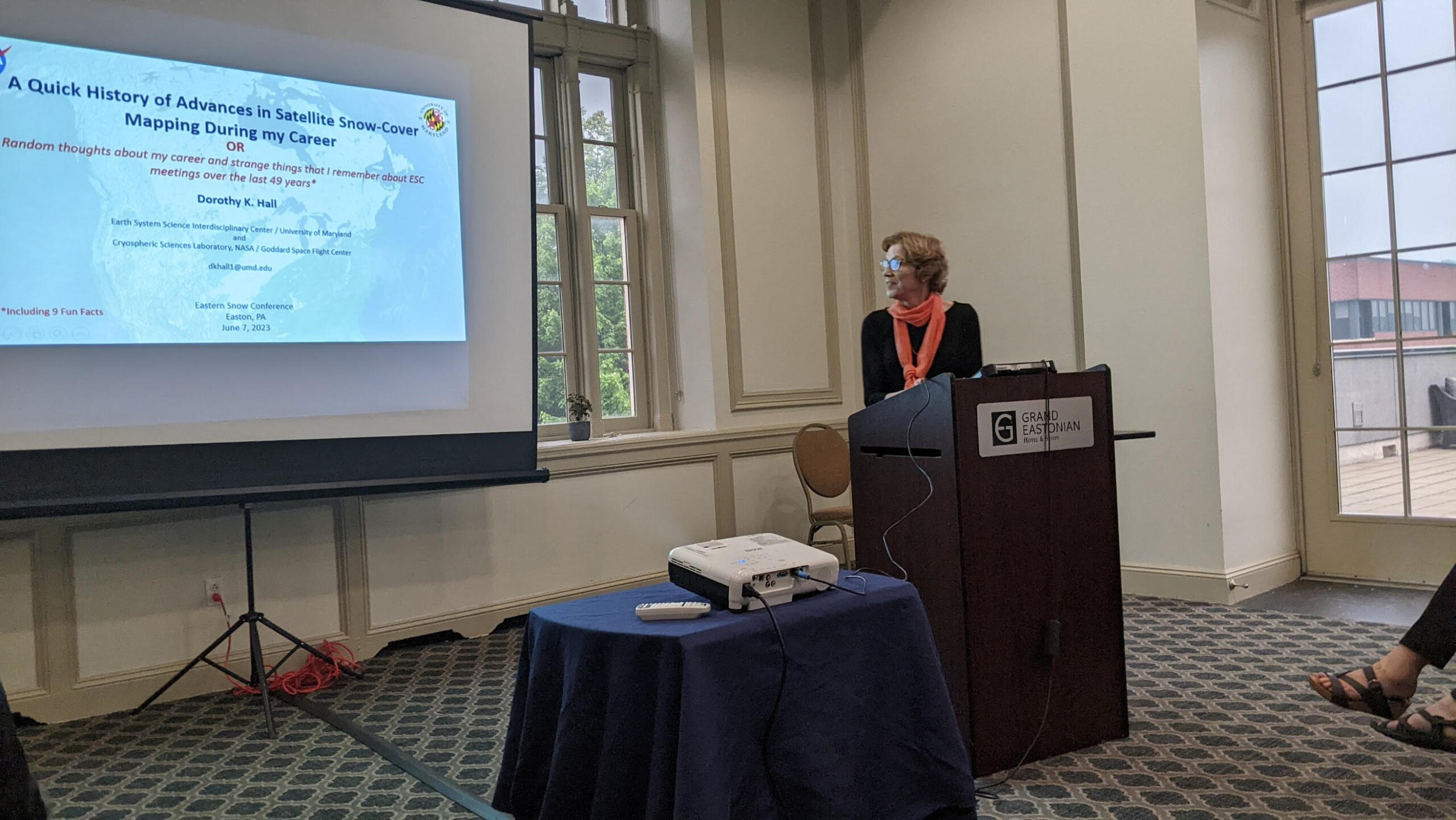
Dorothy Hall was awarded Life Member of the Eastern Snow Conference at the 79th meeting in Easton, PA, on June 7th. She also gave the banquet speech entitled “A Brief History of Advances in Satellite Snow-Cover Mapping”.
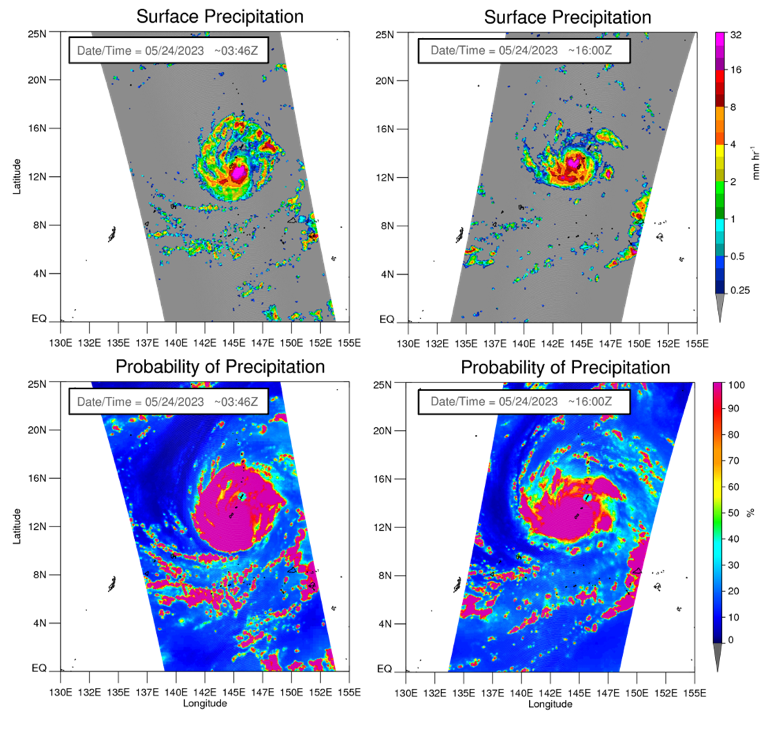
AMSR2 Precipitation Product During Mawar’s Landfall in Guam