Su Earns Prestigious Charles A. Caramello Distinguished Dissertation Award
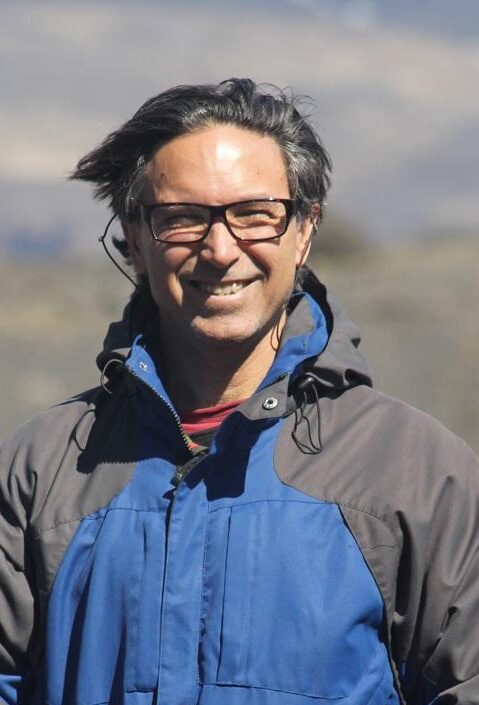
Congratulations to ESSIC/AOSC Professor Zhanqing Li doctoral-advised student Tianning Su, who has recently earned the Charles A. Caramello Distinguished Dissertation Award!

Congratulations to ESSIC/AOSC Professor Zhanqing Li doctoral-advised student Tianning Su, who has recently earned the Charles A. Caramello Distinguished Dissertation Award!

For more than 20 years, NOAA Coral Reef Watch (CRW) has been the world’s leader in observing, predicting, and communicating changes in the coral reef environment to a diverse, global user community. In mid-December 2021, CRW’s daily global 5km-resolution satellite coral bleaching heat stress products detected a significant build-up of oceanic heat stress on the Great Barrier Reef (GBR), Australia. This signified the GBR was starting its 2021-2022 summer season with a much earlier onset of accumulated heat stress than ever recorded before. At the same time, CRW’s modeled Four-Month Coral Bleaching Heat Stress Outlook indicated the significant heat stress would continue, leading to a potential mass coral bleaching event on the GBR (following on the heels of confirmed mass bleaching events in 2016, 2017, and 2020).

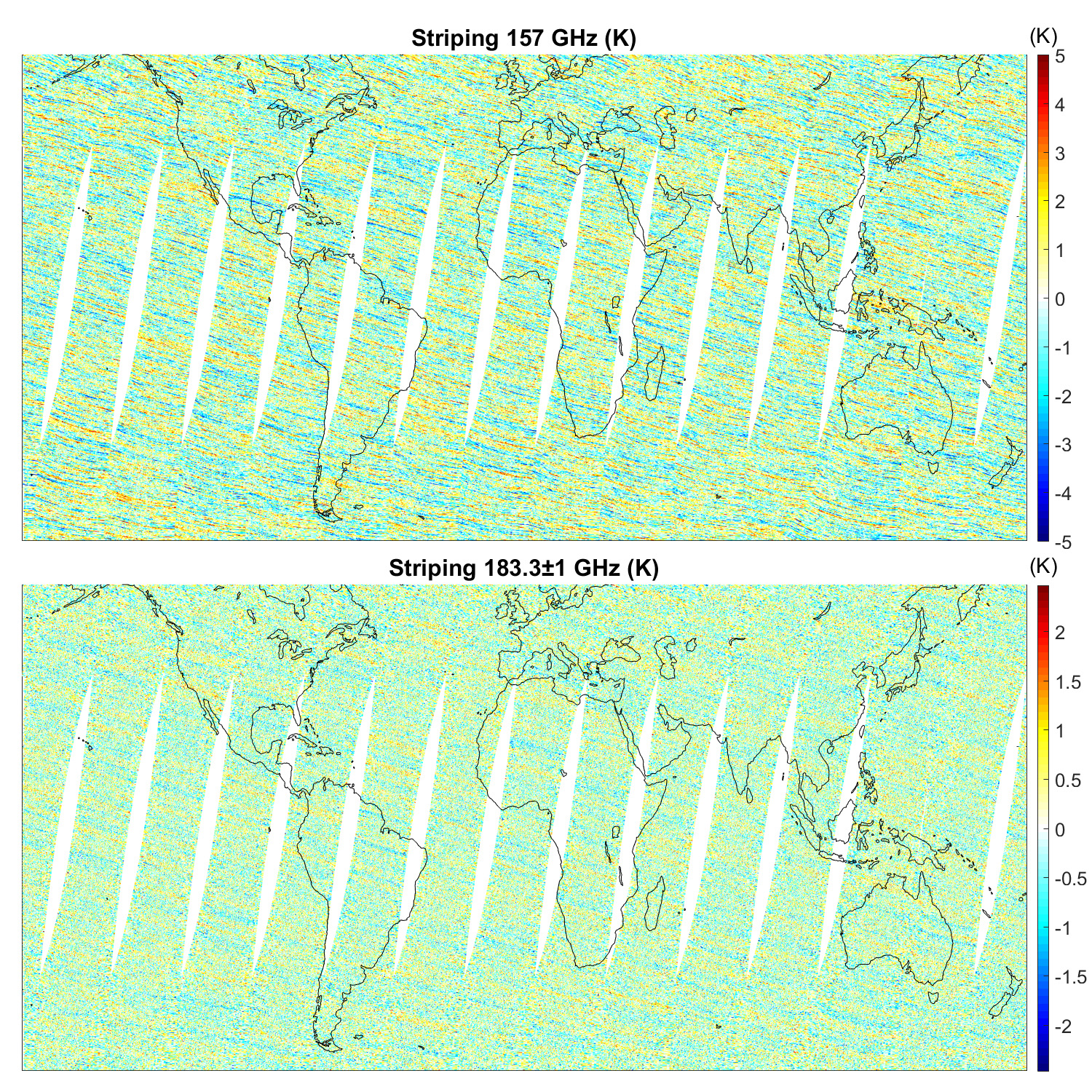
A new article in IEEE Transactions on Geoscience and Remote Sensing details the new updates to the special sensor microwave imager/sounder for the Global Precipitation Measurement (GPM) Version 7 Data Suite. Rachael Kroodsma, ESSIC/CISESS Assistant Research Scientist, was first author on the paper.

The 2022 Annual Global Space-based Inter-Calibration System (GSICS) meeting was successfully held online on 10 March 2022 and 14 – 18 March 2022. Dr. Fangfang Yu, ESSIC/CISESS Associate Research Scientist and new presiding chair of the GSICS Research Working Group (GRWG), led the effort to organize the meeting with the help of the GSICS Coordination Center (GCC) and GRWG members.

A new study including ESSIC scientist Xin-Zhong Liang has discovered that growing Miscanthus + giganteus, a type of perennial biomass crop, has a strong likelihood of significantly lowering regional summer temperatures and the vapor-pressure deficit, while increasing rainfall and overall crop productivity. This work was published in Global Change Biology-Bioenergy with Liang serving as Lead Principal Investigator. The first author, Yufeng He, is a former ESSIC Postdoctoral Associate.
Two NASA Glaciologists, Kelly Brunt and Alex Gardner, recently sat down to discuss the history, challenges, and evolution of mapping the Antarctic continent and what it means for science and society.

The road salt that makes your drive to work easier on snowy days may be damaging the water quality in local rivers and streams long after winter is over.

ESSIC/CISESS Post-doctoral Associate Daile Zhang has written an article on the legacy of lightning and thunder gods in Chinese history that is featured in this month’s issue of Weatherwise.

A giant lenticular cloud was seen in Maryland at about 5:50 pm on March 1st, 2022. ESSIC/CISESS Post-doctoral Associate Daile Zhang captured the cloud in Figure 1 below and a video posted to her Twitter account. GOES-East also detected the cloud as seen in Figure 2 and 3.

NOAA Center for Satellite Applications and Research (STAR) scientists are exploring new capabilities of enhancing satellite images with artificial intelligence (AI) so that moderate resolution images could be enhanced to include more detailed features with high resolution.