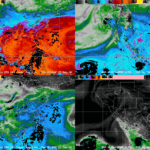
The first named cyclone of the 2026 Atlantic Hurricane Season formed last week with Tropical Storm Arthur. Arthur formed developed at 1500 UTC 17 June 2026 near the “Middle Texas Coast”, according to the NWS National Hurricane Center (NHC). GOES-East 5-minute CONUS Visible Imagery showed the disorganized system, with an exposed low-level center hugging the Texas coastline while most of the convection was displaced to the east.
Figure 1: GOES-East CONUS Visible imagery from 1201-2051 UTC 17 June 2026. Credit: NESDIS/STAR
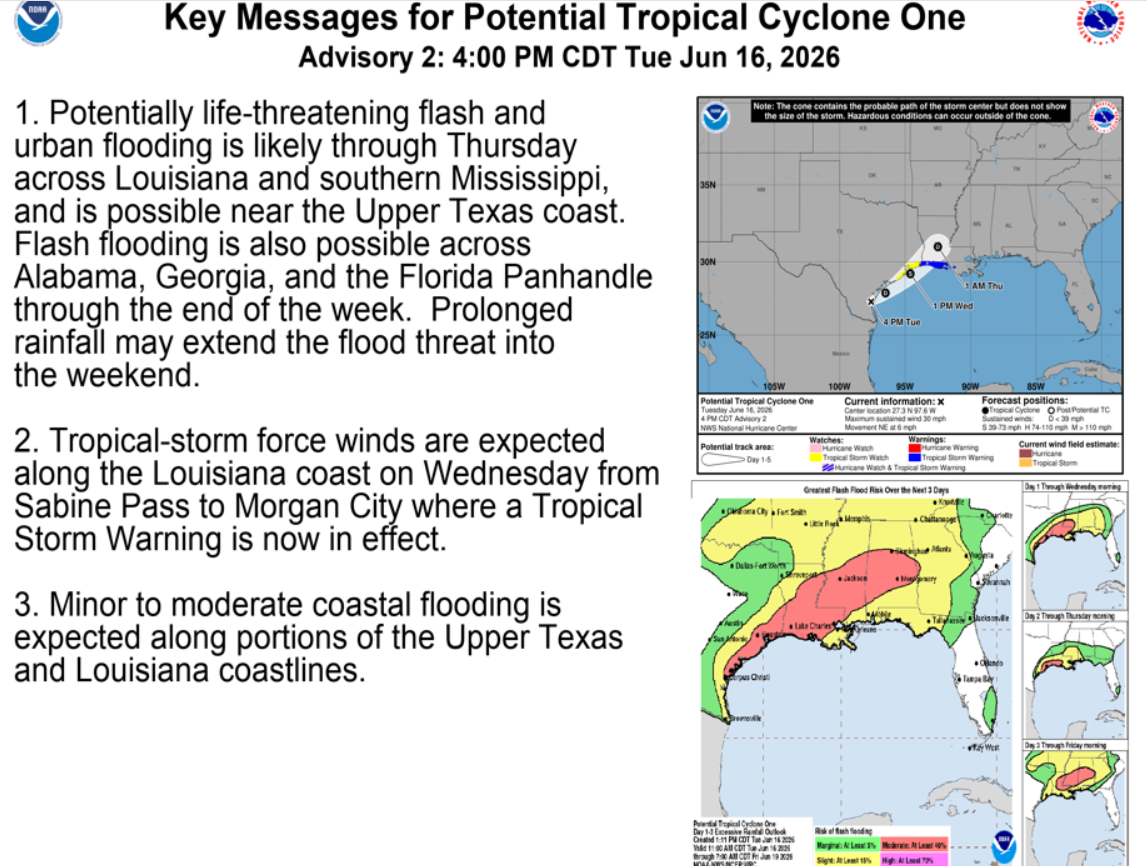
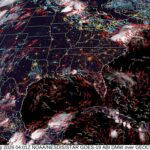
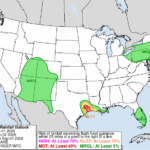
From the start of the Key Messages, heavy rainfall was the focus. The first Key Message issued at 1500 UTC 16 June 2026 noted ‘Potentially life-threatening flash and urban flooding’ with the NWS Weather Prediction Center (WPC) Days 1-3 Excessive Rainfall Outlook (ERO) showing a broad Moderate Risk for flash flooding from Corpus Christi, TX, northeastward through much of the Deep South.
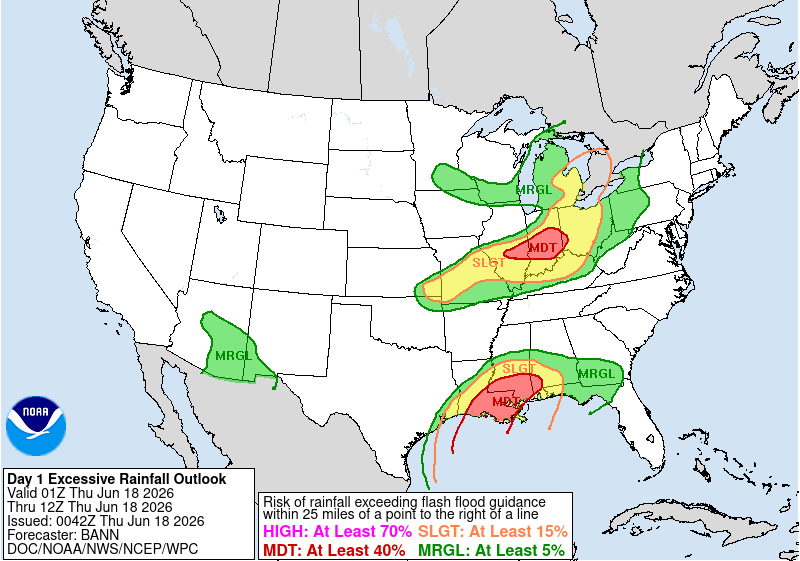
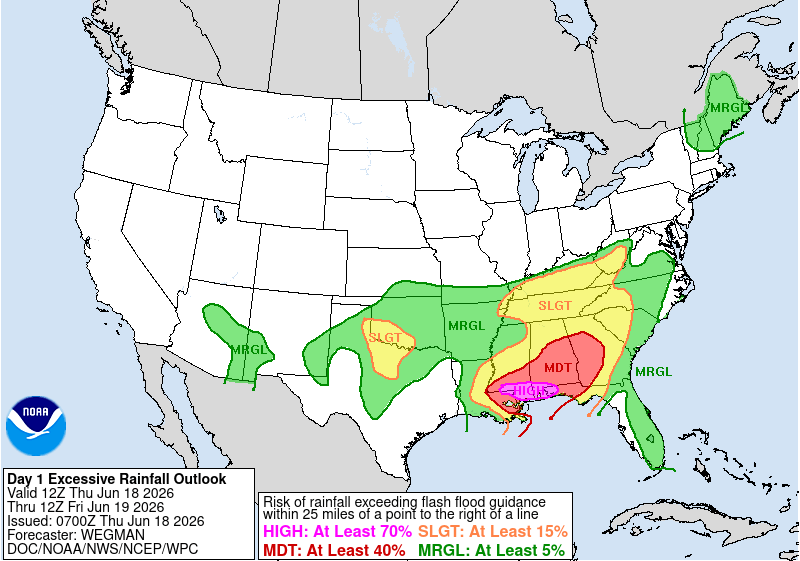
Arthur didn’t last long as a tropical storm, degenerating into a low pressure by 0300 UTC 18 June 2026. However, the threat for heavy rainfall was far from over. NWS WPC issued a Day 1 Moderate Risk ERO ending at 1200 UTC 18 June followed by an extremely rare Day 1 High Risk ERO ending at 1200 UTC 19 June 2026. As noted by WPC, High Risk EROs are only issued on ~4% of days, but account for 80% of all flood-related damages.
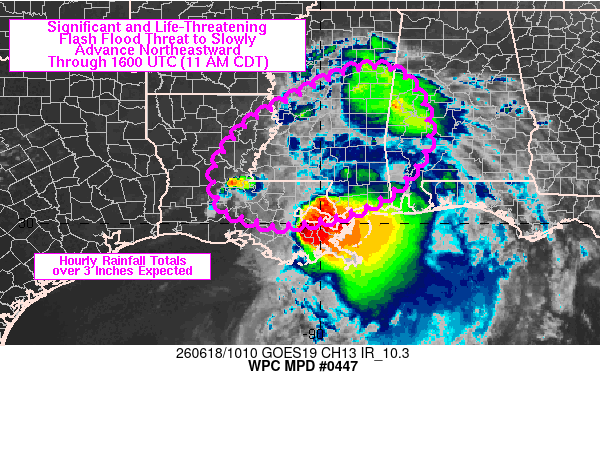
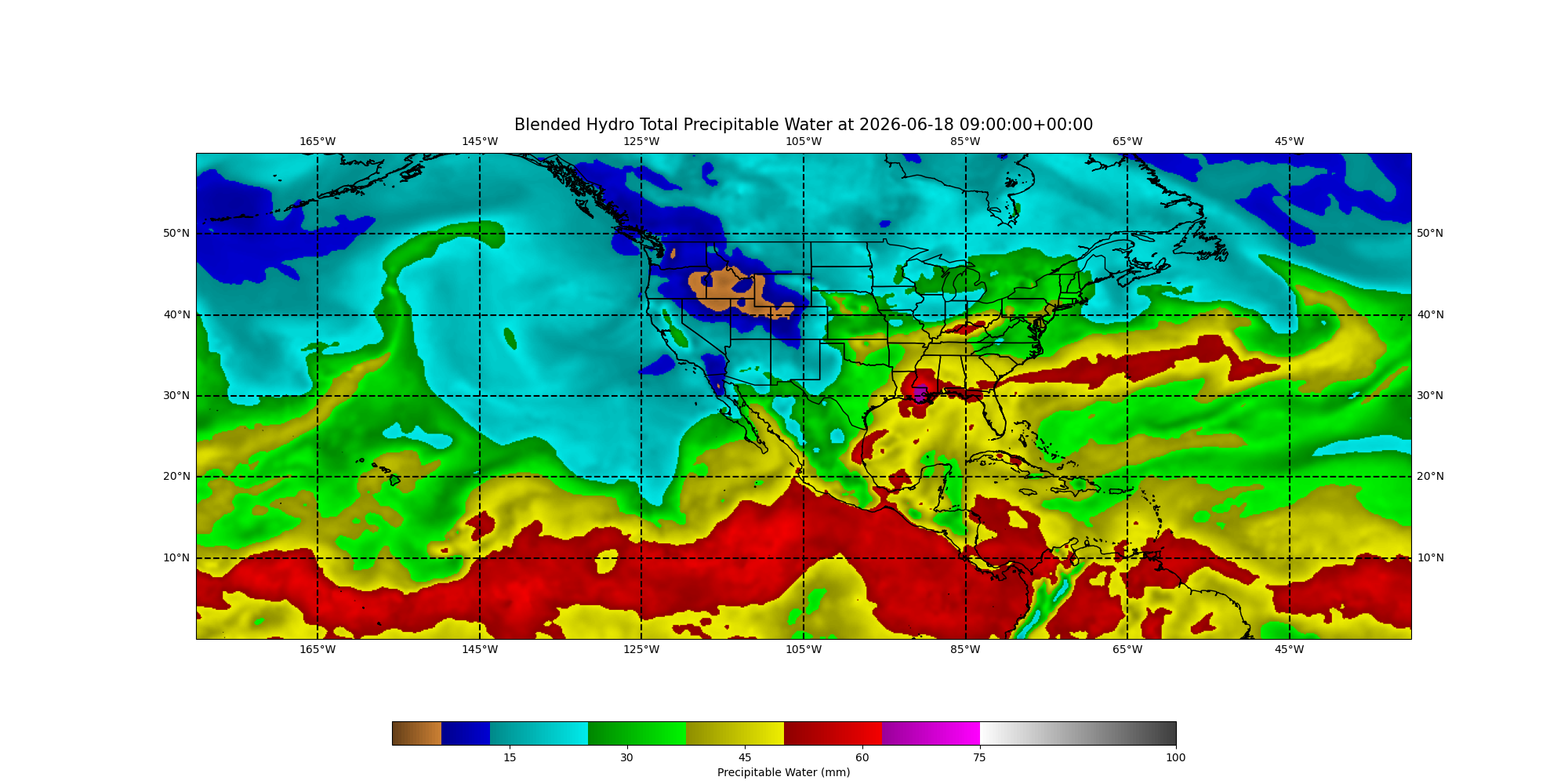
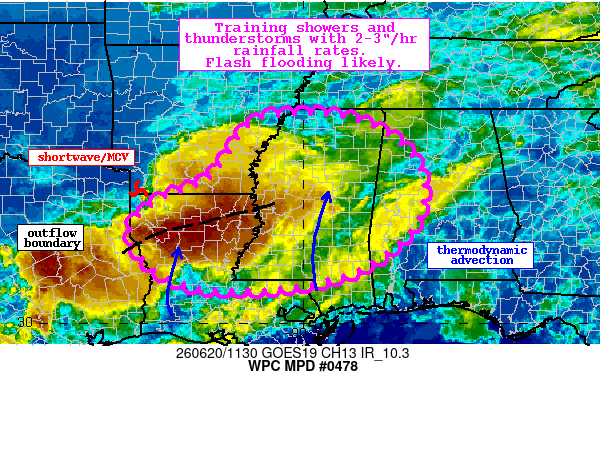
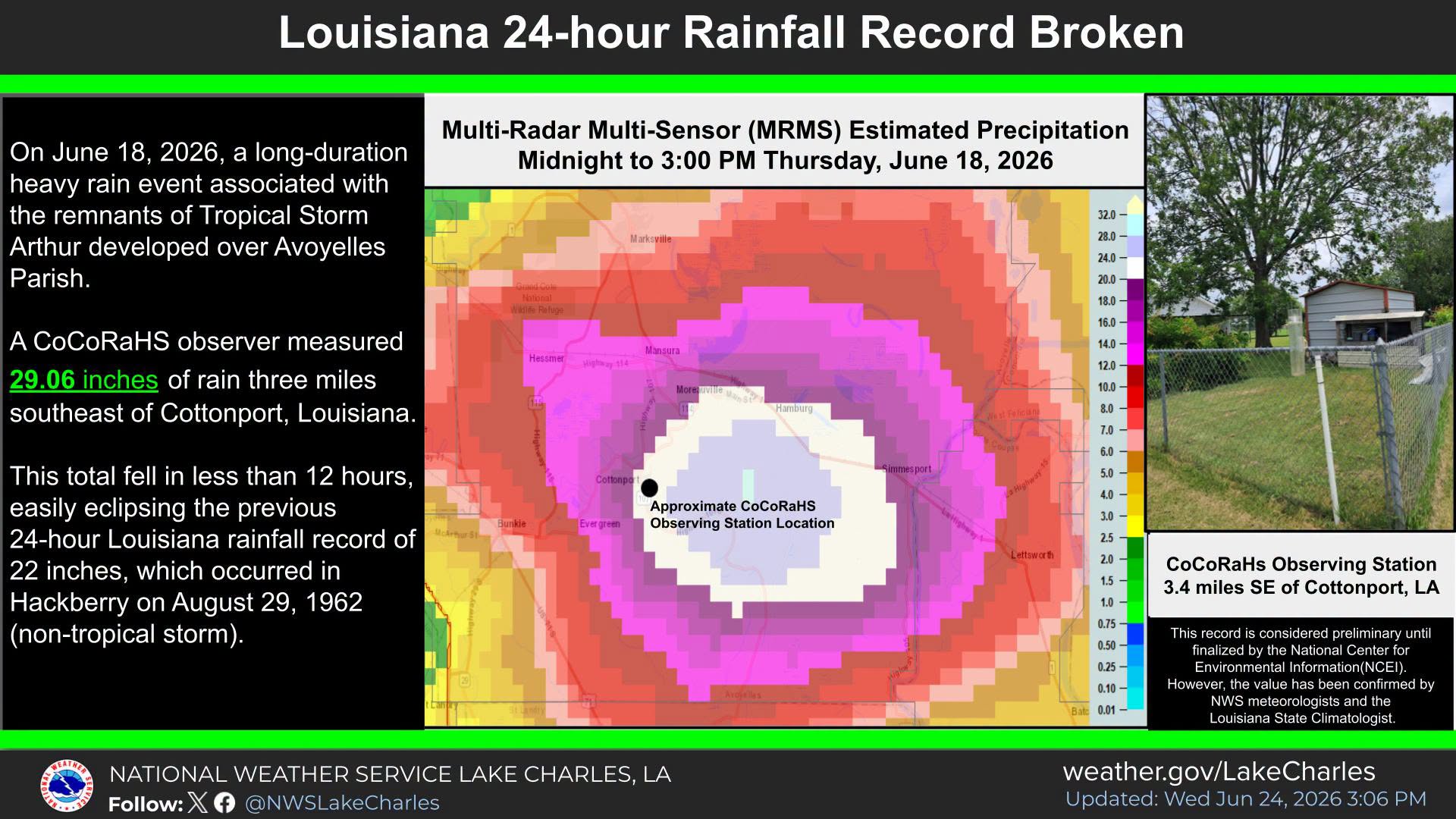
The WPC Metwatch Desk issued a Mesoscale Precipitation Discussion (MPD) at 1021 UTC 18 June 2026, centered over eastern Louisiana, much of Mississippi, and western Alabama. The MPD had a “Flash flooding likely” tag and noted a “Significant and Life-Threatening Flash Flood Threat” with “PWs of 2.2 to 2.6 inches.” The operational NESDIS Blended Total Precipitable Water (bTPW) product at 0900 UTC 18 June 2026 confirmed the very high precipitable water values, in excess of ~65 mm or ~2.5 inches across southeast Louisiana.
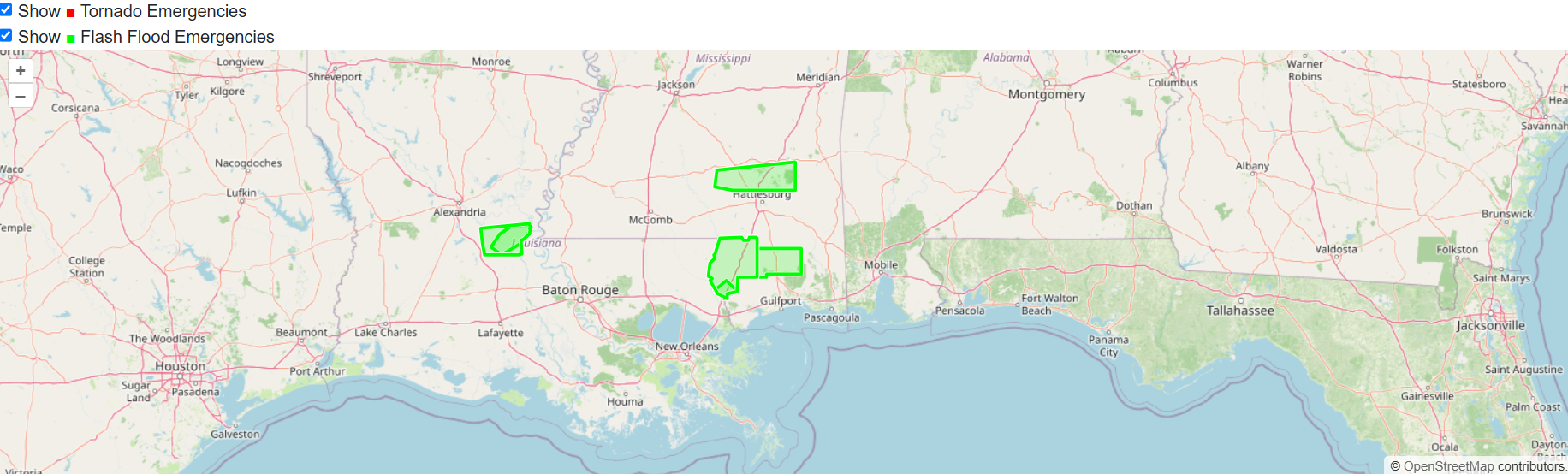
GOES-East CONUS Infrared (IR) imagery from 1401 UTC 18 June 2026 to 0151 UTC 19 June 2026 showed the repeating rounds of convection from eastern Louisiana to southern Alabama and the Florida Panhandle. Six flash flood emergencies were issued betwee Louisiana and Mississippi.
Figure 7: GOES-East CONUS IR imagery from 1401 UTC 18 June to 0151 UTC 19 June 2026. Credit: NESDIS/STAR
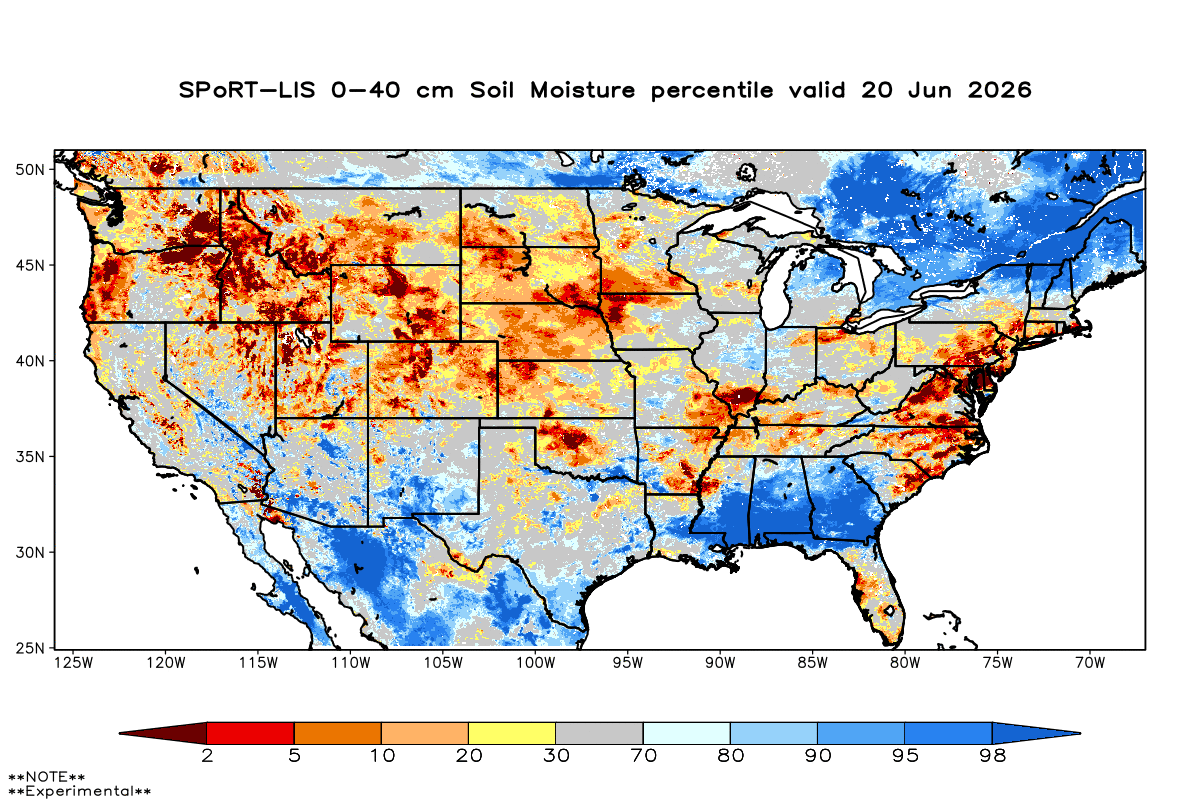
Over the next couple of days, rain continue to fall over hard-hit areas. An MPD issued by WPC on 20 June 2026 again had a “Flash flooding likely” tag for much of the Lower Mississppi Valley due to “fully saturated soils (0-40cm soil moisture above the 98th percentile according to NASA SPoRT)”.
The remnants of Arthur preliminarily broke a Louisiana state record for the most rainfall in 24-hours, with 29.06 inches of rain falling in less than 12 hours near Cottonport, Louisiana.